
Citric acid is a favorite of tool restorers for good reason: it is cheap, relatively safe, and it dissolves rust without the aggression of stronger acids. But citric acid keeps working after you pull the tool out of the bath, and the residue it leaves behind will start new corrosion if it is not neutralized. The neutralization sequence is as important as the soak itself, especially on historic edge tools where preserving the steel matters more than making it shiny.
Why Citric Acid Needs Neutralizing
Citric acid chelates iron, pulling rust into solution, and it leaves the steel surface chemically active and slightly acidic. Rinsing with water alone does not fully remove acid trapped in pits, along the lamination lines of old laminated blades, or under remaining scale. That trapped acid continues to etch and will bloom into fresh rust, sometimes within hours. On a historic edge tool, this is worse than doing nothing, because the new corrosion attacks the very surfaces you just cleaned. Neutralization converts the residual acid into harmless salts and brings the surface back to a stable pH. Think of the soak and the neutralization as two halves of one process; a tool that has only had the first half is unfinished.
The Soak: Getting It Right First
Mix the citric acid in warm water in a plastic container, using a moderate concentration; a few tablespoons per quart of water is a common working strength, and stronger solutions work faster but etch more aggressively. Degrease the tool first so the solution contacts the rust evenly. Submerge the tool and check it every 30 to 60 minutes. Citric acid is slow compared to stronger acids, which is a feature: it gives you time to pull the tool at the right moment. Scrub loosened rust with a soft brush between checks. Pull the tool when the rust is gone but before the solution starts visibly etching the clean steel, which shows as a dull, frosted appearance. Edge tools deserve conservative timing; a little remaining discoloration in deep pits is preferable to etched bevels.
The Neutralization Sequence
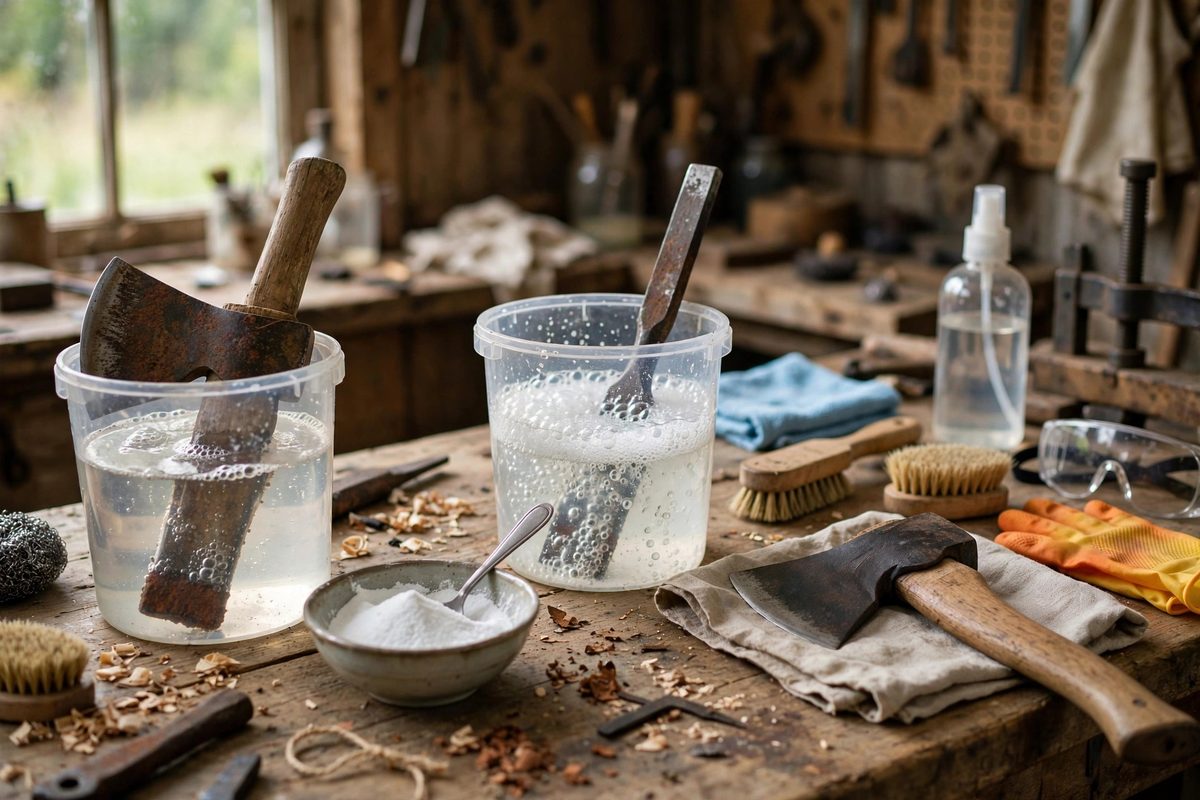
Move the tool straight from the acid bath into the neutralizing rinse without letting it air-dry in between. A solution of baking soda in water is the standard neutralizer: it fizzes on contact with residual acid, and the fizzing tells you it is working. Soak the tool for several minutes, agitating to get the solution into pits and crevices. Then rinse thoroughly under clean running water, scrubbing gently with a soft brush to remove the neutralized salts. Some restorers follow with a brief soak in clean water with a drop of dish soap to lift the last residues, then a final clean rinse. The surface should feel clean, not slippery or chalky; a chalky feel means baking soda residue remains and needs another rinse.
Drying Without Flash Rust
Freshly cleaned steel flash-rusts fast, especially in humid shops. Dry the tool immediately: shake off the water, blow out crevices with compressed air, and warm the tool gently to evaporate the last moisture. A wipe with denatured alcohol helps chase water out of tight spots. Then protect the surface right away. A light coat of oil, paste wax, or a purpose-made tool protectant seals the active steel. On edge tools, oil the bevels and the flat; on wooden handles, keep the oil off the wood or use wax. Do not leave a neutralized tool sitting "to dry on its own" while you do something else; that idle time is when flash rust forms, and it undoes the whole process.
Preserving Historic Character
Historic edge tools carry value in their patina and their markings. Citric acid will lighten the overall tone and can fade etched maker's marks if left too long, so mask or monitor stamped and etched areas. The goal is a clean, stable tool that still looks its age, not a mirror-bright restoration. Stop the soak while some character remains, neutralize carefully, and protect the result. A historic tool that is clean, sharp, stable, and honest about its age is the best outcome of the process.
Citric acid does the cleaning; neutralization makes the cleaning stick. Soak conservatively, neutralize with baking soda solution immediately, rinse thoroughly, dry at once, and protect the steel. Skip any step and the rust comes back to collect.
Related Guides
- Low-Deacidification Soaking for Antique Steel Tools: Antique steel tools often arrive from barns and estate sales carrying more than rust: they carry acidity. Decades of exposure to acidic environments
- Phosphoric Acid Pickling Baths for Heavily Rusted Casts: Heavily rusted cast iron, like old machinery parts, stove components, and tool bodies, can look like a lost cause. Phosphoric acid pickling dissolves
- Restore a Rusty Vintage Hand Plane: Bring Old Tools Back to Life! There's something deeply satisfying about taking a rusty, neglected hand plane from a flea market and transforming it
- Electrolytic Rust Removal Baths for Antique Planes: An antique plane body caked in decades of rust presents a dilemma: aggressive mechanical cleaning removes the rust but also the patina, the crisp
- Evapo-Rust Immersion Timing for Precision Rules: Precision rules, the steel scales machinists and woodworkers measure with, rust like any steel, but they cannot be cleaned like any steel: abrasive