
Precision rules, the steel scales machinists and woodworkers measure with, rust like any steel, but they cannot be cleaned like any steel: abrasive rust removal rounds their edges and, worse, can erase or blur the etched graduations that make them precise. Chelating rust removers like Evapo-Rust dissolve rust chemically without attacking sound metal, which makes them ideal for rules. The variable the restorer controls is immersion time, and it matters more than the product choice.
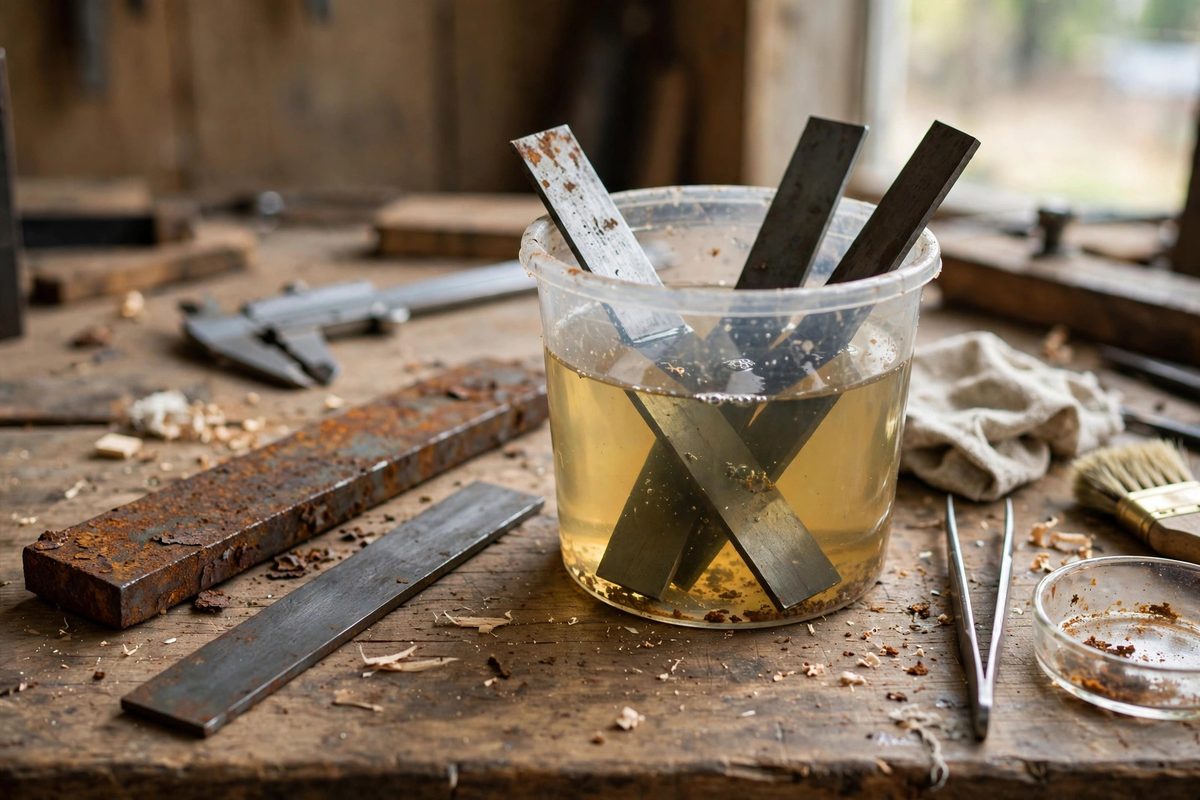
How chelation cleans without harming
Evapo-Rust works by chelation: its active molecules bind selectively to iron oxide and hold it in solution, leaving metallic iron untouched. Unlike acids, which etch everything, or abrasives, which remove metal along with rust, chelation removes only the corrosion. This selectivity is what protects the etched graduations: the dark fill in the etched lines is not rust, so it stays, and the steel around it is not attacked. The process is slow and gentle, which is exactly what a precision instrument wants.
Timing the immersion
Light surface rust on a rule typically clears in 30 minutes to a few hours; moderate rust needs several hours to overnight; heavy, scaly rust can take a full day or more. Check progress periodically rather than setting a timer and walking away: pull the rule, rinse, inspect, and return it if needed. The solution works until it is exhausted (it darkens as it loads with iron), so long soaks in spent solution accomplish nothing; use fresh solution for badly rusted pieces. Room temperature works; gentle warmth speeds the action slightly, but never boil or heat aggressively.
Protecting the graduations
The etched lines on a quality rule are filled with a dark compound that chelation does not attack, but heavy rust growing through the graduations can undermine them mechanically as it is removed. If rust has lifted the etching's fill, no chemical will restore it; clean gently and accept the rule's history. Never scrub a rule with anything abrasive after chelation, even though the temptation is strong when stains remain; the dark staining left in etched lines is often the original fill, and scrubbing removes it. Rinse thoroughly and dry immediately and completely; a wet rule flash-rusts within minutes.
After the bath
Rinse the rule in clean water, then dry it at once: compressed air, a heat gun on low, or a warm oven drive moisture out of the etched lines where it hides. Inspect under magnification; any remaining rust in pits can be addressed with a second, targeted soak. Once clean and dry, protect immediately: a light coat of instrument oil or a microcrystalline wax seals the steel. Rules live in drawers and tool rolls where moisture lingers, so the protection step is not optional. Store with desiccant if the environment is humid.
What chelation cannot do
Chelation removes rust; it does not restore pitted steel, re-etch worn graduations, or straighten a bent rule. Deep pitting remains as pitting, and a rule pitted through its graduations is a compromised measuring tool no matter how clean. Judge each rule honestly: a lightly rusted rule restores to full service, a deeply pitted one becomes a shop beater or a display piece. Knowing which is which is part of the craft.
Soak, check, rinse, dry immediately, protect. The graduations survive because the chemistry only takes the rust, and the timing ensures it takes all of it.
Related Guides
- Electrolyte Solution Ratios for Rust Electrolysis: Electrolysis strips rust from iron and steel using a battery charger, a tub of water, and a sacrificial electrode. It reaches into every pit and
- Electrolytic Rust Removal Baths for Antique Planes: An antique plane body caked in decades of rust presents a dilemma: aggressive mechanical cleaning removes the rust but also the patina, the crisp
- Restore a Rusty Vintage Hand Plane: Bring Old Tools Back to Life! There's something deeply satisfying about taking a rusty, neglected hand plane from a flea market and transforming it
- Low-Deacidification Soaking for Antique Steel Tools: Antique steel tools often arrive from barns and estate sales carrying more than rust: they carry acidity. Decades of exposure to acidic environments
- Microcrystalline Wax Sealing on Corroded Iron: Old iron tools, hardware, and artifacts arrive at the restorer's bench carrying centuries of corrosion, and after cleaning, the bare or partially