
Electrolysis strips rust from iron and steel using a battery charger, a tub of water, and a sacrificial electrode. It reaches into every pit and thread without touching sound metal, which makes it ideal for antique tools with detail worth saving. The electrolyte solution is simple, but the ratio matters: too weak and the process crawls, too strong and you waste material and make a mess.
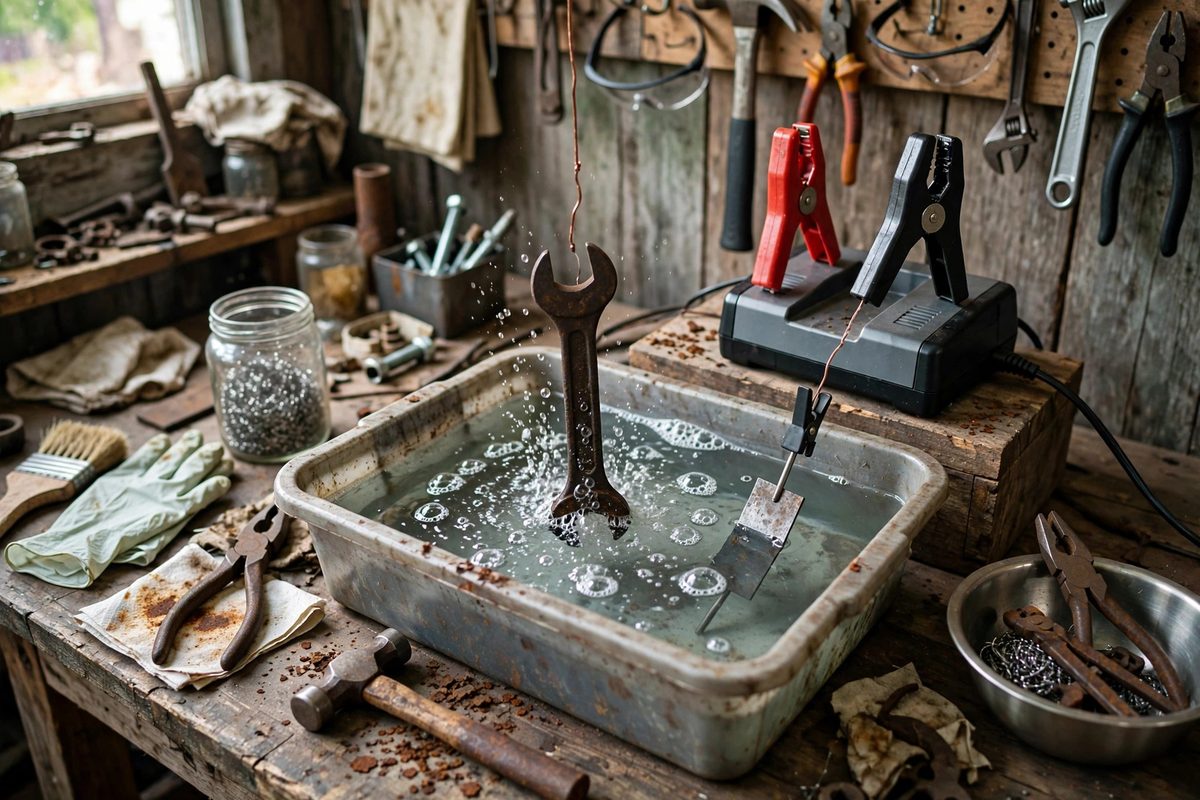
What the Electrolyte Does
Pure water conducts electricity poorly. The electrolyte, typically washing soda (sodium carbonate) dissolved in water, provides the ions that carry current between the electrodes. More electrolyte means lower resistance and higher current at a given voltage, up to the point where the solution saturates. The current is what does the work: it drives the electrochemical reduction that converts rust back toward metallic iron and loosens what it cannot convert. The electrolyte is not consumed in the reaction the way an acid would be, so the bath lasts through many pieces.
The Working Ratio
The long-standing shop ratio is roughly one tablespoon of washing soda per gallon of water. This produces a solution conductive enough for effective rust removal with a typical manual battery charger, without the excessive current and rapid electrode consumption of a stronger mix. For large tanks, scale it directly: a twenty-gallon tub wants about twenty tablespoons, which is roughly a cup and a quarter. Stir until fully dissolved before starting; undissolved powder sitting on the bottom does nothing. If the process seems slow, the usual culprit is poor electrical contact or too little voltage, not a weak solution, so troubleshoot those before dumping in more soda.
Setting Up the Tank
Use a non-conductive container, plastic tubs being the standard. The workpiece connects to the negative lead and becomes the cathode; the sacrificial electrode, plain steel or iron, connects to positive and gets consumed. Arrange one or more anodes around the workpiece so all sides get line-of-sight current flow; electrolysis is directional, and the side facing away from the anode cleans slower. Keep the electrodes from touching each other or the workpiece, using plastic spacers or suspension. A manual battery charger, not an automatic smart charger that shuts off, supplies the current; the process draws a few amps at twelve volts for typical setups.
Running and Monitoring
Bubbles rising from the workpiece signal the process is working. Let it run for several hours, checking periodically: the rust converts to a black sludge that brushes off easily. Pull the piece, scrub it under running water with a brush, and inspect. Repeat as needed for heavy rust. The anodes crust over with crud and need periodic cleaning or replacement to keep current flowing. Top up evaporated water to keep the electrodes submerged, but do not add more soda each time; only the water leaves, so the ratio stays roughly constant.
Safety and Cleanup
Electrolysis produces hydrogen gas at the workpiece, so ventilate the area and keep sparks and flames away. The solution is mildly caustic; wear gloves and eye protection, and rinse spills. Unplug the charger before reaching into the tank or adjusting electrodes. Dispose of the spent solution responsibly: it contains dissolved iron and crud from the anodes, so check local rules rather than pouring it on the garden. After cleaning, dry the derusted tool immediately and oil or wax it, because electrolytically cleaned steel flash-rusts fast.
A tablespoon per gallon, a manual charger, and patience will strip rust from the most intricate antique tool without harming a single engraved line. Set it up right, keep the electrodes clean, and let the current do the delicate work.
Related Guides
- Electrolyte Solution Ratios for Antique Steel Baths: Electrolysis (electrolytic rust removal) cleans antique steel tools by turning rust back into metal at the molecular level: the tool becomes the
- Electrolytic Rust Removal Baths for Antique Planes: An antique plane body caked in decades of rust presents a dilemma: aggressive mechanical cleaning removes the rust but also the patina, the crisp
- Evapo-Rust Immersion Timing for Precision Rules: Precision rules, the steel scales machinists and woodworkers measure with, rust like any steel, but they cannot be cleaned like any steel: abrasive
- Restore a Rusty Vintage Hand Plane: Bring Old Tools Back to Life! There's something deeply satisfying about taking a rusty, neglected hand plane from a flea market and transforming it
- Low-Deacidification Soaking for Antique Steel Tools: Antique steel tools often arrive from barns and estate sales carrying more than rust: they carry acidity. Decades of exposure to acidic environments