
Antique steel tools often arrive from barns and estate sales carrying more than rust: they carry acidity. Decades of exposure to acidic environments, tannic wood, damp leather sheaths, and corrosive storage, leave the steel's surface chemistry primed to keep corroding even after the visible rust is removed. A gentle deacidification soak neutralizes that residual acidity, stabilizing the tool so conservation work lasts. The key word is gentle: the goal is to calm the chemistry, not to strip the tool to bright metal.
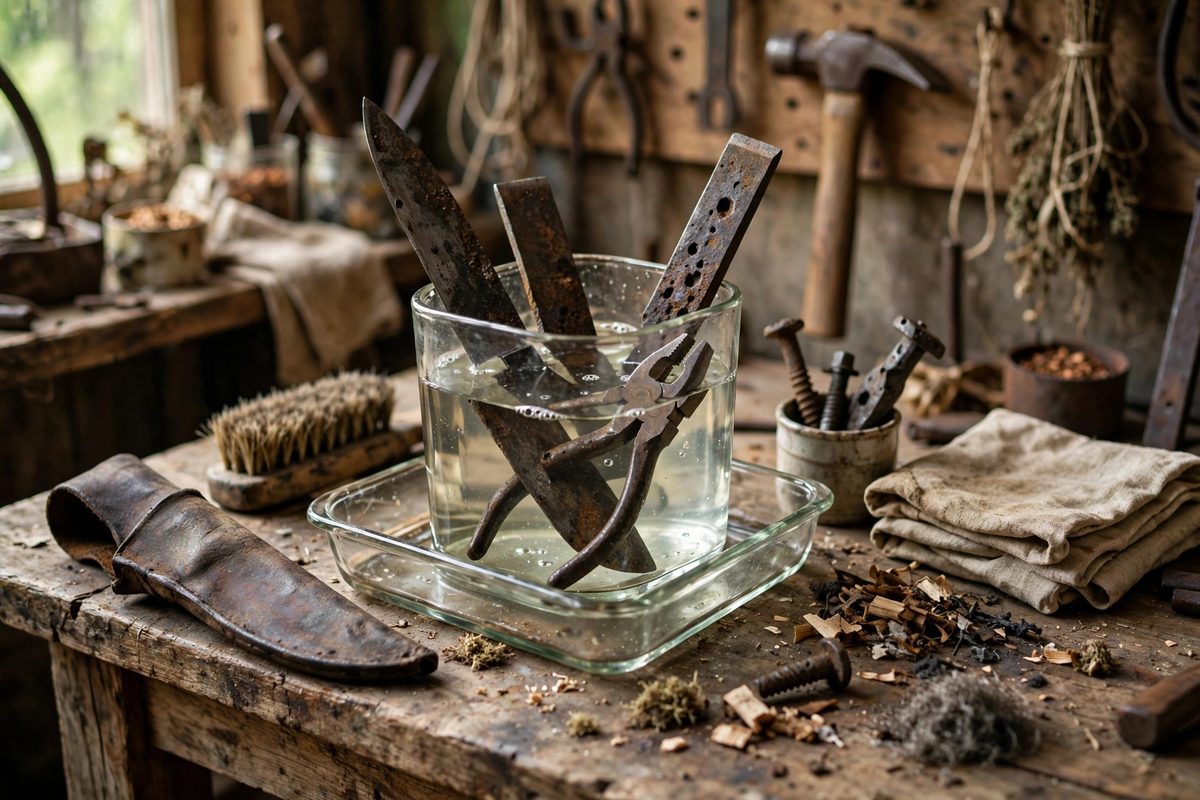
Why cleaned tools sometimes keep rusting
Remove the rust from an antique tool, oil it, put it on the shelf, and sometimes the orange bloom returns within weeks. The culprit is usually acidic residue trapped in the steel's surface pores and in corrosion pits: chlorides from sweat and coastal air, organic acids from wood and leather contact, sulfur compounds from coal-smoke environments. These residues are hygroscopic and corrosive; they pull moisture from the air and restart the corrosion cycle underneath your protective oil. Mechanical cleaning removes the rust but not the chemistry that made it. Deacidification addresses the cause: an alkaline soak neutralizes the acidic residues, and thorough rinsing carries them away. Conservators consider this stabilization step essential for tools that will be stored or displayed rather than used daily, since a working tool's constant handling and re-oiling masks the problem that a display piece cannot hide from.
The mild alkaline soak
The working solution is deliberately weak: water with a small amount of washing soda (sodium carbonate) or baking soda (sodium bicarbonate), roughly a teaspoon to a tablespoon per gallon. This is far milder than an electrolytic bath; there is no current, no aggressive chemistry, just a gently alkaline environment that neutralizes acids on contact. Submerge the tool fully and soak for a few hours to overnight, depending on the severity of the corrosion history. The solution does the quiet work of drawing out and neutralizing acidic residues from pits and pores. For tools with fragile remaining finishes, patina, or markings you want to preserve, this mild approach is far safer than acids, strong alkalis, or abrasives, all of which attack the surface you are trying to save. When in doubt about a valuable piece, test the soak on an inconspicuous area first and inspect before committing the whole tool.
Rinsing, drying, and neutralizing the soak itself
The soak leaves the tool alkaline, which is better than acidic but still not the final state you want. Rinse thoroughly under running water, using a soft brush to clear loosened material from pits and crevices. Then dry completely and immediately: warm air, a soft cloth, and patience, because any moisture left on bare steel starts the cycle again. Some conservators follow with a brief rinse in a mild acid-neutral solution or simply in clean water with thorough drying; the essential point is that no soak residue remains in the pores. Inspect the tool after drying: the surface should look calm, with no active orange powder forming within hours. If active corrosion reappears quickly, the piece may need a longer soak or professional conservation; some chloride contamination runs deep and resists mild treatment.
Protecting the stabilized tool
Deacidification buys stability, not immunity. After the soak and drying, protect the tool with a conservation-appropriate coating: a microcrystalline wax for display pieces, which seals the surface without the yellowing of some oils, or a light oil for tools that will be handled. Apply the protection to warm, completely dry metal so it penetrates the pores. Store stabilized tools in a controlled environment: stable, moderate humidity is the goal, since humidity swings drive the moisture cycling that restarts corrosion. Avoid storing antique steel in contact with acidic materials, oak, leather, and some foams all off-gas acids, and use acid-free tissue or cloth for wrapping. Check stored tools periodically; stabilization is long-lasting but not permanent, and catching a recurrence early keeps it trivial.
Knowing the limits of the method
A mild soak handles mild problems. Deeply chloride-contaminated iron, the kind that weeps and re-rusts aggressively, often needs extended treatment or electrolytic reduction under professional guidance. Tools with significant remaining original finish need case-by-case judgment about whether any wet treatment is appropriate at all. And no soak fixes structural damage: cracked handles, sprung parts, and deep pitting are mechanical problems for other methods. The deacidification soak is one tool in the conservation kit, the one that addresses invisible chemistry, and it works best as part of a thoughtful sequence: gentle cleaning, deacidification, thorough drying, protective coating, and proper storage.
Neutralize the acids, rinse them away, dry completely, and seal the calm surface. The mild soak is unglamorous chemistry, but it is what keeps a conserved tool conserved instead of slowly reverting to a rusty relic on the shelf.
Related Guides
- Electrolyte Solution Ratios for Antique Steel Baths: Electrolysis (electrolytic rust removal) cleans antique steel tools by turning rust back into metal at the molecular level: the tool becomes the
- Electrolytic Rust Removal Baths for Antique Planes: An antique plane body caked in decades of rust presents a dilemma: aggressive mechanical cleaning removes the rust but also the patina, the crisp
- Citric Acid Neutralization Steps for Historic Edge Tools: Citric acid is a favorite of tool restorers for good reason: it is cheap, relatively safe, and it dissolves rust without the aggression of stronger
- Restore a Rusty Vintage Hand Plane: Bring Old Tools Back to Life! There's something deeply satisfying about taking a rusty, neglected hand plane from a flea market and transforming it
- Evapo-Rust Immersion Timing for Precision Rules: Precision rules, the steel scales machinists and woodworkers measure with, rust like any steel, but they cannot be cleaned like any steel: abrasive