
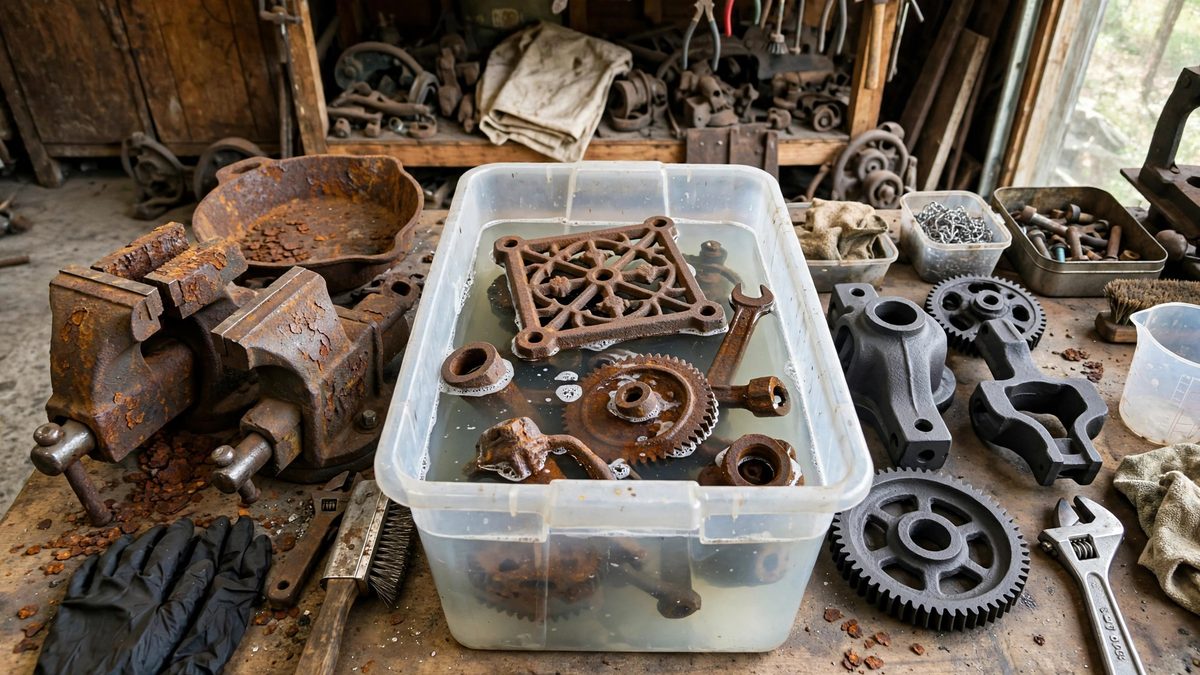
Heavily rusted cast iron, like old machinery parts, stove components, and tool bodies, can look like a lost cause. Phosphoric acid pickling dissolves the rust and converts what remains into a stable phosphate coating, leaving a surface that is ready for oil, paint, or seasoning. It is one of the most effective rust removal methods available to a restorer, and it demands respect as a chemical process.
How Phosphoric Acid Attacks Rust
Phosphoric acid reacts with iron oxide, converting red rust into iron phosphate, a dark, stable compound that adheres to the surface. Unlike mechanical removal, which can only reach what the wire wheel touches, the acid bath reaches into pits, crevices, and blind holes, dissolving rust wherever the solution contacts it. The resulting phosphate layer is mildly protective and provides an excellent key for paint or oil. This is why phosphoric-based rust converters are a staple of automotive and machinery restoration. The process does not restore lost metal, though; deep pitting remains as pitting, just clean pitting. Set expectations accordingly: the bath removes rust, it does not rebuild the casting.
Setting Up the Bath
Use a plastic container, never metal, sized so the part is fully submerged. Dilute the acid according to the product's directions; stronger is not better, since overly aggressive baths etch the sound metal and leave a rough surface. Degrease the part first, because oil and grease shield the rust from the acid and produce patchy results. A hot alkaline wash or a good solvent degreasing does the job. Lower the part in gently, and expect fizzing as the acid works. Heavy rust may need several hours; check progress periodically rather than leaving the part indefinitely, because the acid will eventually start attacking clean metal once the rust is gone. Agitate or reposition the part occasionally so fresh solution reaches recessed areas.
Safety and Handling
Phosphoric acid is a real acid and must be treated as one. Wear chemical-resistant gloves, eye protection, and an apron; work with ventilation, since the reaction with rust releases hydrogen gas, which is flammable. Keep the bath away from open flame and sparks. Add acid to water when diluting, never the reverse, to avoid violent spattering. Store the acid in its original labeled container, out of reach of children and pets. Have baking soda on hand to neutralize spills, and know the location of the nearest eyewash or running water. These precautions are routine for anyone who works with chemicals, but they are not optional; a splash of acid in the eyes is a medical emergency.
Rinsing, Neutralizing, and Drying
When the rust is gone, pull the part and rinse it thoroughly with clean water. Then neutralize any residual acid with a baking soda solution or a dilute ammonia rinse; skipping this step leaves acid in the pores that will cause flash rusting or interfere with coatings. Rinse again after neutralizing. Dry the part immediately and completely, because freshly pickled iron flash-rusts in minutes in humid air. Compressed air followed by gentle heat works well; some restorers finish with a rinse in a water-displacing oil or a dip in denatured alcohol to chase out the last moisture. The part should come out of this sequence with a uniform dark gray phosphate finish and no orange anywhere.
Finishing the Restored Surface
The phosphate coating is a starting point, not a final finish. For machinery and tools, oil the surface promptly; the phosphate layer holds oil well and the combination resists rust effectively. For parts to be painted, the phosphate is an ideal primer base, and paint adheres to it far better than to bare polished metal. For cookware or stove parts, seasoning or stove blacking goes over the clean surface. Inspect the finished part for any remaining rust in deep pits; a second, shorter bath or targeted treatment with a rust converter gel handles stubborn spots. Document the process time and dilution that worked for future parts, because consistent results come from consistent process.
Phosphoric acid pickling turns rust-bound castings into clean, coatable metal by converting the rust where it sits. Degrease, submerge, monitor, neutralize, dry immediately, and finish promptly. Respect the chemistry and it will do the hard work for you.
Related Guides
- Chelating Agent Baths for Delicate Rusted Iron Plating: Delicate ironwork (thin plated items, fine tools, ornamental pieces) presents a restoration dilemma: the rust must go, but every aggressive method
- Citric Acid Neutralization Steps for Historic Edge Tools: Citric acid is a favorite of tool restorers for good reason: it is cheap, relatively safe, and it dissolves rust without the aggression of stronger
- Electrolyte Solution Ratios for Antique Steel Baths: Electrolysis (electrolytic rust removal) cleans antique steel tools by turning rust back into metal at the molecular level: the tool becomes the
- Electrolytic Rust Removal Baths for Antique Planes: An antique plane body caked in decades of rust presents a dilemma: aggressive mechanical cleaning removes the rust but also the patina, the crisp
- Chelating Agent Baths for Delicate Cast Iron Salvage: Delicate cast iron, thin-walled skillets, ornate hardware, antique tools with fine detail, rusts in ways that aggressive restoration destroys. Wire