
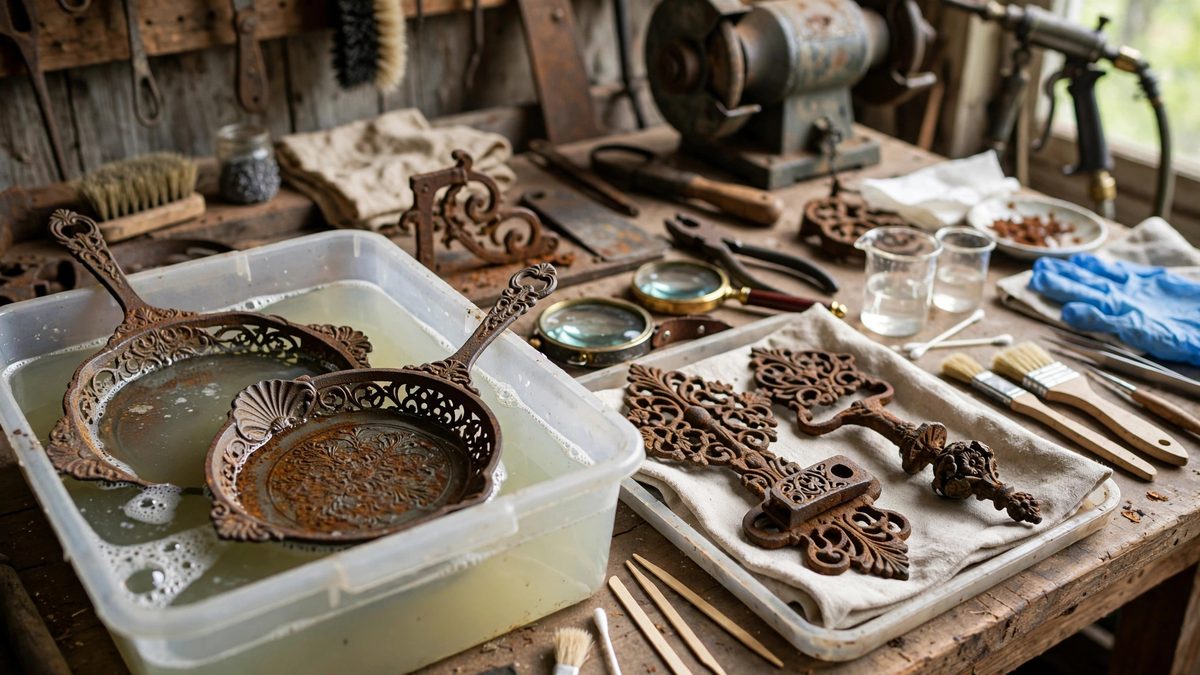
Delicate cast iron, thin-walled skillets, ornate hardware, antique tools with fine detail, rusts in ways that aggressive restoration destroys. Wire wheels and sandblasting erase the very detail you are trying to save. Chelating agent baths dissolve rust chemically while leaving sound metal alone, which makes them the gentlest effective rust removal available to the restorer.
How Chelation Removes Rust
Chelating agents are molecules that grab iron ions and hold them in solution. When rusted iron sits in the bath, the chelator selectively binds the iron in the rust layer and pulls it into the liquid, while the solid metallic iron underneath is largely unaffected because the chemistry favors the oxidized form. The process works at the molecular level, which means it reaches into pits, threads, and engraved detail that no wire brush can touch. It is slow, taking hours to days, but the slowness is the point: nothing is being abraded, so nothing is being lost except rust.
Setting Up the Bath
Mix the chelating solution per the product's directions in a non-metallic container large enough to submerge the piece fully. Plastic tubs work well; metal containers can interfere with the chemistry and get attacked themselves. The solution works at room temperature, though gentle warmth speeds it noticeably. Suspend the piece so all surfaces contact the solution, using plastic line or a plastic rack, because any spot resting against the container bottom gets less circulation. Cover the bath to slow evaporation, and keep it somewhere ventilated since long soaks can produce mild odors.
Timing and Monitoring
Check the piece periodically rather than leaving it indefinitely. Light surface rust may clear in a few hours; deep pitting can take a day or more. Pull the piece, rinse it, and inspect: the rust should be converting to a dark sludge that rinses away, revealing the metal beneath. If sound metal starts showing a darkened or etched appearance, the bath has done its job and the piece should come out. Over-soaking wastes solution and can eventually affect the base metal, so the goal is the minimum soak that removes the rust, not the maximum the schedule allows.
After the Bath
Rinse the piece thoroughly in clean water immediately after removal; dried chelator residue can interfere with finishes. Dry it fast and completely, because freshly derusted iron flash-rusts in minutes in humid air. Towel dry, then warm the piece gently or use compressed air to chase water out of pits and crevices. Apply the intended protection right away: oil, wax, or paint, depending on the piece's purpose. The window between clean metal and new rust is short, so have the next step ready before the piece comes out of the rinse.
What Chelation Cannot Do
Chelation removes rust; it does not restore lost metal. Deep pits remain pits, just clean ones, and a piece rusted thin stays thin. It also does not remove paint, grease, or old seasoning; degrease first so the solution contacts the rust directly. Heavy scale may need a first pass of mechanical removal to expose the rust beneath, but keep that pass gentle on delicate pieces. Know what the bath can and cannot fix before you start, and you will not be disappointed by honest chemistry.
For delicate cast iron, the chelating bath is patience in liquid form: submerge, wait, rinse, dry fast, protect immediately. The detail survives because nothing abrasive ever touched it, and the piece comes out showing its age without wearing its rust.
Related Guides
- Chelating Agent Baths for Delicate Rusted Iron Plating: Delicate ironwork (thin plated items, fine tools, ornamental pieces) presents a restoration dilemma: the rust must go, but every aggressive method
- Electrolyte Solution Ratios for Antique Steel Baths: Electrolysis (electrolytic rust removal) cleans antique steel tools by turning rust back into metal at the molecular level: the tool becomes the
- Microcrystalline Wax Sealing on Corroded Iron: Old iron tools, hardware, and artifacts arrive at the restorer's bench carrying centuries of corrosion, and after cleaning, the bare or partially
- Electrolytic Rust Removal Baths for Antique Planes: An antique plane body caked in decades of rust presents a dilemma: aggressive mechanical cleaning removes the rust but also the patina, the crisp
- Phosphoric Acid Pickling Baths for Heavily Rusted Casts: Heavily rusted cast iron, like old machinery parts, stove components, and tool bodies, can look like a lost cause. Phosphoric acid pickling dissolves