
Delicate ironwork (thin plated items, fine tools, ornamental pieces) presents a restoration dilemma: the rust must go, but every aggressive method (wire wheels, strong acids, electrolysis at high current) risks destroying the very detail you are trying to save. Chelating agent baths dissolve rust chemically and selectively, lifting iron oxide while leaving sound metal and even delicate plating largely untouched. For fragile pieces, chelation is often the only safe route.
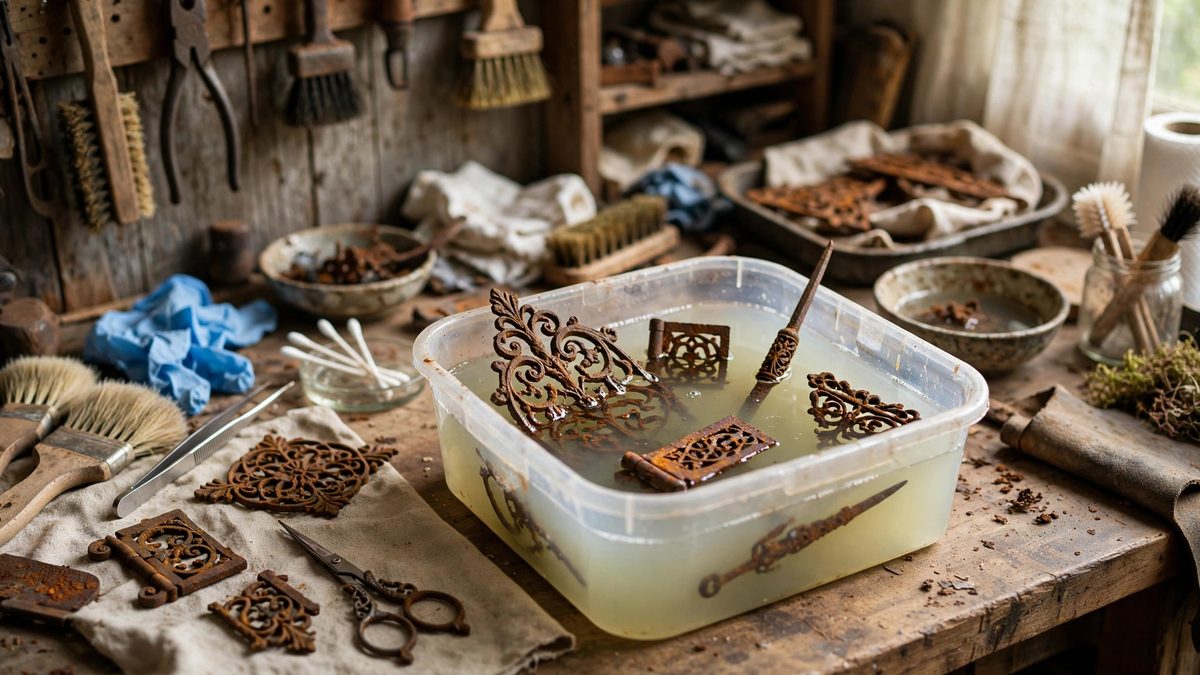
How Chelation Removes Rust
A chelating agent is a molecule that grabs metal ions and holds them in solution, like a claw. In a rust-removal bath, the chelator binds to the iron in iron oxide far more readily than to the iron in solid metal, so rust dissolves into the bath while the underlying steel remains. The process is slow and gentle: no hydrogen embrittlement risk the way strong acids pose, no pitting from aggressive current, no mechanical abrasion. The trade-off is time; a chelation bath works over hours or days, not minutes.
Choosing the Agent
The most accessible chelators for rust removal are citric acid (a mild chelator that also provides gentle acidity) and commercial chelating rust removers based on neutral-pH chelating chemistry. Citric acid baths (a few tablespoons per gallon of water) are cheap and effective for light to moderate rust, but the acidity can etch delicate surfaces if left too long, so they need monitoring. Neutral-pH chelating products are gentler on plating and patina and can be left longer with less risk, at higher cost. For pieces with surviving plating (nickel, tin, zinc), the neutral-pH route is strongly preferred.
Setting Up the Bath
Use a plastic container (never metal, which the bath will attack), sized so the piece is fully submerged with solution circulating around it. Mix per the product's directions or, for citric acid, to a mild concentration; stronger is not better here, because excess acidity attacks the good metal once the rust is gone. Warm solution (around 100 to 120 F) works noticeably faster than cold, so a bucket in a warm shop or a gentle aquarium heater shortens the soak. Suspend the piece on wire or plastic mesh so all surfaces see the solution; a piece resting on the container bottom cleans unevenly.
Monitoring the Process
Check the piece every few hours, lifting it out, rinsing, and inspecting. The rust converts to a dark sludge that wipes or brushes off; stubborn areas may need a soft brush (never steel wool on delicate plating) between soaks. The bath is exhausted when it stops working or turns deeply discolored; refresh it rather than extending the soak indefinitely in a dead bath. Stop when the rust is gone, not when the metal looks new; over-soaking in any chemical bath eventually finds the plating, and the goal is rust removal, not refinishing.
Rinsing and Neutralizing
After the final soak, rinse the piece thoroughly in clean water, then in a mild alkaline rinse (a baking soda solution) if you used an acidic chelator, to neutralize any residual acidity in pits and crevices. Dry immediately and completely: warm air, a heat gun on low, or a water-displacing oil, because freshly cleaned iron flash-rusts within minutes in humid air. The piece is never more vulnerable than in the hour after cleaning, so have your drying and protection plan ready before the bath, not after.
Protecting the Finished Piece
Seal the cleaned iron promptly with a conservation-grade wax (microcrystalline wax is the standard) or a light oil, worked into every pit and crevice. For display pieces kept indoors, wax alone suffices; for pieces that will see handling or humidity, a more robust coating may be warranted. Document the before and after with photos, and record what bath chemistry and soak time you used; restoration is a repeatable craft, and your notes are what make the next delicate piece less of a gamble.
Chelating baths reward patience: gentle chemistry, warm solution, regular checks, and prompt protection. For delicate rusted iron and plated pieces that no wheel or acid dare touch, chelation is the method that removes the rust and leaves the history intact.
Safety note: even mild chelating baths deserve gloves and eye protection, and acidic versions deserve ventilation. Keep all bath chemicals away from children and pets, label every container, and dispose of exhausted baths according to local regulations rather than pouring them down the drain.
Related Guides
- Chelating Agent Baths for Delicate Cast Iron Salvage: Delicate cast iron, thin-walled skillets, ornate hardware, antique tools with fine detail, rusts in ways that aggressive restoration destroys. Wire
- Phosphoric Acid Pickling Baths for Heavily Rusted Casts: Heavily rusted cast iron, like old machinery parts, stove components, and tool bodies, can look like a lost cause. Phosphoric acid pickling dissolves
- Electrolyte Solution Ratios for Antique Steel Baths: Electrolysis (electrolytic rust removal) cleans antique steel tools by turning rust back into metal at the molecular level: the tool becomes the
- Microcrystalline Wax Sealing on Corroded Iron: Old iron tools, hardware, and artifacts arrive at the restorer's bench carrying centuries of corrosion, and after cleaning, the bare or partially
- Electrolytic Rust Removal Baths for Antique Planes: An antique plane body caked in decades of rust presents a dilemma: aggressive mechanical cleaning removes the rust but also the patina, the crisp