
A bee smoker is a controlled smolder: fuel burns slowly in the combustion can, the bellows puffs air through it, and cool smoke comes out the spout. When a smoker will not stay lit, burns too hot, or pours out scorching smoke, the culprit is usually airflow, and airflow is set by the ventilation spacing between the inner combustion can and the outer body. Builders who understand the gap build smokers that behave.
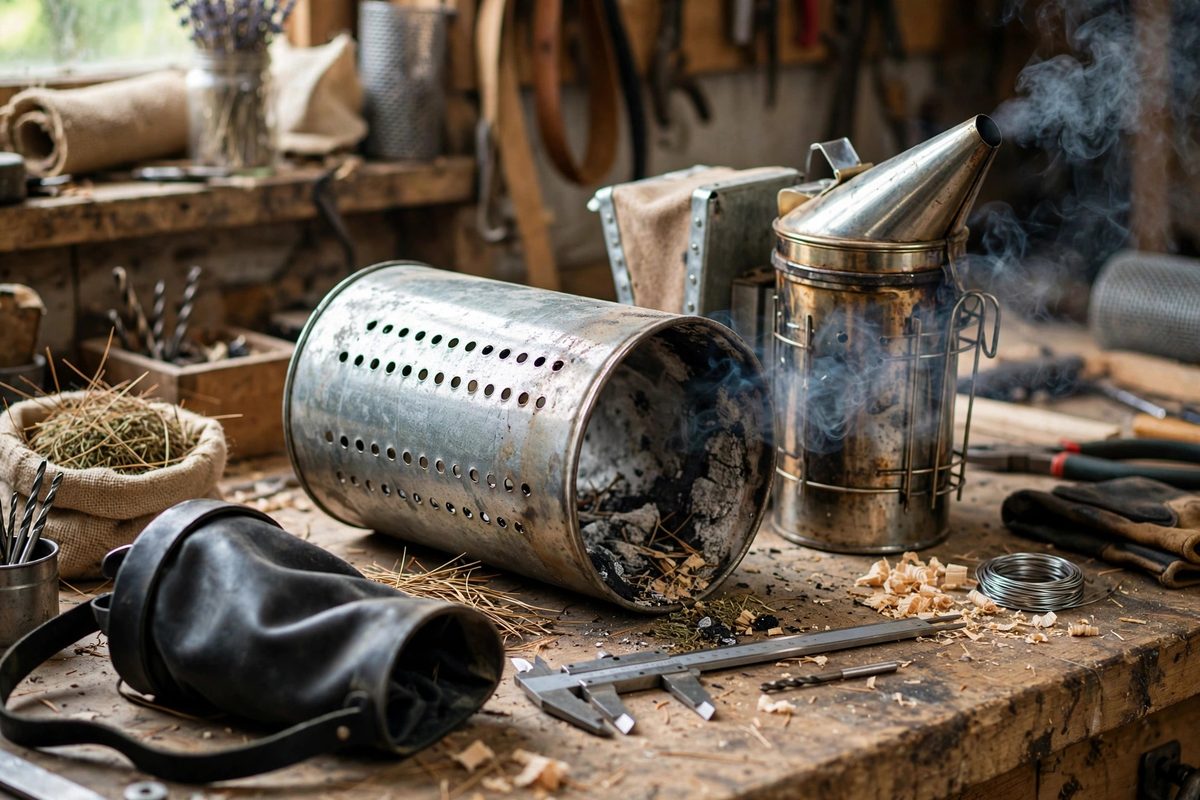
How the smoker breathes
Air from the bellows enters the bottom of the smoker body, rises through the gap between the outer body and the inner combustion can, and is drawn into the can's fire through its ventilation holes. Exhaust and smoke exit through the top spout. The annular gap between can and body is therefore the main air channel: it meters how much oxygen reaches the fuel and how much cooling air mixes with the smoke. Too wide a gap and air rushes past the fuel without feeding it; too narrow and the fire starves.
Sizing the gap
A practical gap between the combustion can and the outer body is roughly a quarter to three-eighths of an inch all around. This gives enough channel for bellows air to reach the fire while keeping the velocity high enough to actually push into the fuel bed. The gap must be reasonably uniform: a can that sits off-center creates a wide channel on one side and a pinched one on the other, so the fire burns unevenly and one side of the smoker runs hot. Centering tabs or a rolled rim on the can keeps it concentric. The bottom clearance matters too: the can should sit slightly above the body's floor so air can get underneath and up into the fire from below.
Ventilation holes in the can
The inner can needs its own holes to admit air to the fuel. A ring of holes near the can's bottom, roughly a quarter inch in diameter and spaced an inch or so apart, feeds the fire's base where combustion happens. Some builders add a second, sparser ring higher up; this is optional and mainly helps when the fuel bed is deep. Keep holes clear of ash and creosote buildup, which gradually choke them; a smoker that slowly gets harder to keep lit over a season is usually a smoker whose holes are closing up. A quick reaming with a wire restores the draft.
Fuel, heat, and smoke quality
Good ventilation produces cool, white smoke; poor ventilation produces either a dead smoker or hot, thin, acrid smoke. Pack fuel loosely enough that air moves through it: a jammed-full can smothers even with perfect gap spacing. Light from the top so the fire burns downward through the fuel bed, giving long, steady smoke. If smoke comes out hot enough to be uncomfortable on your hand at the spout, the fire is burning too fast: reduce bellows puffs, check that the gap is not oversized, and make sure the fuel is not packed with fine, fast-burning material.
Safety in building and use
The outer body gets hot in use; that is normal, but the builder should ensure handles and bellows mounts stay cool enough to grip, which proper gap spacing helps with by keeping the fire centered. Never use galvanized metal for the combustion can or anywhere in the hot zone: heated galvanized coatings release zinc fumes. Use plain steel or stainless. After use, empty the smoker completely and store it where a smoldering ember cannot start a fire; smokers have burned down sheds. A metal bucket with a lid is the safe parking spot.
Gap the can evenly, hole the bottom ring generously, pack the fuel loosely, and keep the zinc out of the fire. The smoker will light easily, burn cool, and stay lit.
Related Guides
- Direct Draft Grate Hole Patterns for Bee Smokers: A bee smoker lives or dies on its draft: the bellows must push air through the fuel chamber in a way that keeps the fuel smoldering evenly, without
- Direct Draft Grate Hole Patterns for Stainless Smokers: A bee smoker is a small furnace, and like any furnace it lives or dies on air management. The grate at the bottom of the fire chamber decides how
- Perforated Inner Shield Gaps for Heavy-Draft Smokers: A bee smoker is a simple machine: a firebox, a bellows, and a spout. But a smoker that burns too hot, produces harsh smoke, or dies mid-inspection is
- Bellows Leather Flapper Valve Airflow Jet Velocity: A bee smoker is a simple machine with one job: deliver a steady stream of cool smoke on demand. The bellows provides the air, the firebox provides