
A bee smoker is a small furnace, and like any furnace it lives or dies on air management. The grate at the bottom of the fire chamber decides how much oxygen reaches the fuel and how evenly it spreads. A badly drilled grate smokes for thirty seconds then dies; a well-patterned one burns steadily for an entire inspection. Stainless makes the job easier and harder at once: it lasts forever, but it is tough to drill.
Why Hole Pattern Matters More Than Hole Size
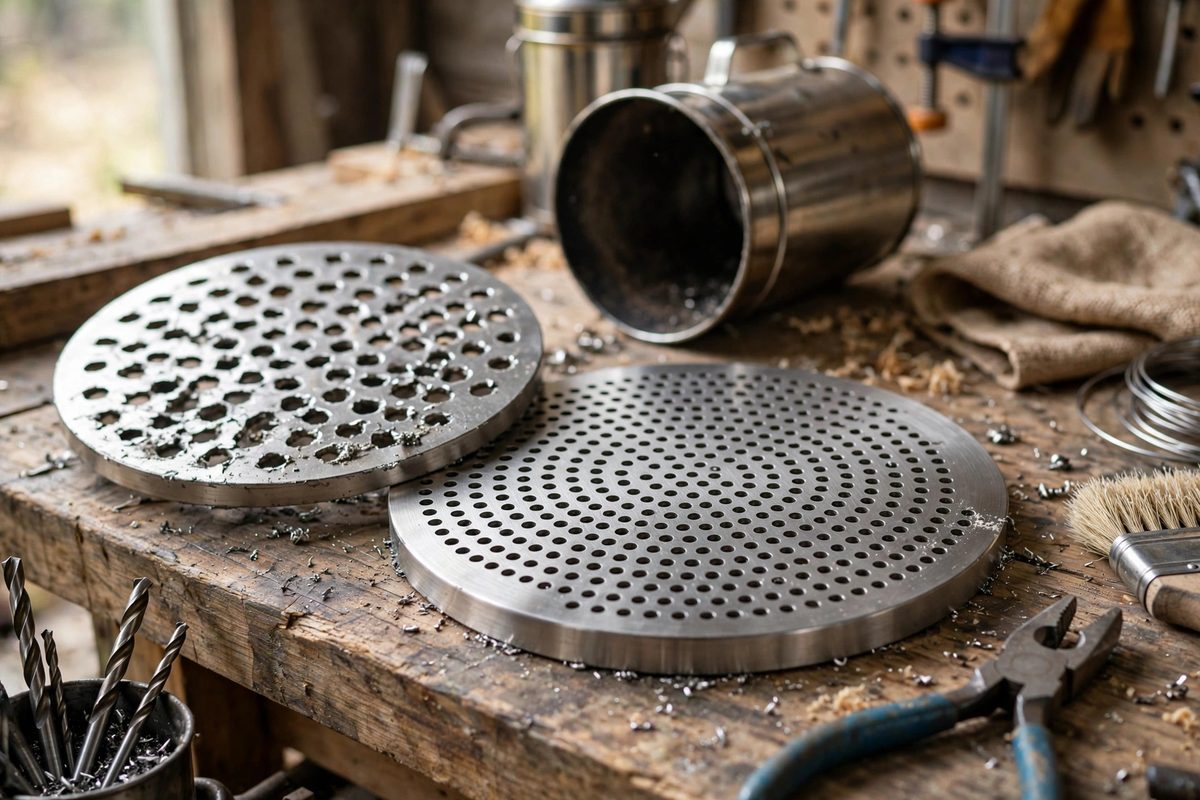
Air entering through a few large holes forms jets that burn hot spots into the fuel and leave dead zones elsewhere. Air entering through many smaller holes spreads evenly and feeds a uniform ember bed. The ideal is a field of evenly spaced holes across the whole grate, so the fuel above receives oxygen everywhere at once. Even distribution keeps the smoker lit with less puffing, which matters when you are juggling frames, a hive tool, and a cloud of curious bees. Uniform airflow also reduces the chance of embers dropping through, because the fuel sits on supported metal rather than spanning gaps.
Sizing the Holes
Holes in the range of roughly three sixteenths to a quarter inch hit the sweet spot for most smokers. Smaller than that, ash and fuel fines plug them within minutes of lighting. Larger than that, small embers fall through onto the bellows side, and the fuel bed loses support as it burns down. If you burn coarse fuel like pine needles and wood chips, the larger end of the range works fine. Fine fuel like compressed pellets or sawdust wants the smaller end. When in doubt, start smaller and enlarge a few holes later; you cannot undrill a hole.
Layout Geometry That Works
A staggered grid, like a honeycomb offset, packs the most holes into the grate while leaving enough metal between them to stay rigid. Space the holes about one and a half to two hole diameters apart, center to center. Drill from the top face down so any burr lands underneath where it will not snag fuel or scrape your fingers during cleaning. Keep a solid margin around the grate edge, roughly half an inch, so the rim stays strong where it seats against the fire chamber wall. A grate that warps under heat loses its seal and leaks air around the edges, defeating the whole pattern.
Drilling Stainless Without Suffering
Stainless work-hardens, which means a slow drill bit with too little pressure just polishes the surface and makes the next attempt harder. Use sharp cobalt bits, firm pressure, and a slow speed with cutting fluid or even soapy water. A center punch mark keeps the bit from walking. Drill in a single confident pass per hole rather than pecking at it; pecking multiplies work-hardening. Clamp the grate plate firmly to a backing board so vibration does not chatter the bit. Stainless punishes dull tools, so if you are drilling dozens of holes, expect to sharpen or replace the bit partway through and do not fight it with a dead one.
Air Entry Below the Grate
The grate is only half the draft system. Air must reach the underside of the grate from the bellows without bottling up. Keep the chamber below the grate clear and generously sized relative to the hole field, and make sure the bellows nozzle points at the grate underside rather than at the chamber wall. Test the draft with the smoker cold: squeeze the bellows and feel the airflow coming up through the grate with your palm. If you feel dead spots, the bellows entry is probably misaligned or the plenum is too shallow.
A smoker that breathes evenly through a well-patterned stainless grate will stay lit through the longest inspection and cool its embers safely afterward. Drill many small holes in a staggered field, feed them from a clear plenum, and the draft will take care of itself.
Related Guides
- Direct Draft Grate Hole Patterns for Bee Smokers: A bee smoker lives or dies on its draft: the bellows must push air through the fuel chamber in a way that keeps the fuel smoldering evenly, without
- Perforated Inner Shield Gaps for Heavy-Draft Smokers: A bee smoker is a simple machine: a firebox, a bellows, and a spout. But a smoker that burns too hot, produces harsh smoke, or dies mid-inspection is
- Combustion Can Ventilation Spacing in Bee Smokers: A bee smoker is a controlled smolder: fuel burns slowly in the combustion can, the bellows puffs air through it, and cool smoke comes out the spout
- Bellows Leather Flapper Valve Airflow Jet Velocity: A bee smoker is a simple machine with one job: deliver a steady stream of cool smoke on demand. The bellows provides the air, the firebox provides