
A bee smoker is a simple machine: a firebox, a bellows, and a spout. But a smoker that burns too hot, produces harsh smoke, or dies mid-inspection is usually suffering from an airflow problem, and the perforated inner shield, the metal liner inside the firebox, is where the airflow is managed. Its gaps set the draft, and the draft sets everything else.
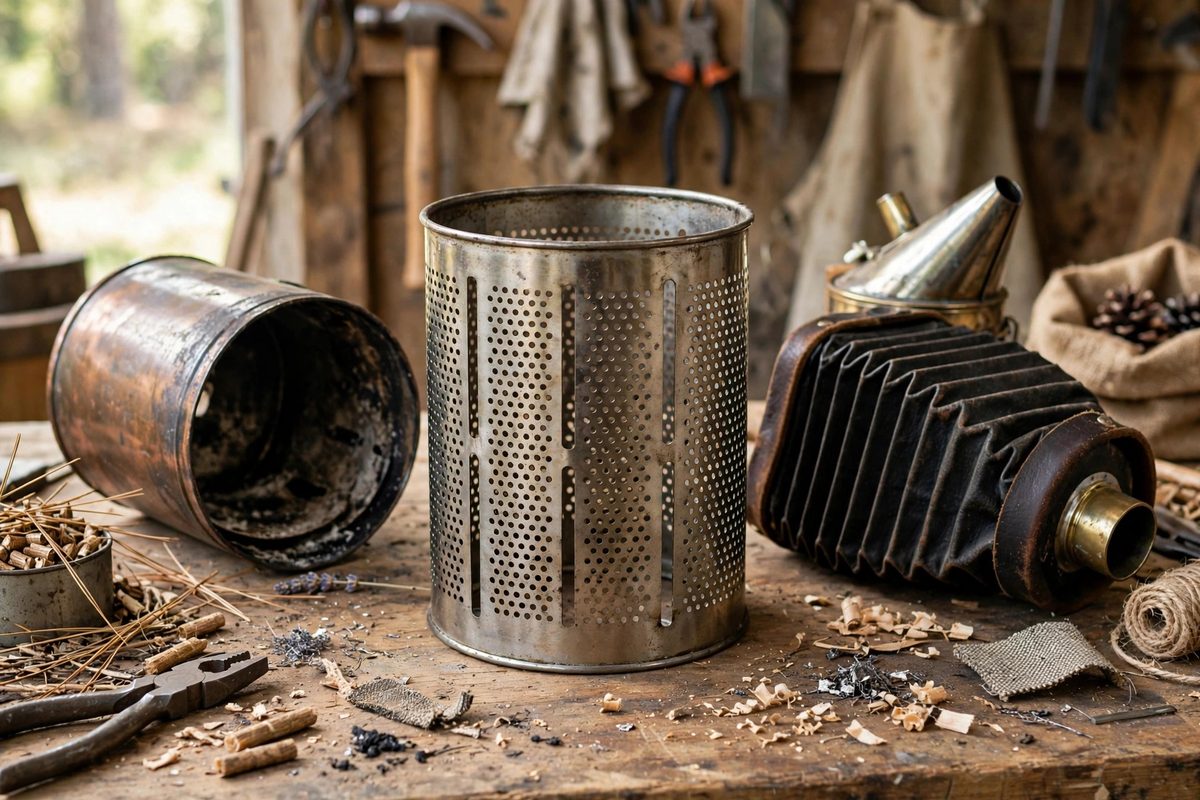
What the inner shield does
The inner shield sits inside the smoker's outer body, holding the fuel away from the walls and creating an air channel between the shield and the body. Air from the bellows enters below, flows up through this channel and through the shield's perforations, feeding the fuel evenly. Without the shield, fuel packs against the walls, airflow channels unevenly, and the smoker burns hot in spots and cold in others. The shield turns a pile of fuel into a controlled burn.
Perforation size and pattern
The perforations meter the air reaching the fuel. Holes too large let the bellows blast directly onto the fuel, producing a hot, fast burn and harsh smoke; holes too small starve the fire, and the smoker goes out when you need it. A pattern of modest holes, evenly distributed, gives the even burn that produces cool, white smoke. The pattern matters as much as the size: clustered perforations feed one area while starving another, so distribute them uniformly around the shield.
The gap between shield and body
The annular gap between the inner shield and the outer body is the main air passage, and its width sets the draft character. A narrow gap speeds the air up, giving a strong draft that burns fuel fast; a wider gap slows the air, giving a gentler, longer burn. For heavy-draft smokers, the ones with powerful bellows meant for large operations, the gap needs to be wide enough that the strong airflow does not turn the firebox into a forge. The gap and the perforations work together: size them as a system, not independently.
Fuel, draft, and smoke quality
The goal is cool, abundant, white smoke, which calms bees without harming them. Hot, thin, gray smoke agitates them and can singe wings. The draft controls this: a gentle, even airflow through the fuel produces the cool smoke, while a blasting draft produces heat. Pack the fuel loosely enough that air moves through it, not just around it; tightly packed fuel forces all the air through the shield gap and none through the fuel bed, which starves the burn. The smoker is a system of fuel, shield, and bellows, and the smoke quality reports on the whole system.
Building and fitting the shield
Make the shield from steel, not aluminum, which softens with heat, and perforate it before rolling; drilling or punching flat stock is far easier than working a cylinder. Roll it to fit the body with the designed gap, and make it removable for cleaning; creosote builds up on the shield and eventually blocks the perforations. A shield that cannot be removed cannot be maintained, and an unmaintained shield slowly strangles the smoker. Design for the cleaning from the start.
Operating technique
Even the best smoker needs proper lighting and tending. Light the fuel thoroughly before the inspection, pump the bellows a few times to establish the burn, and give the smoker a puff every few minutes during use to keep it alive. Store it safely between uses: a lit smoker is a fire risk, so keep it away from dry grass and never leave it unattended. The smoker is a tool with a live fire inside; respect it accordingly.
Size the perforations for even air, set the shield gap for a gentle draft, pack the fuel loosely, and keep the shield cleanable. The smoker will produce the cool, steady smoke that makes inspections calm for everyone, bees included.
Related Guides
- Direct Draft Grate Hole Patterns for Stainless Smokers: A bee smoker is a small furnace, and like any furnace it lives or dies on air management. The grate at the bottom of the fire chamber decides how
- Direct Draft Grate Hole Patterns for Bee Smokers: A bee smoker lives or dies on its draft: the bellows must push air through the fuel chamber in a way that keeps the fuel smoldering evenly, without
- Combustion Can Ventilation Spacing in Bee Smokers: A bee smoker is a controlled smolder: fuel burns slowly in the combustion can, the bellows puffs air through it, and cool smoke comes out the spout
- Bellows Leather Flapper Valve Airflow Jet Velocity: A bee smoker is a simple machine with one job: deliver a steady stream of cool smoke on demand. The bellows provides the air, the firebox provides