
Crackle dyeing produces the web of fine lines that makes batik-like fabric so compelling: dye seeps into tiny cracks in a resist layer, drawing a network of dark veins across the cloth. The beauty is in the crazing, but uncontrolled crazing is just a mess. Controlling the crack pattern is the craft.
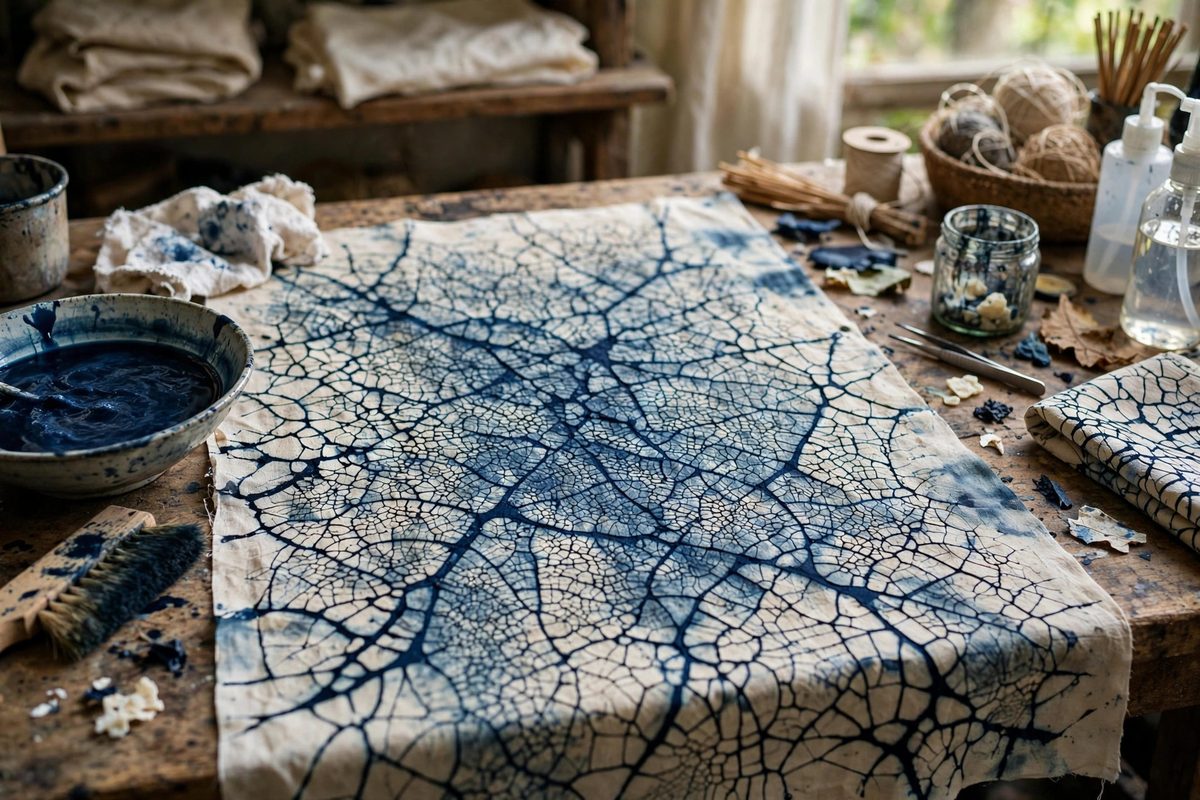
How the crackle forms
The technique starts with fabric coated in a brittle resist, traditionally wax, which is then crumpled or flexed to crack it. Dye applied over the cracked resist seeps into the cracks and reaches the fabric beneath, while the intact resist blocks the dye elsewhere. The crack network becomes the pattern. Every variable, the resist thickness, the fabric, the force of the crumpling, the dye's fluidity, shapes the final veins. Control means managing those variables deliberately instead of hoping.
Resist thickness and crack scale
Thicker resist layers crack into larger plates with wider gaps between them, producing bold, widely spaced veins. Thin resist shatters into fine networks of hairline cracks, giving delicate, dense crazing. Choose the thickness for the effect you want, and apply it evenly; uneven resist gives patchy crackle, with bold veins in one area and fine ones in another. Two thin coats often beat one thick one for evenness. Let the resist cool and harden fully before cracking; warm resist tears instead of cracking cleanly.
Crumpling technique
The crumpling is where the pattern is born. A gentle scrunch produces a few large cracks; vigorous, repeated crumpling produces a dense network. Crumple in stages and check the crack development between rounds, because you can always add more cracks but never remove them. Crumple the fabric in different directions for an even network; crumpling along one axis makes parallel cracks that read as stripes rather than crackle. For large pieces, work in sections so the crack density stays consistent across the whole cloth.
Dye application and penetration
Cold-water dyes for crackle work need to be fluid enough to wick into the fine cracks before the resist softens. Apply the dye generously and give it time to penetrate; a quick brush-over colors the surface but leaves the fine cracks pale. Multiple dye colors can be applied to different areas for a varied crackle, but keep the resists' integrity in mind: flooding one area can soften the resist and blur the cracks there. Work methodically from one area to the next, and resist the urge to overwork any spot.
Fixing and revealing the pattern
After the dye sets, the resist must be removed to reveal the crackle. Heat removal, ironing between absorbent paper, melts wax out cleanly; boiling works for some resists. Remove the resist thoroughly, because residual resist dulls the fabric and can interfere with washing. The moment of reveal is also the moment of truth: the crackle you see is the crackle you made, and studying it teaches you what to change next time. Photograph successful pieces with notes on the resist and crumpling used.
Safety with hot resist
Hot wax is the main hazard. Work with the wax at the lowest temperature that keeps it fluid, keep water away from the melting pot, and have a plan for spills. Work in a ventilated area, since heated wax produces fumes. These are ordinary precautions, but the casual, crafty atmosphere of dyeing makes them easy to skip. Treat the wax pot with the respect it deserves.
Control the resist thickness, crumple in deliberate stages, give the dye time to penetrate, and remove the resist cleanly. The crackle stops being an accident and becomes a technique, which is when the real design work begins.
Related Guides
- Wax-to-Resin Ratios for Fine Detail Crackle Batik: Crackle is the signature texture of batik: fine veins of dye that seep through deliberate cracks in the wax resist, creating the webbed, aged look
- Rosin Ratios for Brittle Crackle Lines in Rice Batik: Rice batik crackle is the network of fine dye lines that appears when a solid resist layer is intentionally fractured and the dye seeps into the
- Wax Resist Viscosity Formulas for Intricate Batik: Batik's fine lines and crisp detail depend on wax that flows exactly as intended: fluid enough to penetrate the cloth and leave a clean line, viscous
- Damar Resin Ratios for Elastic Wax Resist Formulas: Batik's signature crackle, the fine web of dye lines that veining across the fabric, comes from wax that cracks deliberately. But not every batik