
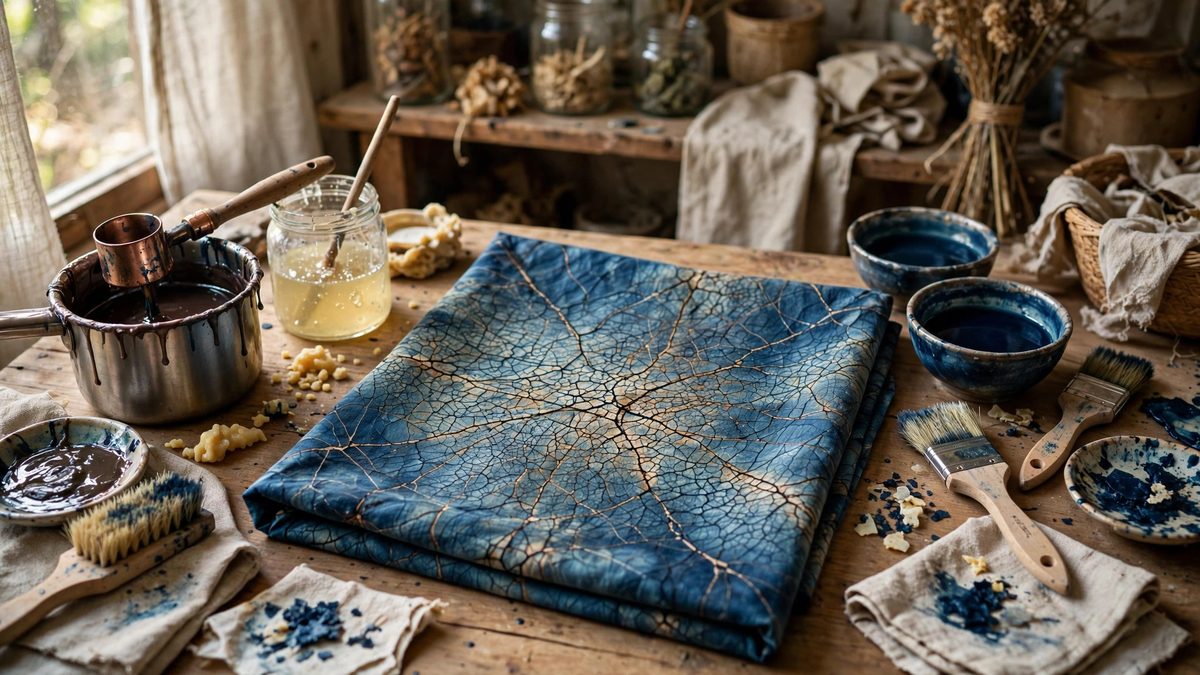
Crackle is the signature texture of batik: fine veins of dye that seep through deliberate cracks in the wax resist, creating the webbed, aged look that makes batik instantly recognizable. The crackle does not happen by accident, at least not the good kind. It is controlled by the wax mixture, specifically the ratio of wax to resin, which determines how the resist cracks: too little resin and the wax flakes off in chunks, too much and it barely cracks at all. For fine detail work, dialing in this ratio is everything.
What Wax and Resin Each Contribute
Traditional batik wax is a blend, most commonly beeswax and paraffin, sometimes with added resin (traditionally damar, a natural tree resin). The waxes provide the resist: they soak into the fabric and block the dye. Beeswax is pliable and adheres well but cracks little; paraffin is brittle and cracks readily but can flake off the fabric entirely. Resin acts as a modifier: it increases adhesion and flexibility, tuning where the blend falls on the spectrum between flaking and cracking. Think of the ratio as a dial: more resin moves toward tough, flexible, fine-crackle resist; less resin moves toward brittle, bold-crackle, flake-prone resist.
Why Fine Detail Needs a Different Ratio
Bold crackle on a large background is forgiving: big cracks, big veins, dramatic effect. Fine detail work, thin lines, small motifs, delicate outlines, needs the opposite: a resist that cracks in hairline veins without lifting off the fabric and without the cracks widening into gaps that flood with dye. If the resist flakes on fine detail, the detail is gone: a lifted flake exposes a patch of fabric that dyes solid, destroying the line. So fine detail wants a higher-resin blend that adheres tenaciously and cracks only in fine lines when deliberately crinkled. The crackle becomes texture within the design rather than a force that erases it.
Finding Your Ratio Through Testing
There is no single correct ratio because fabric, dye, temperature, and working style all interact. Start from a known baseline blend and adjust in small increments, testing each variation on scrap fabric with the same fine-detail motifs you plan to use. Apply the wax, let it cool fully, then crinkle deliberately: scrunch the waxed fabric to induce cracking, then dye and observe. You are looking for fine, even veining with no lifted flakes and no solid-dyed patches where resist failed. Keep notes on each test batch, because wax blending from memory is unreliable and the difference between good and great crackle is a small ratio shift. Test at your actual working temperature too, since wax behavior changes significantly with heat.
Application Temperature and Technique
The ratio sets the potential; temperature and technique realize it. Wax applied too hot penetrates deeply and bonds aggressively, which can suppress cracking; wax applied too cool sits on the surface and lifts easily. For fine detail, you want full penetration without overheating: the wax should soak through to the back of the fabric, ensuring the resist is complete, while staying workable for crisp lines from the canting tool or brush. Work in a consistent ambient temperature, because a cold studio makes any blend behave more brittle and a hot studio makes it gummy. The crackle step itself, the deliberate crinkling before dyeing, should be controlled: gentle, even flexing produces fine cracks, while aggressive scrunching produces the bold veins suited to backgrounds, not details.
Dye Bath Considerations
The dye bath interacts with the crackle. Hotter dye baths soften the wax and can widen cracks or lift marginal resist; cooler baths preserve fine detail but may dye more slowly. Time in the bath matters: the longer the fabric sits, the more dye seeps through the cracks, darkening the veining. For fine detail, shorter immersions with careful observation beat long soaks: you can always re-dip for darker crackle, but you cannot undye a flooded detail. Rinse and assess between dips, and remember that the crackle will look more subtle when the fabric is wet than when dry.
Wax Removal and Final Assessment
Remove the wax by boiling or ironing out, and assess the crackle only after the wax is fully gone and the fabric is dry: wet fabric hides the true contrast. Fine crackle should read as delicate veining integrated with the design, not as damage to it. If the detail survived crisp with subtle veining, your ratio is right; if flakes took out sections, increase resin; if there is no crackle at all, reduce it. Each piece teaches the next.
The wax-to-resin ratio is the hidden variable behind every great crackle batik. Blend deliberately, test on scraps, control temperature and crinkling, and dye with restraint. Fine detail crackle is not luck; it is chemistry tuned by a patient hand.
Related Guides
- Rosin Ratios for Brittle Crackle Lines in Rice Batik: Rice batik crackle is the network of fine dye lines that appears when a solid resist layer is intentionally fractured and the dye seeps into the
- Damar Resin Ratios for Elastic Wax Resist Formulas: Batik's signature crackle, the fine web of dye lines that veining across the fabric, comes from wax that cracks deliberately. But not every batik
- Wax Resist Viscosity Formulas for Intricate Batik: Batik's fine lines and crisp detail depend on wax that flows exactly as intended: fluid enough to penetrate the cloth and leave a clean line, viscous
- Controlling Crazing Patterns in Cold-Water Crackle Dyes: Crackle dyeing produces the web of fine lines that makes batik-like fabric so compelling: dye seeps into tiny cracks in a resist layer, drawing a