
Batik's fine lines and crisp detail depend on wax that flows exactly as intended: fluid enough to penetrate the cloth and leave a clean line, viscous enough not to spread beyond it. Viscosity is the control variable, and it is set by wax composition and temperature. Formulating and handling wax for intricate work is the technical foundation beneath batik's artistry.
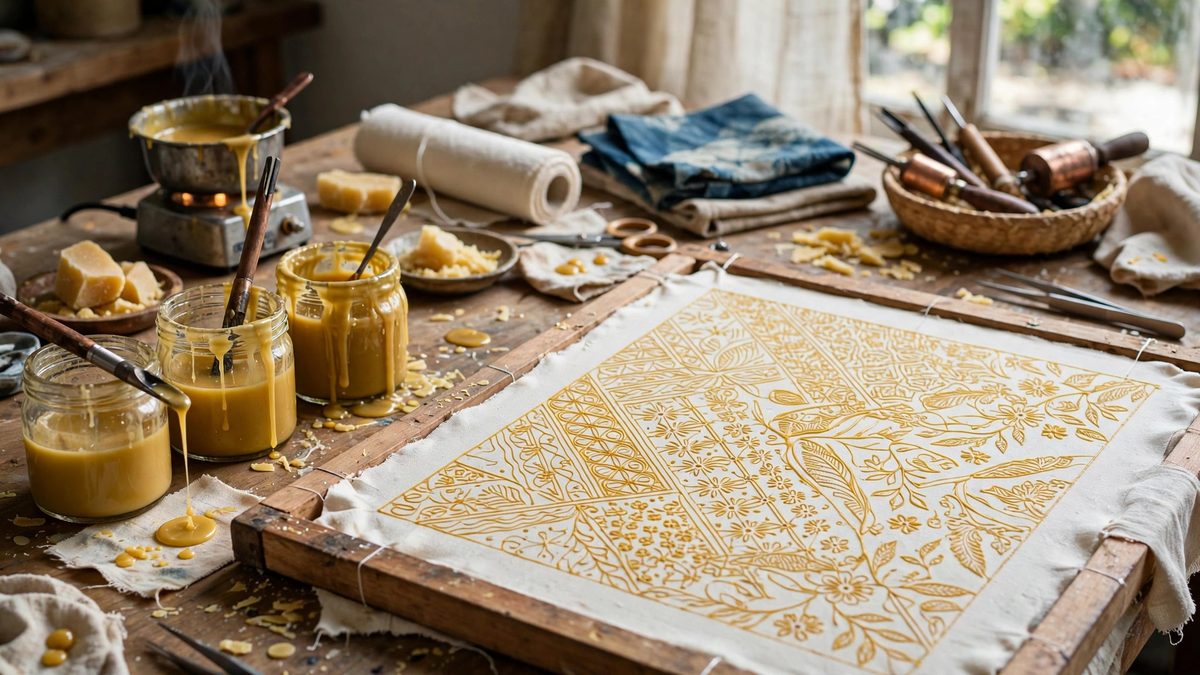
What the wax must do
Applied wax has two jobs: penetrate through the fabric so the resist works on both faces, and form a sharp-edged barrier that dye cannot cross. Penetration requires fluidity at application temperature; sharp edges require the wax to set quickly on contact rather than wicking outward through the fibers. These demands pull in opposite directions, and viscosity management is how they are reconciled.
Too thin and the wax bleeds, blurring fine lines into soft halos. Too thick and it sits on the surface, cracking off during dyeing and letting dye under the resist. The working window for intricate line work is narrow, which is why formulation and temperature control matter so much.
Wax types and their properties
Beeswax is pliable and adheres well but is relatively soft; lines drawn in pure beeswax resist cracking during handling, which suits work that will be manipulated. Paraffin is harder and more brittle, giving crisper lines but cracking readily, which is either a flaw or the source of the prized crackle effect, depending on intent. Most batik wax is a blend: beeswax for adhesion and flexibility, paraffin for crispness, in proportions tuned to the work.
A common starting blend for fine line work leans toward beeswax for penetration and adhesion, with enough paraffin to sharpen the line. For crackle effects, the ratio reverses. There is no universal formula; the blend is tuned to the cloth, the tool, and the desired line quality, then kept consistent for the project.
Temperature: the live control
Wax viscosity drops steeply with temperature, making heat the real-time viscosity control. The wax pot should hold the blend at a steady temperature where it flows freely from the tjanting but sets within a second or two on the cloth. Too cool and the wax drags, leaving broken lines; too hot and it floods, and scorched wax discolors and penetrates too aggressively.
Use a temperature-controlled pot or a careful double-boiler setup, and test on scrap cloth before touching the piece. The test line should be continuous, even in width, with clean edges and full penetration visible on the reverse. Adjust temperature in small increments; a few degrees make a visible difference in line quality.
Tools and line quality
The tjanting, the spouted copper pen, meters wax flow by spout size and pouring angle. Fine spouts for intricate lines demand well-tuned viscosity: the wax must flow steadily without dripping or starving. Keep the tjanting at a consistent angle and speed; hesitation pools wax, rushing starves the line. Brushes suit broad areas and deliberately textured resists, where viscosity matters less than coverage.
Match the tool to the wax: a fine tjanting with too-viscous wax is an exercise in frustration, while a broad brush forgives viscosity sins. Set the blend and temperature for the finest tool in use, since it is the most demanding.
Crackle control and dyeing
Crackle, the fine veining of dye through cracked wax, is controlled by wax brittleness and handling. More paraffin and cooler application produce more crackle; beeswax-rich blends and gentle handling minimize it. Decide before dyeing whether the piece wants crackle, and formulate and handle accordingly, because accidental crackle on a piece designed for clean lines is a defect, not a feature.
During dyeing, keep temperatures moderate; hot dye baths soften wax and blur lines. Multiple dye immersions deepen color but stress the resist each time, so plan the dye sequence to minimize re-immersion of finely waxed areas. Remove wax by boiling out or ironing between absorbent paper, and expect the final lines to reveal exactly what the viscosity discipline achieved.
Intricate batik is viscosity engineering in service of art: a tuned beeswax-paraffin blend, steady temperature, the right tool for the line, penetration verified on the reverse, and crackle as a choice rather than an accident. Control the flow and the lines will be crisp.
Related Guides
- Damar Resin Ratios for Elastic Wax Resist Formulas: Batik's signature crackle, the fine web of dye lines that veining across the fabric, comes from wax that cracks deliberately. But not every batik
- Wax-to-Resin Ratios for Fine Detail Crackle Batik: Crackle is the signature texture of batik: fine veins of dye that seep through deliberate cracks in the wax resist, creating the webbed, aged look
- Rosin Ratios for Brittle Crackle Lines in Rice Batik: Rice batik crackle is the network of fine dye lines that appears when a solid resist layer is intentionally fractured and the dye seeps into the
- Controlling Crazing Patterns in Cold-Water Crackle Dyes: Crackle dyeing produces the web of fine lines that makes batik-like fabric so compelling: dye seeps into tiny cracks in a resist layer, drawing a