
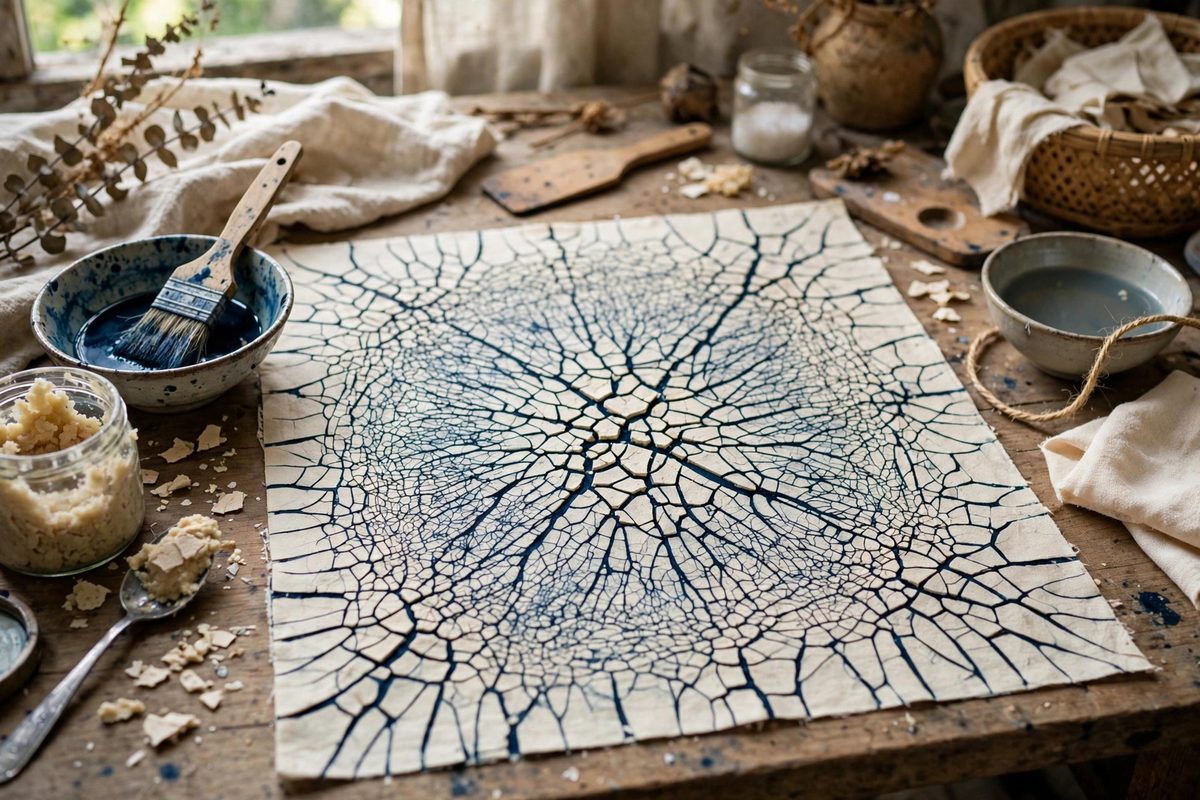
Rice batik crackle is the network of fine dye lines that appears when a solid resist layer is intentionally fractured and the dye seeps into the cracks. In traditional rice-paste batik, the resist is usually a cooked rice or cassava flour paste, sometimes blended with rosin (colophony) from pine trees to make the dried layer brittle enough to crack on demand. Getting the crackle right comes down to the rosin ratio: too little and the paste stays rubbery and cracks poorly, too much and the layer shatters, crumbles off the cloth, and floods with dye. This article covers practical rosin ratios and how they control crackle behavior.
Why rosin makes rice paste crackle
Cooked rice paste dries into a tough, flexible film because its starch molecules form an interlinked gel. That flexibility is great for painting freehand lines that must survive multiple dye dips, but it resists the deliberate cracking that gives crackle batik its character. Rosin is a natural hardener: when powdered rosin is stirred into hot paste, it disrupts the starch network and makes the dried film rigid and brittle. A brittle film cannot flex when the cloth is folded or crumpled, so it fractures into fine random cracks. Dye wicks into those cracks by capillary action, producing the signature fine veined lines after the resist is washed out.
Starting ratios that work
A reliable starting point is one part powdered rosin to four parts dry rice flour by weight (roughly 20 percent rosin), with the paste cooked to a smooth, paintable consistency. At this ratio the dried layer is hard enough to crack when the cloth is scrunched, but adherent enough to stay on the fabric through a normal dye bath. For finer, denser crackle lines, push toward one part rosin to three parts flour (about 25 percent). Past roughly one part in three the film becomes chalky, flakes off the cloth at the first touch, and you lose the design entirely, so treat 25 percent as a practical ceiling.
Adjusting for your paste and cloth
Rosin ratio is only half the story. Thicker cloth wicks paste deeper into its fibers and anchors the resist better, so heavier cotton can tolerate a slightly higher rosin percentage than fine cambric. Paste thickness matters too: a thin skim coat needs less rosin to crack than a thick painted layer, because the thin layer has less internal starch structure to resist fracture. If your first test cracks weakly, raise the rosin by a tablespoon per cup of paste at a time rather than jumping to a whole new formula. Keep notes, because humidity changes everything: a layer dried in a damp room stays leathery and cracks less, while fast dry heat can pre-crack the film before you ever touch it.
Cracking technique controls line character
How you fracture the layer matters as much as the recipe. For classic fine veining, fold the cloth accordion-style and press the folds firmly; the sharp creases produce continuous crack lines that dye into long unbroken veins. For a more random, all-over crackle, ball the cloth up loosely in your hands and work it around, which creates shorter, denser fractures. Harder pressing opens wider cracks that take more dye and read as darker lines. Time matters: crack just before dyeing, because a fractured layer left sitting will lift and curl away from the cloth, and those lifted flakes let dye flood underneath instead of staying in the cracks.
Dye bath behavior and color choice
Crackle lines always print as the color of the dye bath applied after cracking, so choose that layer deliberately. Dark, saturated baths produce the most dramatic veining; pale baths give a subtle tone-on-tone crackle. The resist layer itself slows dye penetration into the covered areas, which is why a crackle layer works best as the final or a late dye step: dyeing over a heavily cracked layer with a second bath will darken the whole piece unevenly as dye migrates through the cracks. Work quickly once the cracked cloth goes into the bath, and keep bath agitation gentle so the fractured film does not dislodge.
Troubleshooting common failures
Cracks that take no dye usually mean the bath was too cool or the dwell too short; natural dyes and fiber-reactives both need time to wick into hairline fractures. Solid dark blotches instead of fine lines mean the resist lifted in sheets: reduce rosin, increase paste thickness slightly, or handle the cloth less after cracking. If the crackle appears only at the edges, the center was probably too thick or dried too slowly. And if the whole layer pops off at the first fold, the rosin has gone past the brittle point; rebuild the batch with plain paste and blend down.
Dial in a ratio on test swatches, log what each variation produced, and that recipe becomes a repeatable tool. Crackle batik rewards a maker's patience: small controlled changes, observed results, and a notebook that turns luck into technique.
Related Guides
- Wax-to-Resin Ratios for Fine Detail Crackle Batik: Crackle is the signature texture of batik: fine veins of dye that seep through deliberate cracks in the wax resist, creating the webbed, aged look
- Wax Resist Viscosity Formulas for Intricate Batik: Batik's fine lines and crisp detail depend on wax that flows exactly as intended: fluid enough to penetrate the cloth and leave a clean line, viscous
- Controlling Crazing Patterns in Cold-Water Crackle Dyes: Crackle dyeing produces the web of fine lines that makes batik-like fabric so compelling: dye seeps into tiny cracks in a resist layer, drawing a
- Damar Resin Ratios for Elastic Wax Resist Formulas: Batik's signature crackle, the fine web of dye lines that veining across the fabric, comes from wax that cracks deliberately. But not every batik