
A marionette control bar (the cross-shaped handle the puppeteer holds) is the puppet's entire nervous system: every cord runs from a body part up to a specific point on the bar, and the bar's geometry determines what movements are possible. A twelve-cord rigging on a cross-bar with a tilting rocker section gives independent control of the major joints while keeping the bar compact enough to actually handle. The rigging layout is the design; everything else is woodworking.
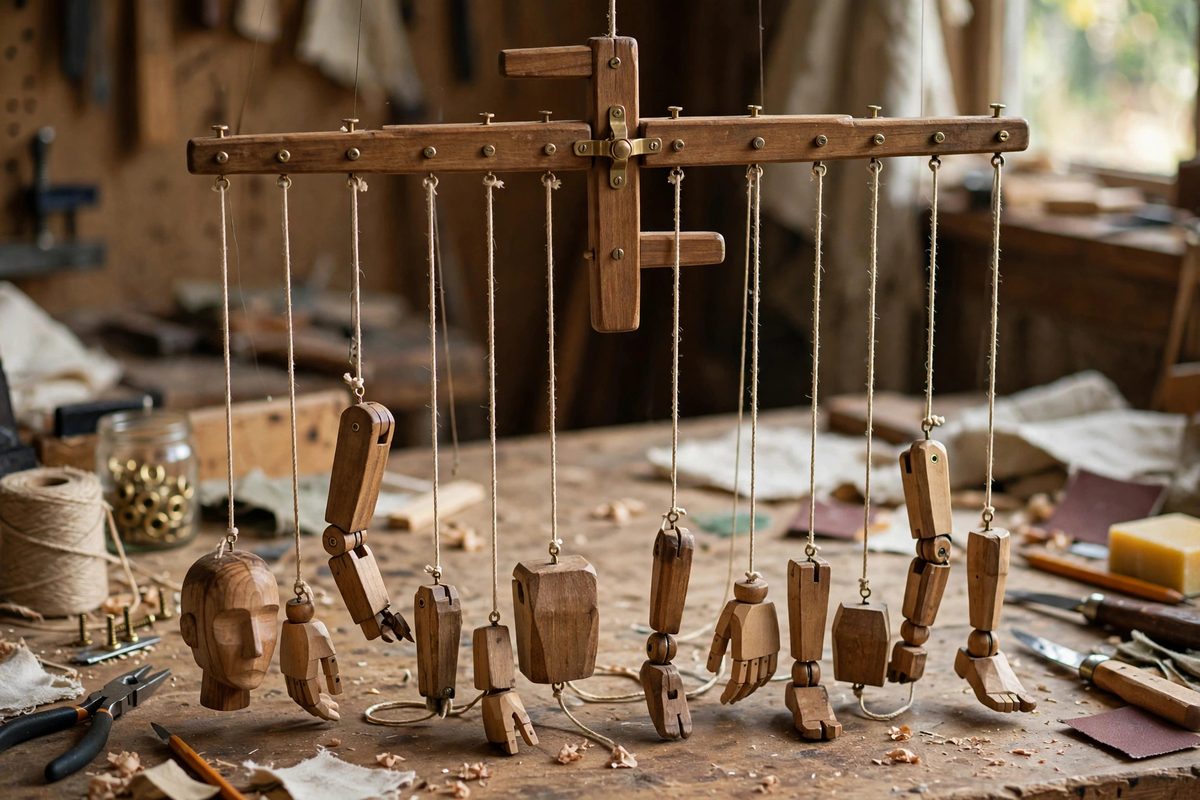
The Standard Twelve Cords
A twelve-cord marionette typically runs: head (1), shoulders or back (1), each hand (2), each elbow (2), each knee (2), each foot or ankle (2), and the waist or pelvis (2). That accounts for all twelve. The head and back cords carry the puppet's weight and set its posture; the limb cords drive the motion. Before drilling a single hole in the control bar, decide exactly which cord goes where, because the bar's geometry must match the puppet's anatomy: hand cords over the hands' rest position, knee cords over the knees, and so on.
Cross-Bar Layout
The classic control is a cross: a long fore-aft bar with a shorter crossbar near the front. The back and head cords attach along the main bar, the hand cords at the crossbar ends, and the leg cords along the main bar behind the crossbar. Space the attachment points so the cords hang vertically when the puppet stands in neutral pose; cords that angle inward or outward at rest will pull the puppet off balance with every move. Drill the cord holes slightly oversize and smooth, since cords saw at the holes during performance and rough edges fray them.
The Tilting Rocker Section
The rocker is a pivoted section of the control bar (usually the front crossbar or a dedicated rocker bar) that tilts side to side, driving paired cords differentially: tilt left and the left cord shortens while the right cord lengthens. This is how you get the puppet to shift weight, lean, or take a step without moving the whole bar. Mount the rocker on a smooth pivot (a bolt with washers, or a proper bearing for a performance puppet) with enough travel for expressive motion but with stops that prevent over-rotation. The rocker typically carries the leg or arm pairs, where differential motion reads most naturally.
Cord Lengths and Tuning
Cord length sets the puppet's rest posture and its range of motion. Rig the puppet hanging from the bar with all cords just taut in neutral pose, then adjust: lengthening a cord lets that part droop, shortening it lifts. Tune in this order: weight-bearing cords first (head, back) to set posture, then leg cords for stance, then arm cords. Leave a little extra length on every cord during initial rigging; you can always shorten, but lengthening means retying. Mark each cord's bar position with a dab of paint once tuned, because a twelve-cord rigging unmarked is a puzzle nobody wants to solve twice.
Cord Material and Attachment
Use low-stretch cord (braided nylon or Dacron fishing line in appropriate weight); stretchy cord turns precise bar movements into mush. Attach cords to the puppet with secure knots backed by a drop of glue, and to the bar with adjustable hitches (a clove hitch or a simple loop through the hole with a stopper knot) so tuning stays possible. Keep the cords untangled during storage by hanging the rigged puppet from its bar; a marionette stored in a box becomes a twelve-cord knot that takes longer to untie than the puppet took to build.
Playing the Bar
The bar is played with both hands: one hand holds the main bar for gross movement (walking the puppet across the stage, turning it), while the other works the rocker and individual cords for expression. Practice the basic vocabulary first: the rocker's side-to-side for weight shifts, a gentle bounce of the whole bar for walking rhythm, individual finger plucks of cords for gestures. Twelve cords sound like a lot until the bar is in your hands; then they feel like exactly enough, which is why the twelve-cord standard has survived.
A well-rigged twelve-cord cross-bar with a tilting rocker turns wood and string into a performer. Lay out the cords to match the anatomy, tune lengths in order, use cord that does not stretch, and practice until the bar disappears from your attention; when the puppeteer forgets the bar, the audience forgets the strings.
Related Guides
- Tilting Head Rocker Rigging for Twelve-String Puppets: A marionette's head needs to nod, tilt, and turn convincingly, and the rocker mechanism inside the head is what makes that possible. A tilting head
- Cross Bar Rocker String Ratios for Marionette Knees: A marionette that walks convincingly does it with its knees, and the knees work because of string geometry at the control. The cross bar rocker, the
- Airplane Control Bar Geometry for Puppet Struts: A marionette's control bar, the wooden handle the puppeteer holds, is the instrument through which every movement passes. Its geometry, the length of
- Nine Hole Control Perch String Balancing for Puppets: The airplane control, a flat bar with nine holes held above the marionette, is the puppeteer's cockpit: every string runs from the puppet up through