
A tall timber planter is a box full of wet soil, and wet soil pushes outward with surprising force. The long sides bow, the corners strain, and eventually the planter spreads into a sad parallelogram. Cross-tie tension rods, steel rods spanning the planter's width, hold the sides together, and their spacing determines whether the planter stays square or slowly surrenders.
The outward force
Soil behaves partly like a fluid: it exerts lateral pressure on the planter walls, greatest at the bottom and increasing with the planter's height and the soil's wetness. A tall planter, anything much over two feet, generates enough pressure to bow timber sides visibly. The pressure is also dynamic: watering saturates the soil and spikes the load, then it eases as the soil drains. The tension rods must handle the peak load, not the average, because the peaks are when planters fail.
How the rods work
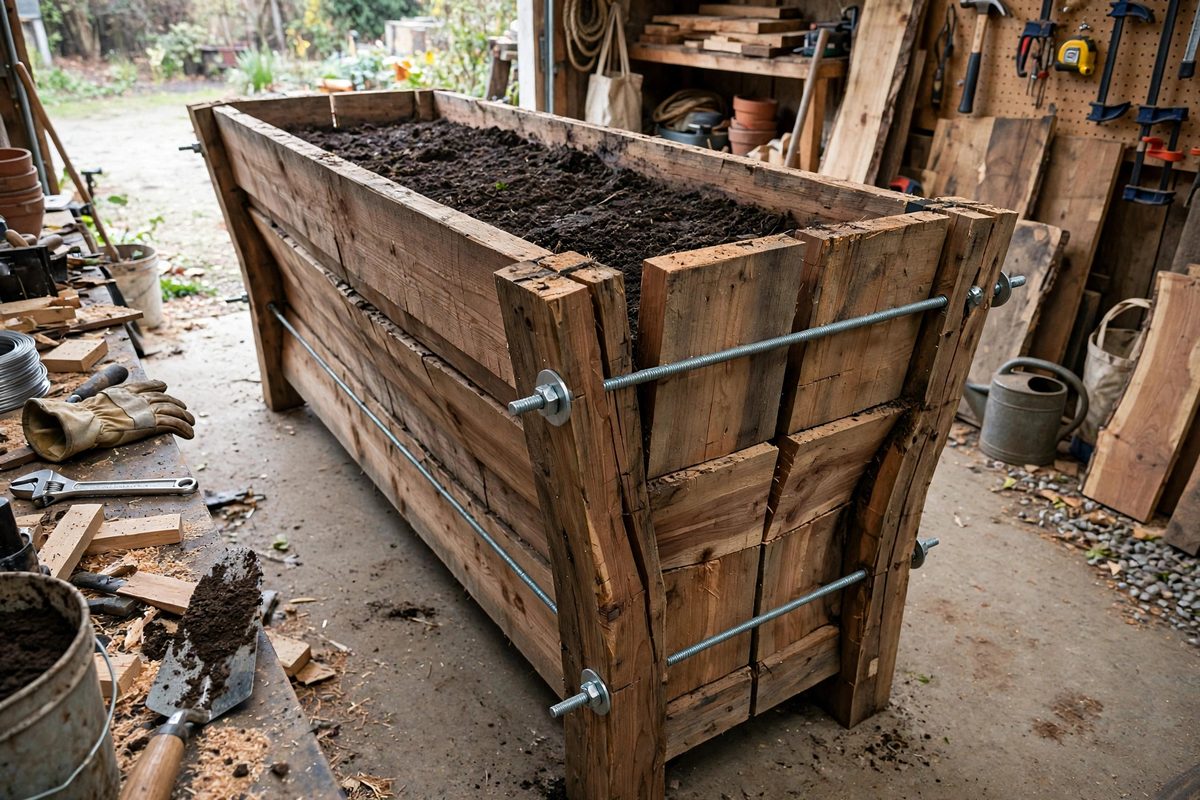
A tension rod spans the planter from one long side to the other, anchored with washers and nuts on the outside. When the soil pushes the sides apart, the rod goes into tension and holds them. The rod does not prevent the pressure; it gives the pressure something to pull against. Multiple rods divide the load: each rod carries the pressure of the wall area nearest to it. The spacing sets how much wall area each rod is responsible for, which is why closer spacing means less load per rod and less bowing between rods.
Spacing guidelines
Space the rods so no unsupported wall section is long enough to bow significantly. As a working rule, place rods every two to three feet along the planter's length, with the first and last rods near the ends where the corners need support. Taller planters need closer spacing, because the pressure is higher; a three-foot-tall planter wants tighter rod spacing than an eighteen-inch one. Also consider rod height: a single rod at mid-height handles moderate planters, but tall planters benefit from two rods at different heights, sharing the pressure profile. The spacing is a judgment call informed by the height, the timber size, and the soil depth.
Rod sizing and hardware
The rods must be strong enough for the tension they will carry. Threaded steel rod in a modest diameter handles typical planter loads with a large safety margin; the failure point is rarely the rod itself but the anchoring. Use large washers or plates on the outside to spread the load across the timber; a nut bearing on a small washer will crush into the wood over time. Galvanized or stainless hardware resists the damp soil environment; plain steel rusts and eventually fails. The hardware is a small cost; make it the right cost.
Installation details
Drill the rod holes straight and level so the rods pull squarely; an angled rod loads the timber unevenly. Install the rods before filling with soil, tensioning them just snug, not guitar-string tight; overtightening bows the sides inward, which the soil will then push back out, working the timber needlessly. As the planter settles and the soil compacts, recheck the tension seasonally and snug up what has loosened. The rods are adjustable, and adjusting them is maintenance, not failure.
Timber and corner construction
The rods supplement, not replace, sound timber construction. Use substantial timbers for the sides, join the corners with real joinery or robust hardware, and consider that the end walls need support too; short end walls can often manage without rods, but long ones cannot. A well-built planter with properly spaced tension rods will outlast its soil many times over. Build it once, build it right.
Space the rods every few feet and at the right heights, anchor them with real hardware, tension them snug, and build the timber box to deserve them. The tall planter will hold its soil squarely, season after season.
Related Guides
- Threaded Tension Rod Spacing for Multi-Tier Planters: A multi-tier planter is a stack of growing beds held apart by structure, and wet soil is heavy: a single tier of damp growing medium can weigh
- Internal Tie Rod Anchor Sizing for Multi-Tier Beds: Soil pushes outward. Every raised bed, and especially every tier stacked on another, carries lateral pressure that wants to bow the walls outward and
- Corner Post Cable Tension in Long Timber Garden Beds: A long raised bed built from timbers looks indestructible on day one, but soil is heavy and patient: a cubic yard of wet garden soil weighs over a
- Build a 4x8 Raised Garden Bed: Start Growing Your Own Food! A raised garden bed is one of the best weekend projects you can tackle. It gives you better soil drainage, easier weed
- Corrugated Galvanized Wall Bracing for Raised Beds: Corrugated galvanized steel makes beautiful raised beds: crisp lines, excellent longevity, and a modern look that wood cannot match. But a tall bed