
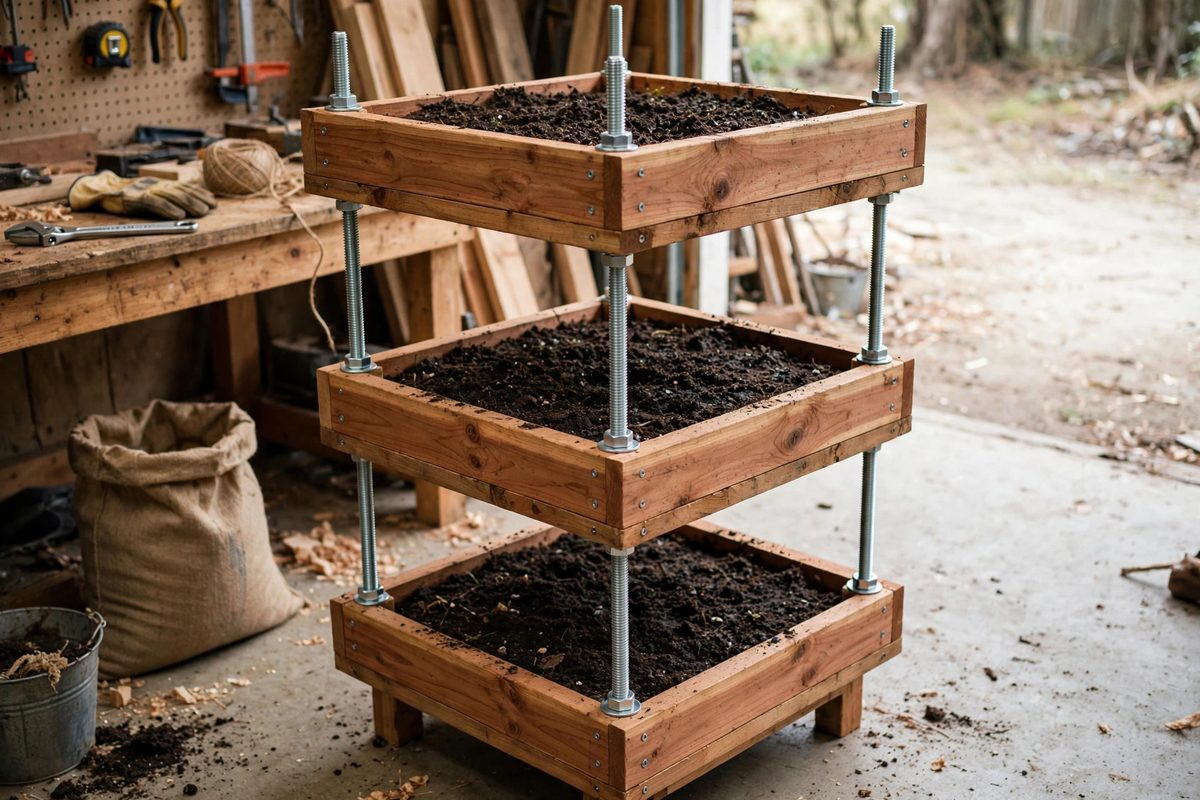
A multi-tier planter is a stack of growing beds held apart by structure, and wet soil is heavy: a single tier of damp growing medium can weigh several hundred pounds. Threaded tension rods running vertically through the tiers tie the whole stack together, keeping the tiers from shifting, spreading, or walking apart as the soil settles and swells. Rod spacing is the structural decision that determines whether the planter stands rigid for years or slowly racks itself into a parallelogram.
What the Rods Are Doing
Each tier of a planter wants to do two things: bow outward under the lateral pressure of wet soil, and shift sideways as the stack settles unevenly. Vertical threaded rods with nuts and washers above and below each tier clamp the tiers between compression, turning a stack of boxes into a single rigid column. The rods are in tension; the tiers are in compression. Spacing the rods correctly means no point on any tier is far enough from a rod to bow or walk.
Spacing Rules of Thumb
Place rods at every corner of each tier, and add intermediate rods along any side longer than about 3 feet, spacing them roughly 24 to 30 inches apart. This keeps the unsupported span of each tier wall short enough that wet soil cannot bow it visibly. For round or hexagonal tiers, space rods evenly around the perimeter at similar intervals. The rods should pass through all tiers from the base to the top cap, with the top tier capped by a washer and nut that gets retightened seasonally as the wood shrinks and the soil settles.
Rod Diameter and Material
Half-inch threaded rod is the workhorse size for planters up to about 4 feet tall; it is stiff enough to resist the tension loads with margin, and the hardware is cheap and ubiquitous. Galvanized or stainless rod resists the constant moisture; plain zinc-plated rod will rust and stain within a season or two of wet soil contact. Use large fender washers (at least 1.5 inch diameter) under every nut to spread the clamping load across the wood, because a standard washer will crush into soft, wet lumber and lose tension. Double-nut the top of each rod or use a lock nut so vibration and freeze-thaw cycles cannot back the nuts off.
Protecting the Wood at Penetrations
Every rod passes through every tier, and every penetration is a water entry point. Drill the holes slightly oversize, seal the hole walls with a dab of exterior wood glue or sealant before inserting the rod, and make sure the fender washers bed down on flat, solid wood, not on end grain or a knot. Where a rod passes through a tier's soil zone rather than its frame, sleeve it in a short length of PVC pipe so wet soil never sits directly against the threads; this also lets you remove and replace a rod years later without fighting corrosion.
Base and Foundation
The rod system is only as good as what it stands on. Set the bottom tier on a level, well-drained foundation: compacted gravel, pavers, or pressure-treated skids, not bare soil that will settle unevenly and twist the stack. Anchor the base tier against sliding with stakes or brackets if the planter sits on a slope or in a windy spot. A tall multi-tier planter is a sail when the upper tiers are full of leafy plants; the rods handle the vertical clamping, but the foundation handles the overturning.
Seasonal Maintenance
Check rod tension every spring and after any major storm. Wood shrinks as it dries and swells when wet, so nuts that were tight in April may be loose by August; a quarter turn with a wrench restores the clamping. Inspect washers for crushing and replace any that have sunk into the wood with larger ones. A five-minute seasonal check keeps a rod-tied planter rigid indefinitely, while a neglected one loosens, racks, and eventually needs rebuilding.
Threaded tension rods turn a stack of heavy soil boxes into one coherent structure. Corner rods plus intermediates every couple of feet, half-inch galvanized or stainless rod, big fender washers, sealed penetrations, and a level foundation: build to that formula and the planter will outlast the lumber it is made from.
Related Guides
- Cross-Tie Tension Rod Spacing for Tall Timber Planters: A tall timber planter is a box full of wet soil, and wet soil pushes outward with surprising force. The long sides bow, the corners strain, and
- Internal Tie Rod Anchor Sizing for Multi-Tier Beds: Soil pushes outward. Every raised bed, and especially every tier stacked on another, carries lateral pressure that wants to bow the walls outward and
- Corner Post Cable Tension in Long Timber Garden Beds: A long raised bed built from timbers looks indestructible on day one, but soil is heavy and patient: a cubic yard of wet garden soil weighs over a
- Build a 4x8 Raised Garden Bed: Start Growing Your Own Food! A raised garden bed is one of the best weekend projects you can tackle. It gives you better soil drainage, easier weed
- Corrugated Galvanized Wall Bracing for Raised Beds: Corrugated galvanized steel makes beautiful raised beds: crisp lines, excellent longevity, and a modern look that wood cannot match. But a tall bed