
Four-way spandex stretches in every direction, which is why it makes perfect bodysuits and terrible seams when the feed is wrong. A serger's differential feed controls how fast the front feed dogs move relative to the rear ones, and on stretch fabric that ratio is the difference between flat, professional seams and the wavy lettuce-edge that screams homemade. Calibrating it for your specific fabric is a ten-minute job that transforms the result.
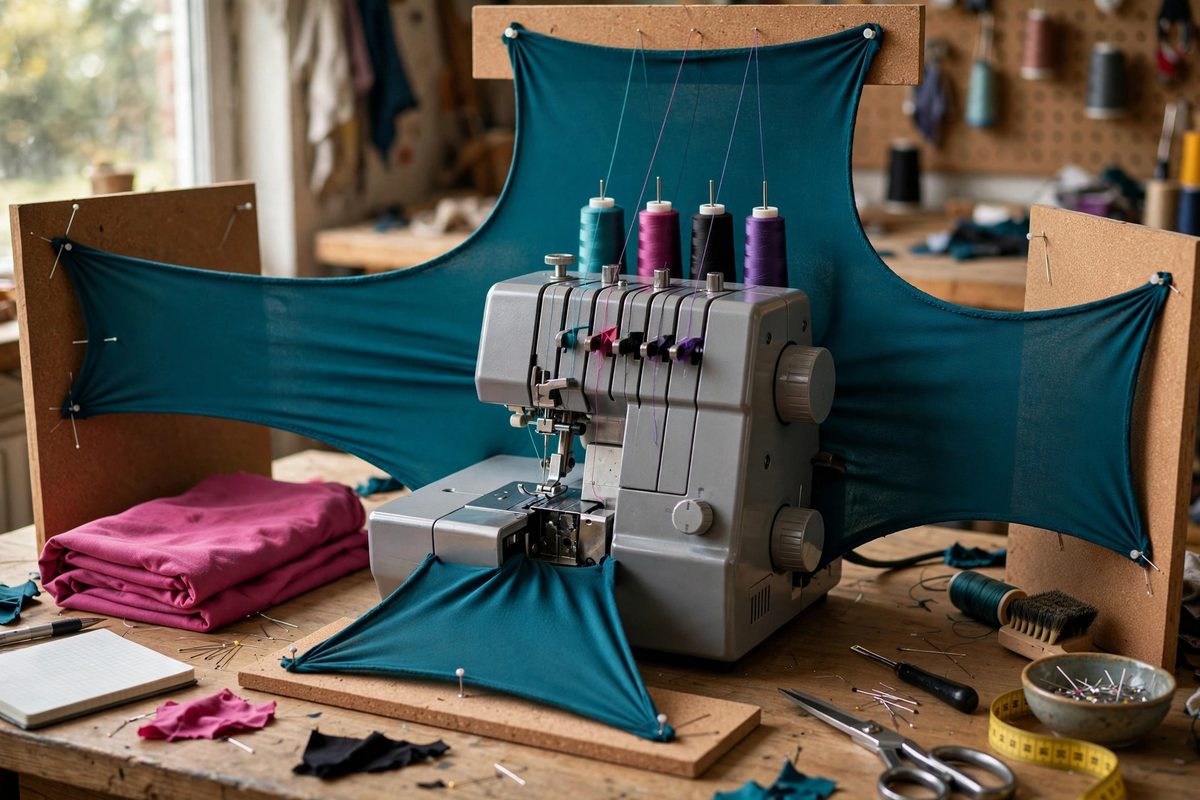
What Differential Feed Does
A serger has two sets of feed dogs: the front set and the rear set. At a 1:1 ratio they move together and the fabric feeds straight through. Increase the ratio (front faster than rear) and the fabric gets gathered slightly as it sews, which counteracts the stretching that the presser foot and needle cause on elastic fabrics. Decrease it below 1:1 and the fabric gets stretched as it sews, useful for deliberately creating lettuce edges or easing in fullness. On four-way spandex, you almost always want a ratio above 1:1, because the fabric's instinct is to stretch under the foot and then snap back into waves.
Calibrating on Scraps
Cut test strips from the actual project fabric, including any layers you will sew (lining, power mesh, interfaced sections), because each combination feeds differently. Start at 1:1 and serge a strip; inspect the seam. If the edge waves or ripples, increase the differential feed in small steps and test again. The correct setting is the lowest ratio that produces a flat seam; going higher than necessary gathers the fabric and shortens the seam. Mark the winning setting on a piece of tape on the machine, because the dial is easy to bump and the setting is specific to that fabric.
Presser Foot Pressure Matters Too
Differential feed does not work alone. Heavy presser foot pressure stretches spandex before the feed dogs even engage, and no feed ratio fully compensates for a foot mashing the fabric flat. Reduce foot pressure until the fabric feeds without being visibly compressed, then fine-tune the differential. The two settings interact, so adjust pressure first and feed second. If your machine lacks adjustable foot pressure, a walking foot attachment or even a strip of tissue paper under the seam can reduce the drag that causes stretching.
Stitch Length and Needle Choice
Shorter stitch lengths (around 2 to 2.5 mm) suit spandex: they distribute the seam's stress across more stitches and stretch with the fabric instead of popping. Use ballpoint or stretch needles, which push between the knit fibers instead of piercing them; a sharp needle cutting fibers in spandex creates runs that appear after the first wear. Match the thread to the fabric's stretch: polyester thread has the give that cotton thread lacks, and wooly nylon in the loopers gives seams a soft, professional finish that stretches without breaking.
Seam Types for Bodysuits
Flat, low-bulk seams matter in garments worn skin-tight. A four-thread overlock is the workhorse for structural seams; trim the seam allowance narrow and press (with a cool iron and a press cloth, never direct heat) to flatten it. For areas needing maximum stretch, like crotch and underarm curves, consider a stretch straight stitch on a conventional machine as a stay-stitch before serging, which stabilizes the curve without sacrificing elasticity. Avoid backstitching on spandex; instead, leave long thread tails and knot them, since backstitching perforates and weakens the knit.
Testing the Finished Seam
Before assembling the garment, stretch every test seam to the fabric's full extension and inspect: stitches should elongate without popping, the seam should lie flat when released, and no waviness should appear along the edge. Wash a test piece as the finished garment will be washed, because some waviness only appears after laundering. A seam that passes the stretch test, the flat test, and the wash test is ready for the bodysuit; anything less gets recalibrated, not rationalized.
Four-way spandex rewards the sewer who calibrates instead of guessing. Set the differential feed on real scraps, ease off the foot pressure, use the right needles and thread, and test every seam under stretch; the bodysuit that results will look store-bought, which is the highest compliment a handmade garment can earn.
Related Guides
- Differential Feed Settings for Four Way Stretch: Four-way stretch fabrics, the spandex blends behind bodysuits, leggings, and fitted armor undersuits, defeat ordinary sewing machine settings: the
- Twin Needle Tension Calibration on High-Spandex Knits: Twin needle hems give cosplay bodysuits and stretch garments that clean, professional double row of stitching, but high-spandex knits punish bad
- Differential Feed Tension on Double Brushed Poly Knits: Double brushed poly knits, the buttery fabric behind countless cosplay bodysuits and leggings, stretch in every direction and punish sloppy feeding
- Reinforced Spandex Seam Stitching for Bodysuits: A bodysuit is the most demanding garment most cosplayers will ever sew: it must stretch in every direction, recover instantly, survive lunges and