
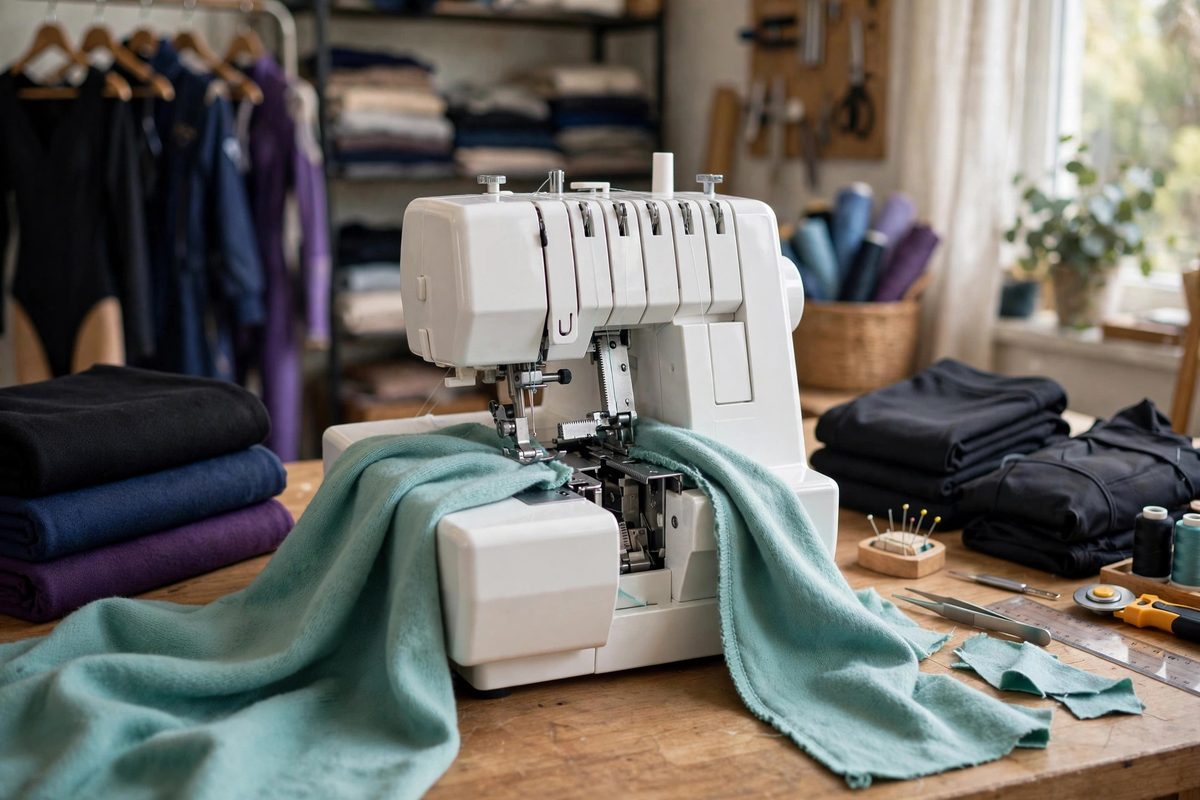
Double brushed poly knits, the buttery fabric behind countless cosplay bodysuits and leggings, stretch in every direction and punish sloppy feeding. A differential feed, the two-part feed dog system on sergers and some sewing machines, controls whether the fabric stretches out or gathers up as it sews. Set it wrong and seams ripple; set it right and the fabric feeds flat and the seam disappears into the stretch.
What Differential Feed Does
A differential feed has front and rear feed dogs that can move at different rates. When the front feeds faster than the rear, the fabric is eased in and gathers slightly, which prevents stretching. When the rear feeds faster, the fabric is stretched as it sews. At a neutral setting both move together and the fabric feeds as-is. Double brushed poly wants the easing side of neutral, because the presser foot naturally stretches the fabric ahead of the needle and the differential feed compensates by feeding the front slightly faster. The result is a seam sewn into relaxed fabric rather than stretched fabric, so it does not ripple when the pressure releases.
Dialing In the Setting
Start at neutral and sew a test seam on a scrap of the actual fabric, doubled as it will be in the garment. If the seam ripples or waves, increase the differential toward the gathering side in small steps until the test seam lies flat. If the seam puckers or the fabric bunches, you have gone too far and need to back off. Mark the winning setting, because it changes with fabric weight and stretch percentage; the setting for a lightweight brushed poly will not match the setting for a heavy ponte in the same fiber. Test every new fabric, every time, on scraps cut from the project itself.
Presser Foot Pressure Matters Too
Differential feed cannot fully compensate for a presser foot crushing the fabric. Reduce foot pressure until the fabric feeds reliably without being squeezed, which on soft knits is noticeably lighter than the default. Too little pressure and the fabric wanders; too much and the foot stretches the knit ahead of the feed dogs. The right pressure feels like the foot is barely kissing the fabric. Combined with the correct differential setting, light foot pressure lets the feed dogs do the work instead of fighting the foot.
Needle and Stitch Choices
Use ballpoint or stretch needles so the needle slips between knit fibers instead of piercing them; a sharp needle cutting fibers weakens the seam and causes runs. A narrow zigzag or a stretch stitch lets the seam extend with the fabric, while a straight stitch on a knit seam pops the first time the garment stretches. On the serger, a four-thread overlock with the differential set for easing produces the classic ready-to-wear knit seam: strong, stretchy, and flat. Match the thread to the fabric's stretch; rigid thread in a stretchy seam is the weak link.
Handling While Sewing
Let the machine feed the fabric. Pushing or pulling double brushed poly while sewing adds exactly the distortion the differential feed is trying to prevent. Guide the fabric gently, keeping the seam allowance aligned, and let the feed dogs set the pace. For long seams, support the fabric weight so it does not drag and stretch behind the machine. The fabric's worst enemy at the machine is the sewer's own hands, and the discipline of not pulling is what separates clean knit sewing from wavy frustration.
Double brushed poly sews beautifully once the feed is right: differential toward easing, light foot pressure, stretch needles, and hands that guide without pulling. Test on scraps, mark the settings, and the seams will stretch with the garment instead of fighting it.
Related Guides
- Differential Feed Calibration for Four-Way Spandex: Four-way spandex stretches in every direction, which is why it makes perfect bodysuits and terrible seams when the feed is wrong. A serger's
- Differential Feed Settings for Four Way Stretch: Four-way stretch fabrics, the spandex blends behind bodysuits, leggings, and fitted armor undersuits, defeat ordinary sewing machine settings: the
- Twin Needle Tension Calibration on High-Spandex Knits: Twin needle hems give cosplay bodysuits and stretch garments that clean, professional double row of stitching, but high-spandex knits punish bad
- Reinforced Spandex Seam Stitching for Bodysuits: A bodysuit is the most demanding garment most cosplayers will ever sew: it must stretch in every direction, recover instantly, survive lunges and