
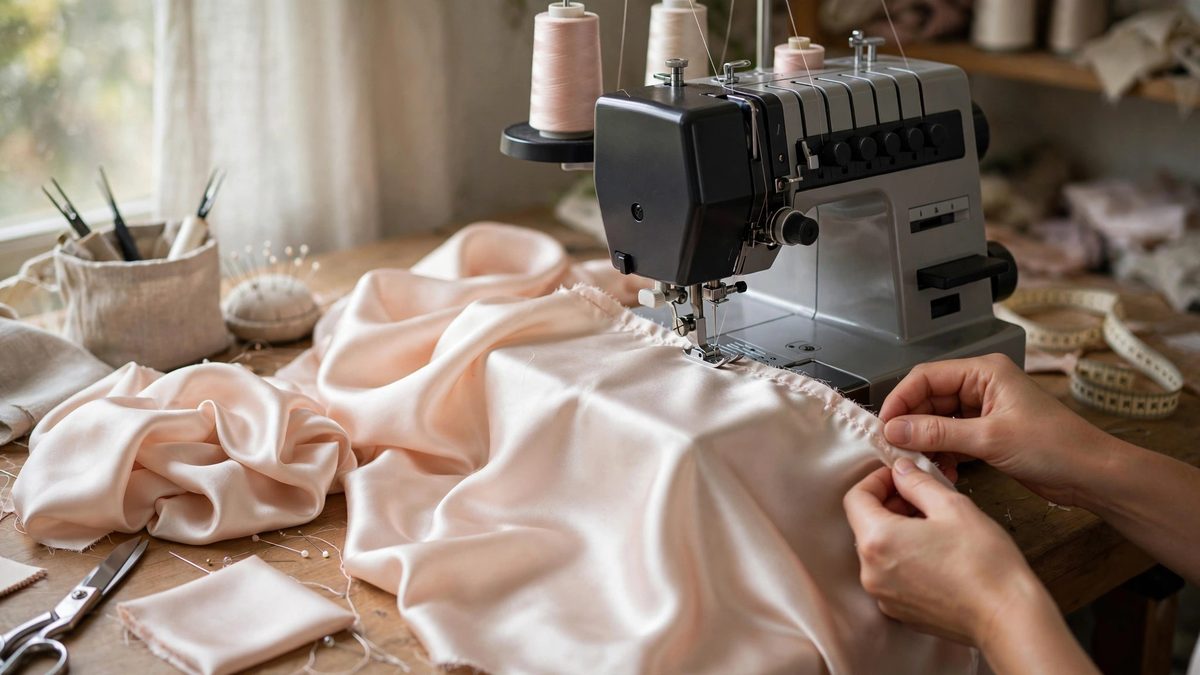
Silk charmeuse is one of the most beautiful and most treacherous fabrics to sew: liquid drape, luminous surface, and a tendency to slip, pucker, and stretch out of shape the moment it meets a sewing machine. The differential feed, the mechanism on sergers and some sewing machines that feeds the front and back of the fabric at different rates, is the key to taming it. Set correctly, it neutralizes charmeuse's worst behaviors; set wrong, it makes them worse.
How Differential Feed Works
A standard feed dog moves the fabric at one speed, but fabric layers do not always want to move together: the presser foot drags the top layer while the feed dog drives the bottom, and stretchy or slippery fabrics distort in the gap. The differential feed splits the feed dog into front and rear sections that can move at different rates, expressed as a ratio: a setting above 1.0 gathers (the front feeds faster, easing fullness), below 1.0 stretches (the rear pulls faster, elongating). For most fabrics you leave it at neutral, but charmeuse is not most fabrics: its slipperiness and bias instability mean the layers almost never feed evenly on their own, and the differential feed is how you compensate.
What Charmeuse Does Under the Foot
Charmeuse misbehaves in specific ways. It slips: the top layer slides against the bottom under presser foot pressure, so seams end up with one layer longer than the other. It puckers: the fabric's fluidity lets it bunch ahead of the needle, creating ripples along the seam. It stretches: especially on the bias, charmeuse elongates under the tension of feeding, so a seam sewn flat springs into waves when released. And it shows everything: the lustrous surface highlights every pucker and wobble. These behaviors are the fabric's nature, not defects, and the sewing setup must accommodate them rather than fight them.
Dialing In the Differential for Charmeuse
Start near neutral and test on scraps cut like your real pieces, including bias sections if the garment has them. If the seam puckers, increase the differential slightly toward gathering: the front feed eases the top layer in, counteracting the pucker. If the seam stretches and waves, decrease toward stretching... but carefully: on charmeuse you usually want to prevent stretch, not add it, so a wavy seam more often indicates too much presser foot pressure or handling tension rather than a differential problem. The sweet spot is the setting where a test seam lies flat and measures the same as the unsewn fabric: sew, release, measure. Adjust in small steps and re-test: differential changes are sensitive, and overshooting creates the opposite problem.
Presser Foot Pressure and Handling
The differential feed works with presser foot pressure, not independently of it. Reduce presser foot pressure for charmeuse: heavy pressure increases the drag differential between layers, which is the root cause of slipping. Support the fabric's weight as you sew: charmeuse hanging off the table pulls the seam, adding stretch that no feed setting corrects. Guide, do not push or pull: let the feed do the moving, and keep your hands light on the fabric, smoothing gently ahead of the foot without stretching. Tissue paper under the seam, torn away afterward, is the classic helper: it stabilizes the slippery layers and gives the feed dogs something to grip.
Stitch and Needle Choices
Pair the feed setting with appropriate stitch parameters. Use a fine, sharp needle (a microtex or sharp in a small size): a dull or large needle pushes the fluid fabric aside rather than piercing it, causing puckers no feed adjustment fixes. Shorten the stitch length slightly: shorter stitches distribute the seam's tension over more points, reducing pucker. Use fine thread matched to the fabric: heavy thread in delicate charmeuse creates its own tension problems. And consider the seam type: French seams enclose the raw edges beautifully in charmeuse and add structure that helps the seam lie flat, while also hiding the fabric's tendency to fray.
Testing Protocol Before the Garment
Never take a first guess at differential settings to the real garment. Build a test sandwich from scraps of the actual fabric, including any interfacing, and sew the actual seam types: straight seams, curved seams, bias seams. Press the test seams as you will press the garment (low heat, press cloth: charmeuse scorches and water-spots) and evaluate flat. Only when the test seams are flat, even, and true to length should you cut into the fashion fabric. This discipline feels slow, but it is vastly faster than unpicking charmeuse: every needle hole in silk is permanent, and unpicked seams leave a dotted scar.
Differential feed is the tool that makes silk charmeuse sewable: understand what the fabric does, dial the feed to neutralize it, lighten the presser foot, support the work, and test everything on scraps first. The liquid drape that makes charmeuse difficult is the same quality that makes the finished garment extraordinary: the setup effort is the price of admission.
Related Guides
- Feed Dog Height Calibration for Slippery Silk Chiffon: Silk chiffon is the final exam of machine sewing: sheer, slippery, and utterly intolerant of the feeding errors that other fabrics forgive. The feed
- Walking Foot Pressure Tuning for Slippery Silk Crepe: Silk crepe is one of the most rewarding fabrics to wear and one of the most punishing to sew. Its high-twist yarns give it that pebbled texture and
- Tension Balance for Bias-Cut Lightweight Rayon Crepes: Bias-cut rayon crepe drapes like liquid, which is why designers love it and why sewers approach it with respect. Cut on the bias, the fabric
- Rotary Blade Sizing for Multi-Layer Cottons: The rotary cutter is the garment maker's speed tool, but its blade diameter is a real engineering choice, not a fashion preference. Cut six layers of