
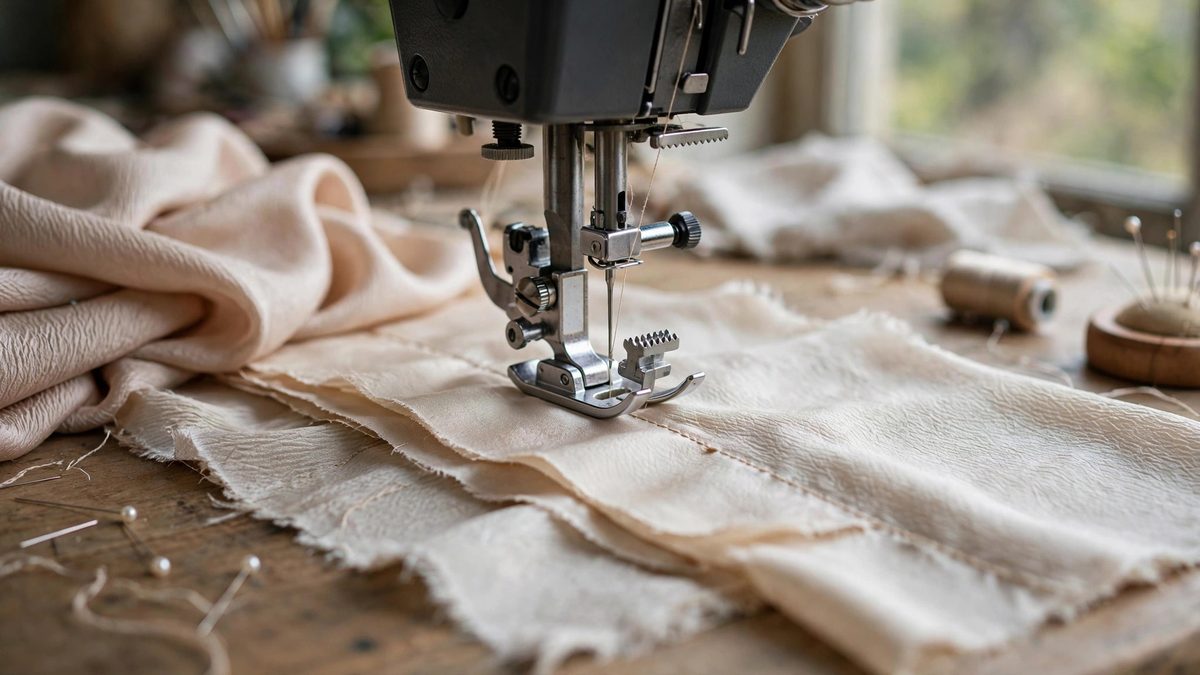
Silk crepe is one of the most rewarding fabrics to wear and one of the most punishing to sew. Its high-twist yarns give it that pebbled texture and fluid drape, but they also make the layers slide against each other like wet glass. A walking foot, which feeds the top layer in sync with the feed dogs below, is the standard answer to shifting layers. Tuning its pressure for silk crepe is what separates a walking foot that helps from one that just leaves deeper dents.
Why silk crepe shifts under a standard foot
A standard presser foot holds the fabric down while the feed dogs move the bottom layer forward. On stable cotton the top layer mostly follows along, dragged by friction with the bottom layer. Silk crepe has very low interlayer friction, so the top layer lags, and the result is seams that start aligned and end misaligned, plus puckering where the bottom layer gathered slightly ahead. A walking foot adds a second set of feed dogs on top that move in time with the lower ones, so both layers advance together. That solves the differential feed problem mechanically. What it does not solve by itself is pressure: too much presser foot pressure on crepe compresses the pebbled texture and can emboss a permanent track along the seam line, while too little lets the layers wander again.
Finding the pressure sweet spot
Most machines with adjustable presser foot pressure have a dial or screw on top of the machine, and walking feet themselves sometimes add spring tension. Start by reducing pressure from your normal setting, testing on doubled scraps of your actual crepe, and increasing only until the layers stop creeping. The right pressure is the minimum that feeds evenly. You are looking for two things in the test seam: the ends still align after six inches of sewing, and the seam line shows no crushed channel in the fabric texture. Mark the dial position once you find it, because silk crepe settings differ wildly from the pressure you use on denim or quilting cotton, and you will want to return to normal afterward. If your machine has no pressure adjustment, the walking foot is still worth using, but expect to help the fabric slightly with your hands, guiding rather than pushing.
Needle, thread, and stitch length choices
Pressure tuning works best alongside the right consumables. Use a fresh sharp or microtex needle in a fine size, because a slightly dull or too-large needle pushes crepe yarns aside instead of piercing them, which shows as puckered holes along the seam. A fine, high-quality polyester or silk thread in a matching weight keeps the seam supple; heavy thread in delicate crepe creates a stiff ridge that no pressure setting can fix. Shorten the stitch length a touch from your default, since shorter stitches distribute the feed dogs' grip more evenly and reduce the wavy distortion that long stitches encourage in fluid fabrics. Test the full combination, not each change in isolation, because pressure, needle, and stitch length interact.
Stabilizing without changing the hand
Even with a tuned walking foot, some silk crepe seams benefit from temporary stabilization. Thin tissue paper or wash-away stabilizer under the seam gives the feed dogs something to grip and tears away afterward without disturbing the fabric. For hems and edges that will be handled a lot, a strip of lightweight fusible interfacing cut on the bias preserves the drape while stopping the edge from growing as you sew. Pin within the seam allowance and use fine silk pins, or better yet, hand-baste critical seams like set-in sleeves, because pins can leave permanent holes in silk and basting gives you control no machine setting can match. The goal of all stabilization is to be invisible in the finished garment: support during construction, nothing left behind.
Handling and pressing discipline
How you handle crepe between seams matters as much as machine settings. Let the fabric feed under its own power; pulling from behind or pushing from the front overrides the walking foot and reintroduces the shifting you tuned it to prevent. Support the weight of the garment so it does not hang off the table and drag the seam. When pressing, use a press cloth, low heat, and minimal steam, pressing on the wrong side whenever possible, because silk crepe can shine or watermark under direct heat. A seam roll or tailor's ham keeps curved seams from getting pressed flat. None of this is fussy for its own sake. Silk crepe remembers every insult, and the tuned walking foot only earns its keep when the rest of your handling respects the fabric.
Tuned well, a walking foot makes silk crepe behave almost like an ordinary fabric: layers stay put, seams stay straight, and the texture survives construction. Take the ten minutes to dial in pressure on scraps, and the garment will repay it in every seam.
Related Guides
- Feed Dog Height Calibration for Slippery Silk Chiffon: Silk chiffon is the final exam of machine sewing: sheer, slippery, and utterly intolerant of the feeding errors that other fabrics forgive. The feed
- Differential Feed Tension on Fine Silk Charmeuse: Silk charmeuse is one of the most beautiful and most treacherous fabrics to sew: liquid drape, luminous surface, and a tendency to slip, pucker, and
- Rotary Blade Sizing for Multi-Layer Cottons: The rotary cutter is the garment maker's speed tool, but its blade diameter is a real engineering choice, not a fashion preference. Cut six layers of
- Tension Balance for Bias-Cut Lightweight Rayon Crepes: Bias-cut rayon crepe drapes like liquid, which is why designers love it and why sewers approach it with respect. Cut on the bias, the fabric