
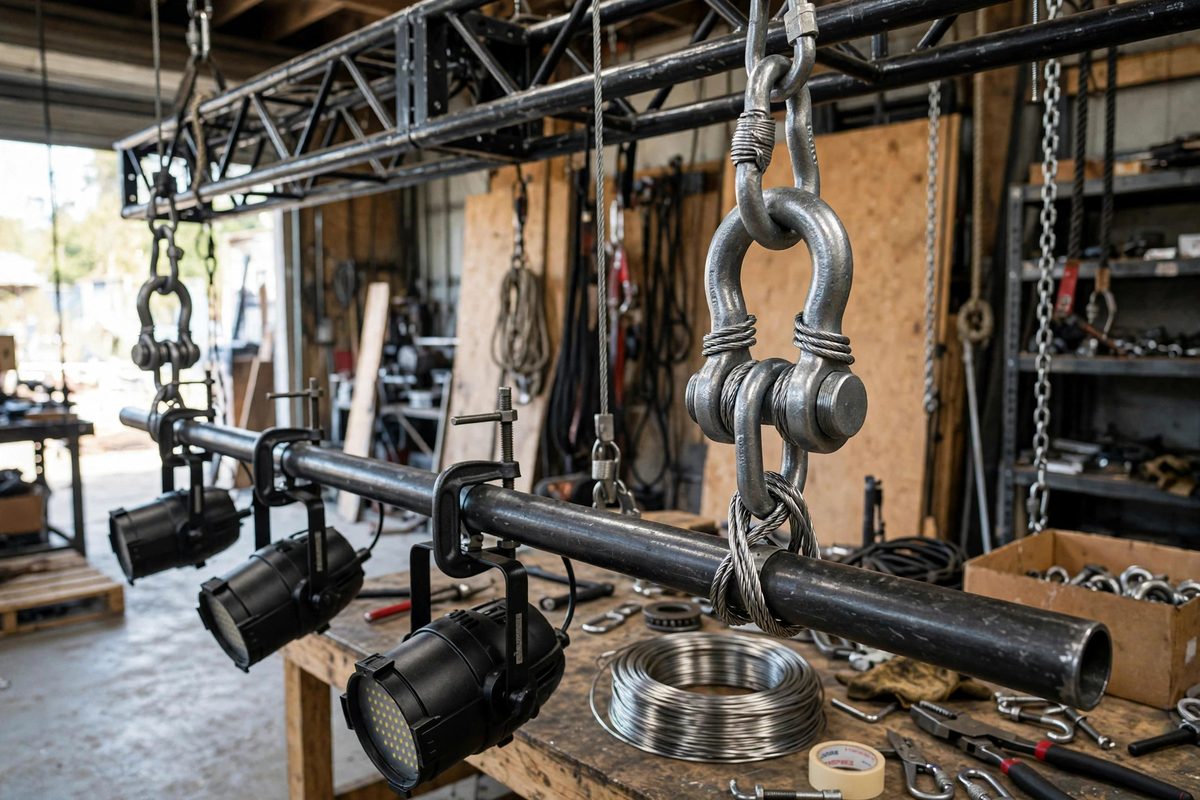
A flying bar, a pipe batten or truss flown overhead carrying scenery or lights, hangs from rigging where every connection is life-safety critical. Drop forged shackles are the standard connectors, and mousing the shackle pin, wiring it so it cannot unscrew, is the small detail that keeps the connection secure through vibration, handling, and time. It is a five-minute job that prevents a catastrophic failure.
Why Shackle Pins Need Mousing
A screw-pin shackle closes with a threaded pin, and threaded pins can back out. Vibration from moving scenery, thermal cycling, and the constant small movements of a flown system all conspire to loosen the pin over a run. A pin that backs out far enough lets the shackle open under load. Mousing, wrapping wire through the pin's eye and around the shackle body, physically prevents the pin from rotating, so it cannot unscrew no matter what the system does. It is not optional on overhead rigging; it is the standard of care.
Choosing the Shackle
Use drop forged shackles rated for overhead lifting, marked with a working load limit, from a reputable manufacturer. The rating must exceed the actual load with a proper safety factor; rigging safety factors are generous because the consequence of failure is severe. Size the shackle to the connection: the pin should fill the attachment point without excessive slop, and the bow should accommodate the sling or hardware without side-loading. Never use a shackle with a bent pin, a cracked body, or illegible markings. Inspect every shackle before it goes overhead, every time.
The Mousing Technique
Thread seizing wire, typically stainless or galvanized steel wire of modest gauge, through the eye or hole in the shackle pin and wrap it several turns around the adjacent shackle body, then twist the wire ends together neatly and trim them. The wraps should be snug enough that the pin cannot rotate but not so tight they deform the wire. The classic pattern crosses the wire in a figure that locks the pin against turning in either direction. Tuck the twisted ends flat so they do not snag hands or lines during handling. A properly moused pin is visibly secure; if you have to wonder whether it is moused, it is not done.
Inspecting Moused Connections
Mousing wire fatigues and corrodes. Inspect moused shackles on a schedule: check that the wire is intact, the twists are tight, and the pin has not moved. Replace wire that is kinked, rusted through, or loose. When a flying bar comes in for maintenance or reconfiguration, re-mouse any shackle that was opened, because a shackle that was unmoused for adjustment and never re-moused is a common and dangerous oversight. Keep a log of rigging inspections; memory is not a maintenance system.
The Bigger Rigging Picture
Mousing is one detail in a system that must be designed as a whole. Every component in the load path, the bar, the shackles, the slings, the attachment points, must be rated, inspected, and installed by competent people. Know the total weight being flown, including dynamic loads from moving pieces, and keep it within the system's rated capacity. When in doubt about any rigging decision overhead, the correct move is to stop and get a qualified rigger involved. No show is worth a dropped bar.
Mouse every shackle pin on every flying bar, inspect the mousing on schedule, and treat the whole load path with the seriousness overhead weight demands. The wire is cheap; the consequences of skipping it are not.
Related Guides
- Forged Steel Shackle Pin Mousing for Flying Trusses: Flying trusses (aluminum truss sections hung from motors or chain hoists, carrying lights and scenery above the stage) are held together and hung by
- Shackle Pin Mousing Techniques for Flying Loads: When scenery flies, when a batten, a drop, or a scenic piece hangs from rigging overhead, every connection in the load path must be secure against
- Wire Rope Thimble Pinch Radii for Stage Drop Rigging: Stage drops, the big painted cloths that fly in and out, hang from wire rope, and the eye at the end of each rope is formed around a thimble. The
- Aircraft Cable Swaging Specs for Stage Rigging: Stage rigging holds scenery, lights, and sometimes people above other people's heads, which makes it the highest-consequence craft in theatre