
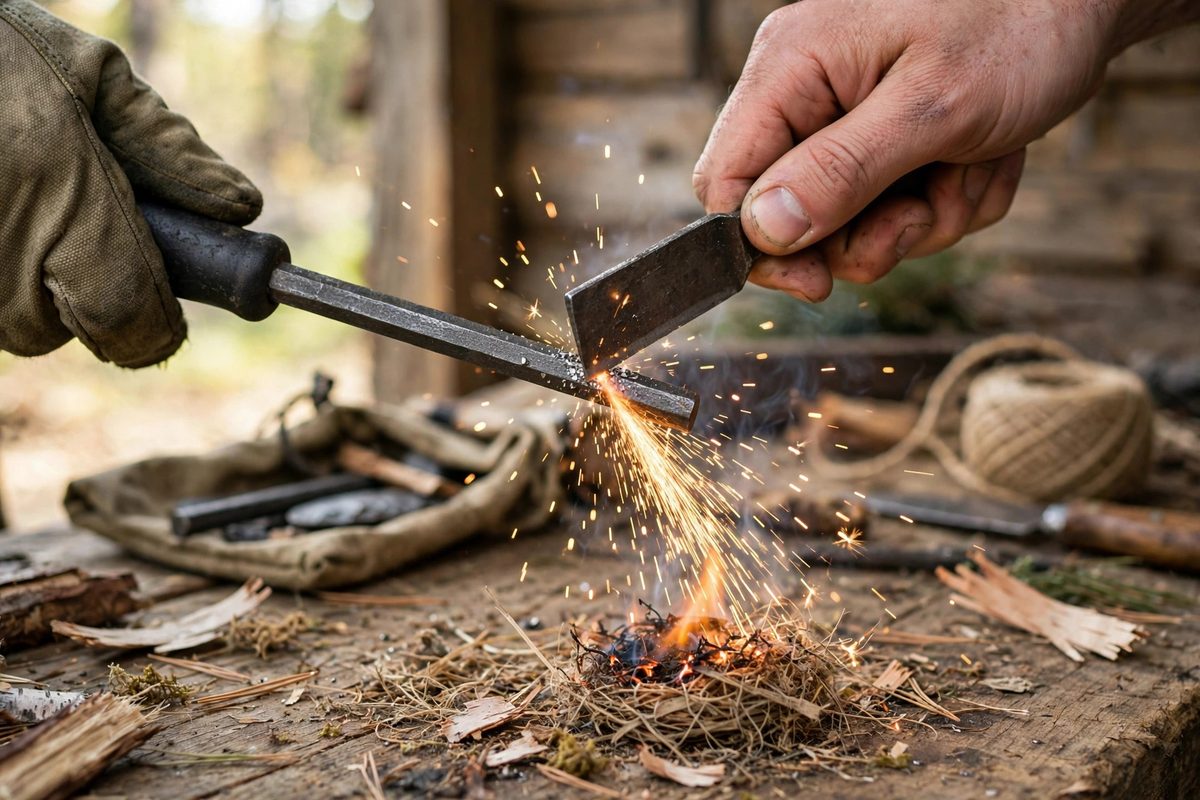
A ferrocerium rod throws sparks hot enough to ignite tinder (around 3,000 F at the spark), but only if the striker shaves the rod correctly. Most failed fire attempts are not bad rods or bad tinder; they are bad scraping technique. The angle of the striker against the rod controls how much material gets shaved, how fine the shavings are, and how fast they oxidize in the air, which is the entire physics of the shower of sparks.
How the Sparks Happen
Ferrocerium is pyrophoric: tiny shavings of it ignite spontaneously in air because their surface-area-to-volume ratio is so high that oxidation heat cannot escape. The striker's job is to peel off shavings in the right size range. Too coarse, and the shavings do not ignite; too fine, and they burn out before reaching the tinder. The scraping angle sets the cut depth, which sets the shaving size, which sets the spark. Everything downstream follows from the angle.
The Working Angle
Hold the striker at roughly 45 degrees to the rod for general use. At this angle, a firm, fast scrape peels a consistent ribbon of shavings that ignite into a dense shower. Steepen the angle toward 60 or 70 degrees and the striker digs in, gouging coarse chunks that spark poorly and chew up the rod; shallow the angle toward 20 or 30 degrees and the striker skims, producing fine dust that flashes and dies in the air. The 45-degree neighborhood is the sweet spot because it balances cut depth against shaving fineness across most rod hardnesses.
Speed Beats Force
A fast scrape throws a better shower than a hard scrape. Speed does two things: it ejects the shavings with enough velocity to carry them into the tinder bundle, and it generates the shavings in a rapid burst so they ignite each other in a cascade. Bearing down hard with a slow push just plows a groove in the rod. Plant the rod's tip near the tinder, lock your striker hand, and pull the rod back sharply through the striker rather than pushing the striker forward; this keeps the spark shower aimed at the tinder instead of scattering it across the campsite.
Striker Edge Matters
The striker needs a sharp, square 90-degree edge: the spine of a knife, a dedicated striker, or a piece of hacksaw blade all work. A rounded or beveled edge slides over the rod instead of cutting it, which is why the back of a typical pocketknife (often softly rounded) performs poorly. Harder striker edges cut cleaner shavings; a file-sharp hardened striker on a good rod produces noticeably hotter sparks than a dull soft edge. Keep a dedicated striker with your rod so you are never improvising the most important variable.
Rod Condition and Technique Adjustments
New rods often carry a protective coating that must be scraped off before they spark well; the first few scrapes are for the coating, not for fire. In wet conditions, scrape the rod's surface a few times to expose fresh metal, since the oxidized outer layer sparks weakly. If your shower is thin, check the trifecta in order: striker sharpness, angle near 45 degrees, and scrape speed. One of those three is almost always the culprit, and fixing technique beats blaming the rod nearly every time.
Directing the Shower
Aim the spark shower into the finest, driest part of the tinder bundle: the charred or feathered center, not the bulky outer material. Hold the rod tip within an inch or two of the tinder so the sparks land while still at full heat; sparks cool fast in flight. In wind, shield the tinder with your body and scrape on the downwind side so the breeze feeds the first ember instead of scattering it. One well-aimed shower into prepared tinder beats ten scattered showers into a damp bundle.
The ferro rod is one of the most reliable fire tools ever made, and its reliability is almost entirely in the user's hands. Sharp striker, 45 degrees, fast pull, aim true: practice that sequence until it is automatic, and the shower of sparks becomes the easy part of fire-making.
Related Guides
- Ferro Rod Striker Scraping Angles for Shower Sparks: A ferro rod is only as good as the striker scraping it. The same rod throws a pathetic dribble of sparks with a rounded knife spine and a glorious
- Ferrocerium Rod Diameter and Spark Shower Density: A ferrocerium rod throws sparks when shaved: the soft metal ignites in the air as tiny burning particles. Makers building fire starters choose rod
- Magnesium Shaving Ratios for Weatherproof Spark Tins: A spark tin is a pocket-sized fire insurance policy: a small sealed container holding everything needed to turn a spark into a flame, even when the
- Waterproof Cotton Ball Saturation Limits in Tinder Kits: Petroleum-jelly cotton balls are the classic DIY fire tinder: cheap, light, and reliable. Waterproofing them with wax or jelly makes them