
A ferrocerium rod throws sparks when shaved: the soft metal ignites in the air as tiny burning particles. Makers building fire starters choose rod diameters from slim pen-sized sticks to fat thumb-thick bars, and the diameter changes the spark shower's character more than most people expect. Understanding the relationship helps you match the rod to the kit.
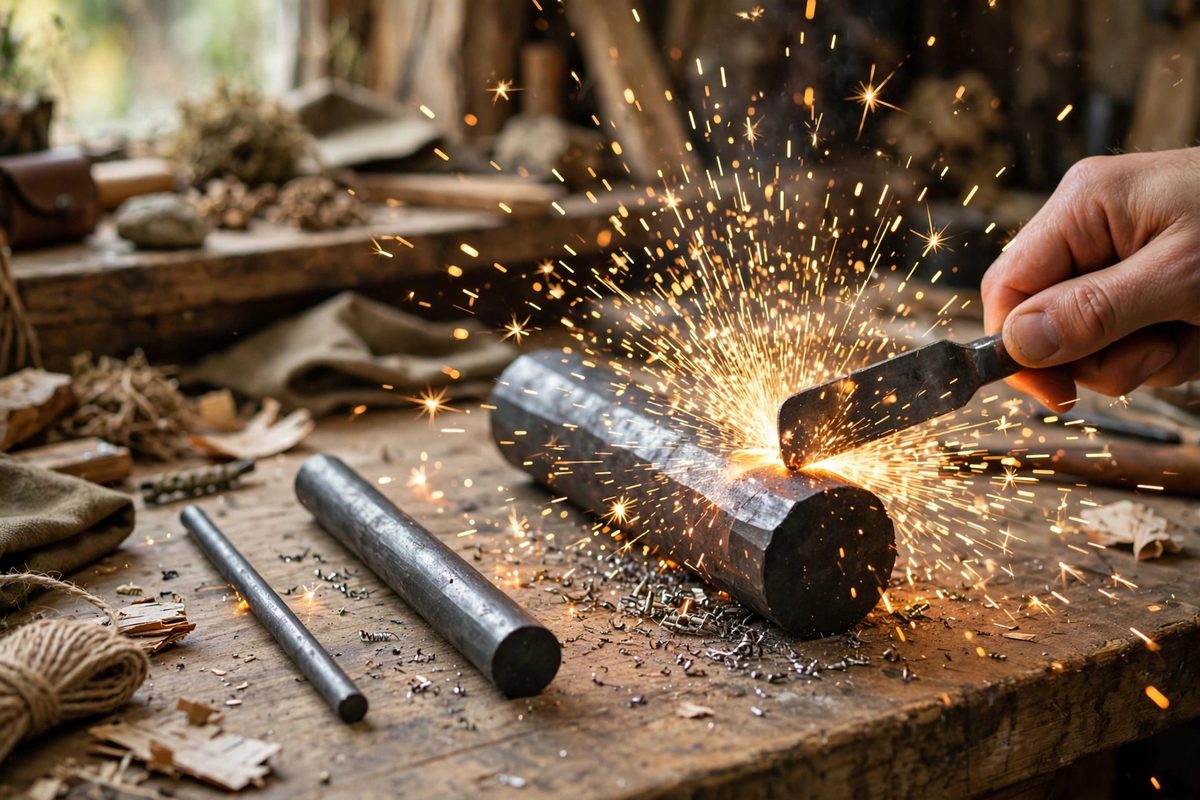
How ferro rods make sparks
Ferrocerium is an alloy of iron, cerium, and other rare-earth metals that oxidizes so readily it ignites when finely divided. Scraping the rod with a hard, sharp edge shaves off tiny curls of metal; the friction and the fresh surface area let them catch fire instantly, burning at several thousand degrees as they fly. The spark shower's density, how many burning particles land in the tinder per strike, depends on how much metal each scrape removes and how violently it disperses. That is where diameter comes in.
What diameter changes
A thicker rod presents more surface to the scraper per stroke, so each scrape removes more metal and produces a denser shower of larger sparks. A slim rod gives fewer, finer sparks per strike. The difference is practical: lighting marginal tinder in damp conditions wants the dense, hot shower of a thick rod, while a practiced fire-maker with good dry tinder does fine with a slim one. Thicker rods also last far longer, since each strike consumes a smaller fraction of the total metal; a fat rod can outlast a slim one by an order of magnitude in total strikes. The trade is size and weight in the kit.
Matching rod to use
For a compact everyday-carry or keychain fire starter, a slim rod (around a quarter inch diameter) keeps the kit small and still lights prepared tinder reliably. For a dedicated bushcraft or survival kit, a half-inch rod is the sweet spot: dense showers, long life, still packable. Rods thicker than that suit base camps and teaching, where the impressive shower helps beginners succeed. There is no prize for the smallest rod that can technically work; the rod's job is to make fire easy, and margin is the point.
Scraper and technique matter as much
The scraper must be harder than the rod and have a sharp 90-degree edge: the spine of a knife, a dedicated striker, or even a broken piece of hacksaw blade. A dull or rounded scraper mushes the rod instead of shaving it, producing few sparks regardless of diameter. Technique: anchor the rod's tip near the tinder, place the scraper at the far end, and push the scraper forward (or pull the rod back) in one firm, fast stroke, directing the spark shower down into the tinder bundle. Slow, tentative scrapes make weak showers; commit to the stroke.
Care and longevity
Ferrocerium corrodes slowly in humid air, growing a dull oxide coat that slightly reduces sparking until scraped off; a light coat of oil or storing the rod dry prevents this. The rods are somewhat brittle: a thick rod dropped on rock can snap, so protect it in the kit. They are not consumable in any practical sense for most users; even a slim rod provides thousands of strikes. Replace when the rod is visibly whittled down to a nub, not on a schedule.
Thick rod, dense shower, long life; slim rod, compact kit, adequate sparks. Choose by the fire you need to make, scrape like you mean it, and keep it dry.
Related Guides
- Ferro Rod Scraping Angle Dynamics for Shower Sparks: A ferrocerium rod throws sparks hot enough to ignite tinder (around 3,000 F at the spark), but only if the striker shaves the rod correctly. Most
- Ferro Rod Striker Scraping Angles for Shower Sparks: A ferro rod is only as good as the striker scraping it. The same rod throws a pathetic dribble of sparks with a rounded knife spine and a glorious
- Magnesium Shaving Ratios for Weatherproof Spark Tins: A spark tin is a pocket-sized fire insurance policy: a small sealed container holding everything needed to turn a spark into a flame, even when the
- Waterproof Cotton Ball Saturation Limits in Tinder Kits: Petroleum-jelly cotton balls are the classic DIY fire tinder: cheap, light, and reliable. Waterproofing them with wax or jelly makes them