
Petroleum-jelly cotton balls are the classic DIY fire tinder: cheap, light, and reliable. Waterproofing them with wax or jelly makes them weather-resistant, but the waterproofing is also the fuel, and the saturation level determines whether the tinder catches easily or smolders stubbornly. There is a sweet spot, and overshooting it is the common mistake.
How the tinder works
The cotton ball provides surface area and structure; the petroleum jelly or wax provides the fuel and the water resistance. A spark or flame ignites the jelly, which burns long enough to ignite the cotton, which burns hot enough to ignite the kindling. The system works because each stage feeds the next. Too little fuel and the flame dies before the kindling catches; too much and the ball is a greasy lump that resists ignition. The saturation limit is the line between those two failures.
Finding the saturation sweet spot
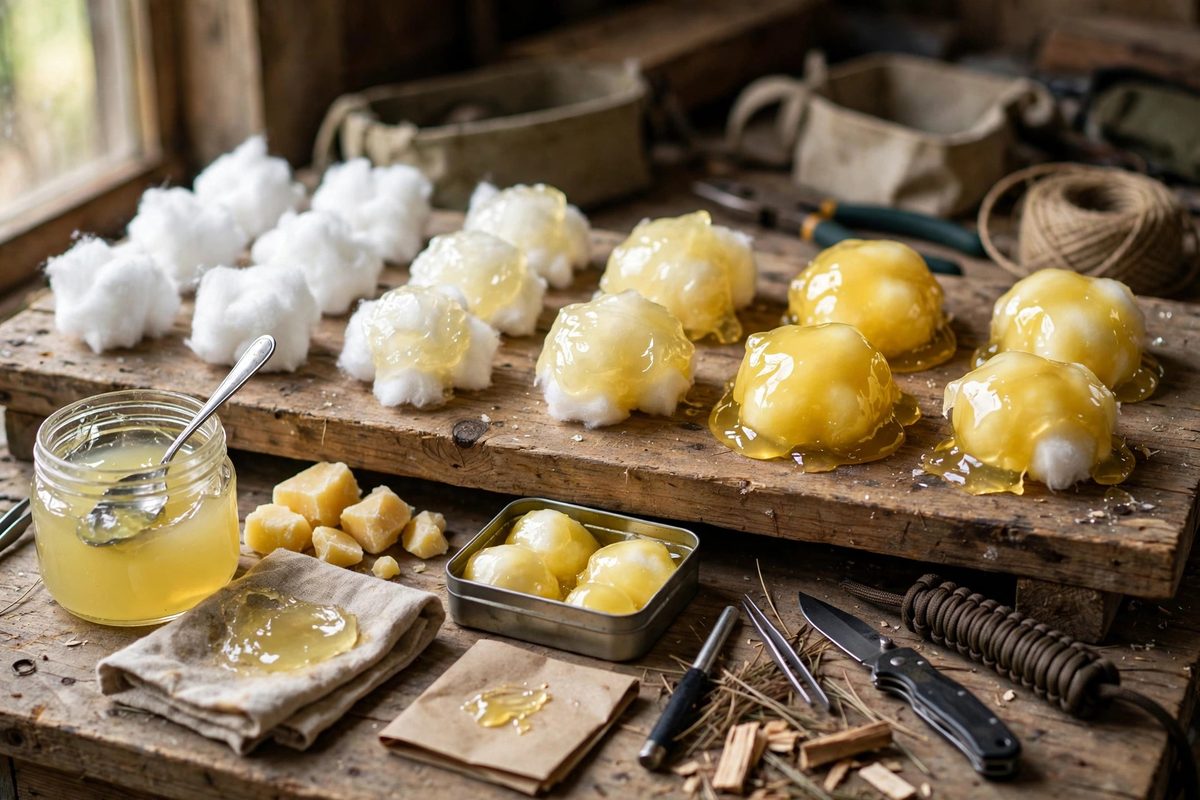
The working method: melt the petroleum jelly or wax, dip or knead the cotton balls in it, then squeeze out the excess. The ball should feel waxy and hold together, but not drip or feel heavy; when pulled apart slightly, the fibers should show, providing the exposed surface that catches the spark. A good test is weight: a properly saturated ball weighs noticeably more than a dry one but is nowhere near dripping. Make a test batch at a few saturation levels and actually light them; the fire is the only judge that matters.
Why oversaturation fails
An oversaturated ball has its fibers fully encased in fuel, with no exposed cotton to catch the initial spark. Sparks bounce off the waxy surface; a lighter's flame must first melt through the coating before reaching anything flammable. The ball will eventually burn, and burn long, but getting it lit in field conditions, with cold hands and wind, becomes a struggle. More fuel is not more fire when the fuel blocks ignition. Restraint in saturation is what makes the tinder fast to light.
Wax versus petroleum jelly
Petroleum jelly stays soft, making the balls easy to fluff and light even in cold weather; it can weep in heat, so store the kit cool. Paraffin wax sets hard, giving excellent water resistance and a longer shelf life, but waxed balls need to be cracked or fluffed to expose fibers before lighting. Each has its devotees; the saturation principle applies to both. Choose based on your climate and your patience: jelly for ease of use, wax for durability.
Packing the tinder kit
Pack the finished balls in a waterproof container: a small tin, a sealed bag, or a dedicated pouch. Keep them from being crushed; a flattened ball has less exposed fiber and lights harder. Include a few extra beyond what you think you need, because tinder is the cheapest insurance in the kit. Add a reliable ignition source, and keep the tinder and the ignition together; a tinder kit separated from its spark is just a bag of waxy cotton.
Practice before you need it
Light your tinder in bad conditions before you depend on it: wind, damp, cold hands. The practice reveals whether your saturation is right and whether your technique works when it counts. Teach everyone who might use the kit; the best tinder in the world is useless to someone who has never lit one. A fire kit is a skill plus materials, and the skill needs the same preparation as the balls.
Saturate firmly but not heavily, leave fiber exposed, pack them protected, and practice in the conditions you will face. The cotton balls will catch when you need them to, which is the entire purpose of the kit.
Related Guides
- Magnesium Shaving Ratios for Weatherproof Spark Tins: A spark tin is a pocket-sized fire insurance policy: a small sealed container holding everything needed to turn a spark into a flame, even when the
- Ferrocerium Rod Diameter and Spark Shower Density: A ferrocerium rod throws sparks when shaved: the soft metal ignites in the air as tiny burning particles. Makers building fire starters choose rod
- Ferro Rod Striker Scraping Angles for Shower Sparks: A ferro rod is only as good as the striker scraping it. The same rod throws a pathetic dribble of sparks with a rounded knife spine and a glorious
- Ferro Rod Scraping Angle Dynamics for Shower Sparks: A ferrocerium rod throws sparks hot enough to ignite tinder (around 3,000 F at the spark), but only if the striker shaves the rod correctly. Most