
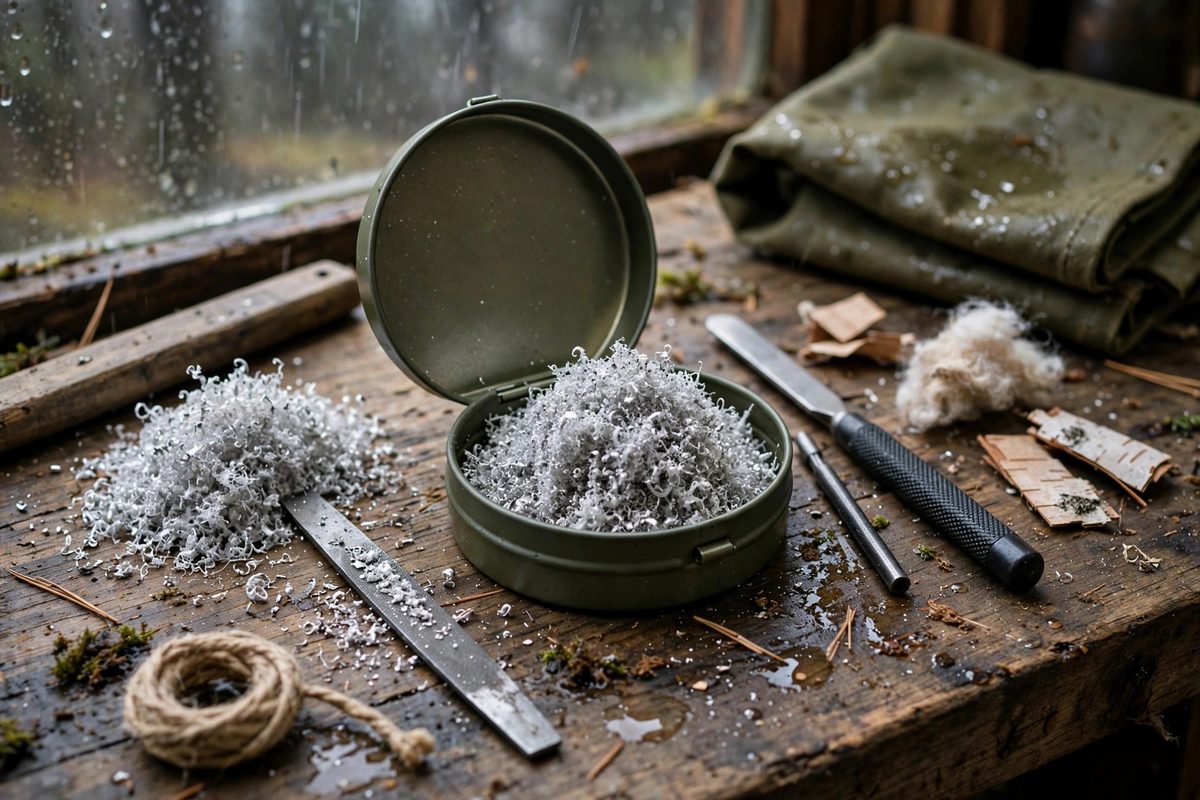
A spark tin is a pocket-sized fire insurance policy: a small sealed container holding everything needed to turn a spark into a flame, even when the world is wet and cold. Magnesium shavings are the star ingredient, because magnesium burns ferociously hot and ignites from a ferrocerium spark with eagerness. But magnesium alone burns out in seconds. The art of the spark tin is in the ratios: enough magnesium for reliable ignition, enough slow-burning fuel to grow the spark into a sustainable flame, and packaging that keeps it all dry until the moment it matters.
Why magnesium earns its place
Magnesium ignites at a relatively low temperature for a metal and then burns with intense heat, thousands of degrees, throwing off brilliant white sparks. That heat is what a marginal tinder bundle needs: a spark from a ferro rod is hot but tiny and brief, while a pinch of burning magnesium is a sustained blowtorch by comparison, easily lighting damp tinder that a bare spark would never catch. Magnesium's weakness is its burn time: shavings flash and are gone in seconds. So the tin pairs the magnesium igniter with a slower fuel that the magnesium lights in turn. Think of it as a two-stage system: magnesium converts the spark into serious heat, and the secondary fuel converts that heat into a lasting flame you can build on.
The core ratio: magnesium to slow fuel
A practical spark tin centers on petroleum-jelly-soaked cotton balls as the slow fuel, with magnesium shavings as the igniter. Prepare the cotton balls by working petroleum jelly thoroughly through them until they are saturated but not dripping; each one should burn for several minutes once lit. For the magnesium, shave a solid block with a knife or coarse file into fine curls and powder: fine shavings ignite far more readily than coarse chunks because of their greater surface area. As a working ratio, pack the tin mostly with prepared cotton balls, roughly six to eight of them in a standard small tin, and include a generous pinch of magnesium shavings, about a tablespoon, either loose in the tin or wrapped in a small paper twist per cotton ball. In use, you pull out one cotton ball, fluff up its fibers, sprinkle or place magnesium on the fluffed fibers, and strike your spark into the magnesium. The magnesium flashes, the cotton catches, and you have minutes of flame.
Weatherproofing the tin
The finest ratios mean nothing if the contents get wet. Use a tin with a tight lid, and consider a ranger band, a wide rubber band cut from a bicycle inner tube, around the seam for a genuinely water-resistant seal. Pack the contents snugly so nothing rattles or shifts; movement grinds the magnesium into dust that settles uselessly at the bottom. Some makers add a small piece of char cloth or a few waxed jute twine bundles as backup tinders that catch even the weakest spark. Keep a ferrocerium rod with the tin or in the same pocket, because a spark tin without a spark source is just a tin of cotton. Test the seal by submerging the closed tin briefly; any leak found at home is infinitely better than one found in the rain.
Making and storing magnesium safely
Magnesium demands respect during preparation. Shave it away from open flame and sparks, obviously, and do not grind it with power tools, which can ignite fine magnesium dust. Collect shavings in a non-flammable container and keep them away from the ferro rod until packing time; a stray spark in a pile of magnesium shavings is an exciting event you do not want. Store the finished tin away from heat sources and never in a vehicle cabin in summer sun. In use, strike sparks into the magnesium with the tin's other contents protected, and be ready: magnesium burns brilliantly and throws sparks, so keep your face back and have your tinder bundle ready to receive the flame. Never test a spark tin indoors or near flammables.
Using the tin when it counts
Field use is a practiced sequence, not improvisation. Prepare your fire lay first: tinder bundle, kindling, fuel, all gathered before you open the tin. Open the tin, take one prepared cotton ball, fluff it, add magnesium, and set it in the heart of your tinder bundle. Strike deliberate, aimed sparks, not a shower of hopeful ones. When the magnesium flashes, shield the young flame from wind with your body and feed it progressively larger fuel. One tin holds many fires if you use one cotton ball per fire; resist the urge to dump in extra magnesium, since more magnesium mostly means more drama, not more reliability. Practice this at home until it is boring. Boring is what you want from emergency gear.
A tablespoon of magnesium, a tin of jelly-soaked cotton, and a watertight seal: that is a fire starter that works soaked, frozen, and scared. Build it carefully, store it sensibly, and practice until using it is second nature.
Related Guides
- Ferrocerium Rod Diameter and Spark Shower Density: A ferrocerium rod throws sparks when shaved: the soft metal ignites in the air as tiny burning particles. Makers building fire starters choose rod
- Waterproof Cotton Ball Saturation Limits in Tinder Kits: Petroleum-jelly cotton balls are the classic DIY fire tinder: cheap, light, and reliable. Waterproofing them with wax or jelly makes them
- Ferro Rod Striker Scraping Angles for Shower Sparks: A ferro rod is only as good as the striker scraping it. The same rod throws a pathetic dribble of sparks with a rounded knife spine and a glorious
- Ferro Rod Scraping Angle Dynamics for Shower Sparks: A ferrocerium rod throws sparks hot enough to ignite tinder (around 3,000 F at the spark), but only if the striker shaves the rod correctly. Most