
A ferro rod is only as good as the striker scraping it. The same rod throws a pathetic dribble of sparks with a rounded knife spine and a glorious shower with a sharp, square striker at the right angle. The angle of the scrape controls how much material gets shaved off and how violently it ignites, which is the whole game when your tinder is damp and your hands are cold.
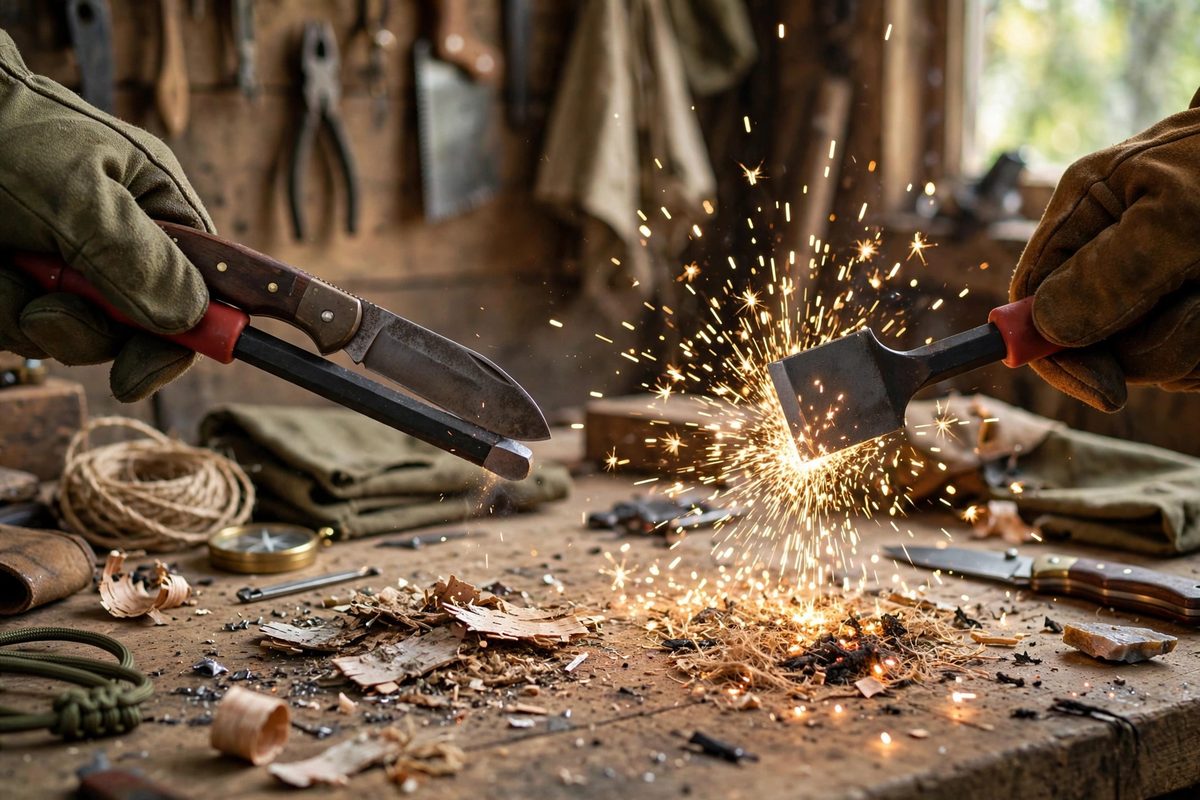
Why the Scrape Angle Matters
Scraping a ferro rod shaves off tiny particles of metal that ignite from the friction heat. A shallow angle skims the surface and shaves off fine, thin curls that ignite easily but carry little heat each. A steep angle digs in and gouges off thick chunks that burn hot but may not ignite at all because the scrape did not generate enough heat per particle. The sweet spot lies between: an angle steep enough to bite and shave real material, shallow enough that friction heat lights the shavings as they leave the rod. Roughly forty-five degrees of striker to rod is the classic starting point, adjusted by feel.
Striker Edge Geometry
The striker needs a sharp, square, ninety-degree edge. A rounded edge, like the spine of a well-used knife, spreads the force and shaves poorly. A beveled edge digs in and skips. Grind or file the striker edge square and keep it that way; it is a consumable edge that wears with use. Hardened steel strikers hold their edge longer than soft ones, which is why the little striker that comes with a quality rod outperforms a random piece of mild steel. Test the edge on your thumbnail: a good striker edge bites and stops, a bad one slides.
Speed, Pressure, and Technique
Sparks come from speed more than from brute force. A fast, confident scrape down the rod throws sparks far and hot; a slow grind just makes dust. Lock the rod tip near the tinder and pull the striker toward you, or hold the striker still and push the rod, so the shower lands exactly on the tinder instead of spraying across camp. Press firmly enough to keep the edge biting, but do not bear down so hard that the striker chatters and skips. Practice the motion until it is one smooth stroke, because fumbling the technique in the rain is how fires do not happen.
Reading the Spark Shower
Good sparks are white-hot, numerous, and land in a tight cluster. If your sparks are few and orange, the scrape is too slow or too shallow. If you are gouging the rod and getting flakes instead of sparks, the angle is too steep or the pressure too high. A rod that throws well and suddenly does not may have a glazed or contaminated surface; scrape the coating off a new rod first, and wipe a dirty rod clean. The rod tells you what is wrong if you watch the shower instead of just watching the tinder.
Matching Sparks to Tinder
The hottest shower in the world will not light a damp log. Ferro sparks ignite fine, dry, fluffy tinder: char cloth, cotton balls, shredded bark fibers, feather sticks. Prepare the tinder into a bird's nest shape that catches sparks and cradles the first ember. Aim the shower into the heart of the nest, then nurture the ember with gentle breaths. The striker technique and the tinder prep are a system; perfect sparks into bad tinder fail exactly as reliably as bad sparks into perfect tinder.
Square the striker edge, scrape at a working angle with speed and confidence, and read the shower to tune your technique. The rod has thousands of fires in it, and every one of them starts with the scrape.
Related Guides
- Ferro Rod Scraping Angle Dynamics for Shower Sparks: A ferrocerium rod throws sparks hot enough to ignite tinder (around 3,000 F at the spark), but only if the striker shaves the rod correctly. Most
- Ferrocerium Rod Diameter and Spark Shower Density: A ferrocerium rod throws sparks when shaved: the soft metal ignites in the air as tiny burning particles. Makers building fire starters choose rod
- Magnesium Shaving Ratios for Weatherproof Spark Tins: A spark tin is a pocket-sized fire insurance policy: a small sealed container holding everything needed to turn a spark into a flame, even when the
- Waterproof Cotton Ball Saturation Limits in Tinder Kits: Petroleum-jelly cotton balls are the classic DIY fire tinder: cheap, light, and reliable. Waterproofing them with wax or jelly makes them