
The cast-on edge is the foundation of every knitted piece, and for anything that needs to stretch, cuffs, sock tops, necklines, hat brims, the cast-on must stretch too. The German twisted cast-on (also called the Old Norwegian cast-on) produces an edge with exceptional elasticity: it looks like a standard long-tail cast-on but behaves like a ribbed spring. The secret is in the twist of each stitch and, critically, in the tension you cast on with.
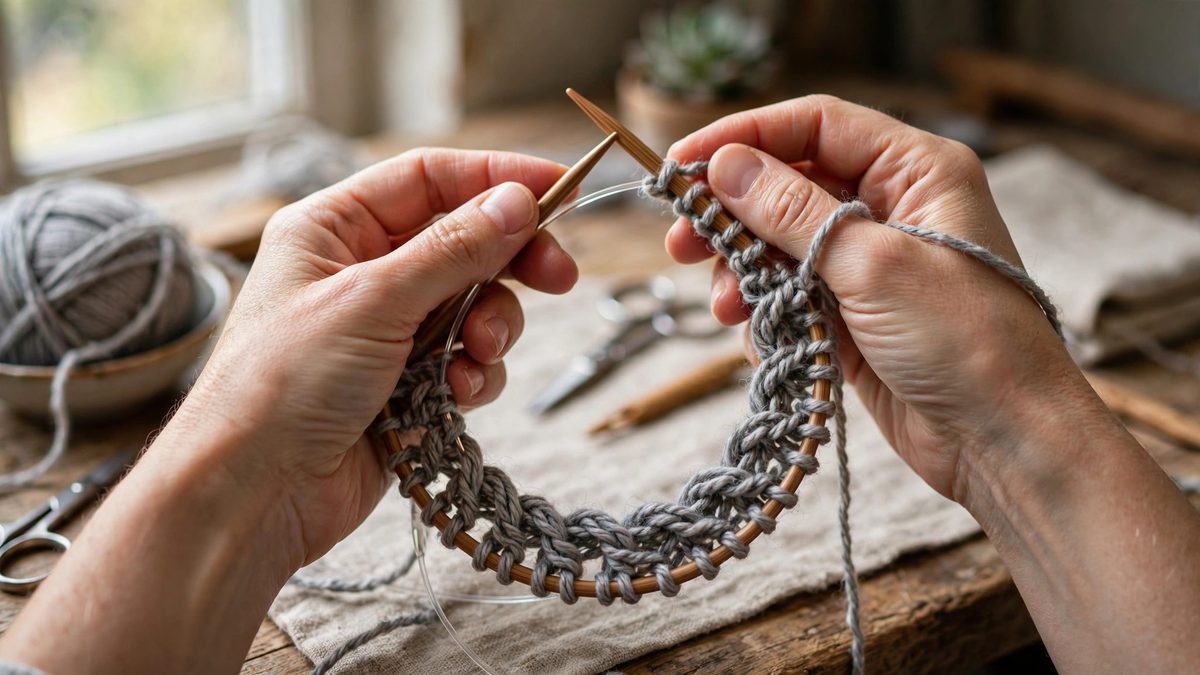
How the German Twisted Cast-On Works
The German twisted cast-on starts like a long-tail cast-on, with the yarn held in slingshot position, but each stitch gets an extra twist as it is formed: the needle dips under and twists the thumb loop before drawing the yarn through. That twist wraps additional yarn into each stitch's base, creating a slightly twisted, reinforced edge stitch with more yarn available to extend when stretched. The result is a cast-on edge that can stretch dramatically and snap back, far beyond what a standard long-tail edge manages. It is particularly valuable in circular knitting, where the cast-on joins into a round and any tightness in the edge constricts the whole opening.
Why Tension Matters More Here
The twisted cast-on's elasticity comes from the extra yarn in each stitch, but tension determines whether that potential is realized. Cast on too tightly and you strangle the twist: the stitches lock down, the extra yarn cannot extend, and you get an edge barely stretchier than a standard cast-on, defeating the entire purpose. Cast on too loosely and the edge flares, looks sloppy, and the first row is hard to work into. The target is a medium, even tension: firm enough that the edge is neat and the stitches sit uniformly on the needle, loose enough that each twisted stitch retains its ability to open up. This is a narrower sweet spot than most cast-ons demand, which is why the technique has a reputation for fussiness.
Finding the Right Tension
Several practical tricks help. Cast onto a needle one size larger than your working needle, then switch to the working needle for the first row: the larger needle enforces a minimum stitch size and prevents the death-grip cast-on that ruins elasticity. Keep the yarn tail tension relaxed in the slingshot hold; many knitters unconsciously tighten the thumb loop, so check that each new stitch slides freely on the needle rather than gripping it. Space the stitches with a finger's width of consistency rather than jamming them together: the cast-on edge should look even, not compressed. After casting on a dozen stitches, stretch the edge gently: it should extend easily and recover. If it does not, your tension is too tight, and it is better to restart now than to discover it at the cuff.
The Join in Circular Knitting
In circular knitting, the cast-on edge must join without twisting and without a tight spot at the join. The German twisted cast-on's stretchiness actually helps here: the edge forgives minor tension inconsistencies around the join that would show in a stiffer cast-on. When joining, make sure the first and last stitches meet at the same tension as the rest: a tight join creates a permanent pinch point in an otherwise stretchy edge. Some knitters cast on one extra stitch and knit it together with the first stitch at the join, which tidies the junction; with the twisted cast-on, this works well because the edge has the elasticity to absorb the decrease invisibly.
Matching Cast-On to Bind-Off
An elastic cast-on paired with a tight bind-off is a half-finished job: cuffs need both ends stretchy. Pair the German twisted cast-on with a stretchy bind-off like a sewn bind-off or a suspended bind-off, worked with matching care about tension. Test both edges by stretching: they should extend similarly and recover similarly. Mismatched elasticity is surprisingly visible in the finished garment, with one edge flaring and the other constricting, and it is entirely avoidable with a minute of planning.
When Not to Use It
The German twisted cast-on is not the answer for every edge. Where you want a firm, non-stretchy edge, a structured shoulder seam, a bag bottom, a decorative picot edge, its elasticity is a liability: the edge will stretch out of shape under load. It also uses more yarn than a standard cast-on, so estimate your tail generously (the twist consumes extra). And for beginners still mastering basic tension, the added twist motion is one more variable; there is no shame in using a standard long-tail cast-on while building the fundamentals. Use the twisted cast-on where its stretch earns its place.
The German twisted cast-on rewards attention to tension with an edge that stretches like ribbing and looks like a clean long-tail. Cast onto a larger needle, keep the tension medium and even, test the stretch early, and match it with a stretchy bind-off. Your cuffs will thank you every time they go on and come off.
Related Guides
- German Twisted Cast On Elasticity for Sock Ribbing: A sock cuff lives a hard life: stretched over the heel dozens of times a week, washed, worn, expected to snap back every time. The cast-on edge is
- Twisted Loop Cast-On Elasticity for Ribbed Cuffs: A ribbed cuff lives or dies by its edge. The cast-on must stretch when a hand pushes through and snap back to hug the wrist afterward, thousands of
- Cable Tension Drop in Long Circumference Circular Needles: Knitting on a long circular needle should be smooth: the stitches glide around the cable, the join stays put, the rhythm never breaks. But on very
- Magic Loop Cable Flex for Small Circumference Knits: Magic loop lets one long circular needle knit any small circumference, sleeves, socks, hats, by looping the excess cable out at two points and