
A leaf cast lives or dies on the mix. The plaster or cement has to capture vein detail fine enough to read, then survive being handled, hung, and weathered without crumbling at the edges. High strength aggregate mixes borrow from concrete technology: fine, well-graded particles packed tight, with just enough water and the right additives to cure dense and hard.
Choosing the Base Material
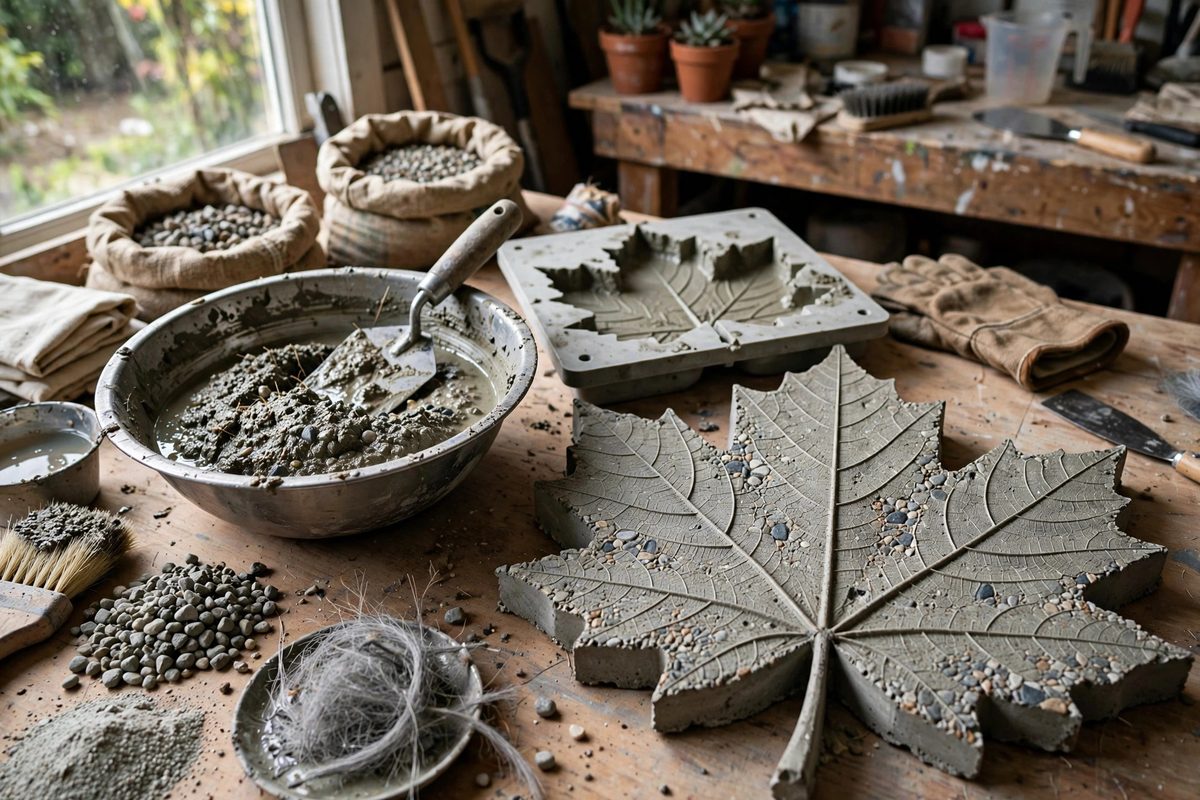
For indoor casts, a hard plaster or stone-type casting plaster captures the finest detail because its particles are extremely fine. For outdoor casts, cement-based mixes win on weather resistance. The strength of a cement mix comes from the aggregate grading: a blend of fine sand with a small fraction of even finer material packs tighter than a single-size sand, leaving fewer voids in the cured cast. Avoid coarse aggregate entirely; pebbles and coarse sand cannot reproduce leaf veins and they make edges chip. The mix should feel almost creamy when properly proportioned.
Water Ratio and Workability
Strength and water fight each other. More water makes the mix easier to pour and press into detail, but excess water leaves pores as it evaporates, weakening the cast. Use the minimum water that still gives a workable mix, roughly the consistency of thick cake batter for poured casts or stiff dough for pressed ones. Mix thoroughly so every particle is wetted; dry pockets become weak spots. If the mix needs more workability without more water, a small dose of water-reducing admixture or a polymer modifier does the job without sacrificing cured strength.
Reinforcement for Thin Edges
Leaf casts are thinnest at the edges, exactly where they break. Embed a layer of fiberglass mesh, hardware cloth, or natural fiber mesh in the middle of the cast to tie the whole piece together. Place the reinforcement after the first detail layer has captured the leaf texture, then cover it with the backing layer. The detail face stays clean and the mesh carries the tensile load that unreinforced thin cement cannot. For large casts, a second mesh layer near the back adds insurance against handling cracks.
Additives That Actually Help
Polymer modifiers, added as a liquid replacing part of the mix water, dramatically improve the flexibility and bond strength of cement mixes, which matters at thin leaf edges. A pinch of pigment can be worked into the mix for integral color, though test first because pigments can slightly reduce strength. Retarding admixtures buy working time on hot days when the mix wants to set before you finish pressing detail. Skip the exotic additives and air-entrainment agents meant for structural concrete; they solve problems a leaf cast does not have.
Curing for Maximum Strength
Fresh casts gain strength slowly, and rushing the cure is the most common way to ruin a good mix. Keep the cast damp and covered for the first day or two so it cures rather than dries; cement that dries out stops gaining strength permanently. Protect fresh casts from freezing and from direct sun baking them dry. Wait a full week before handling the cast roughly or hanging it outdoors. A properly cured high-strength mix shrugs off weather that would powder a quick-dried one.
Detail comes from fine materials, strength comes from tight grading and low water, and survival comes from reinforcement and proper curing. Mix lean, reinforce the edges, cure it slow, and the leaf you cast this season will still be crisp seasons from now.
Related Guides
- Reinforced Concrete Slurry Mixes for Leaf Castings: A leaf casting captures a leaf's veining in concrete with a fidelity no carving can match: you press a real leaf into sand, pour concrete over it
- Vibrating Mortar Slurry to Stop Air Pockets in Casts: Leaf casting, pressing real leaves into mortar to capture their veining in concrete, lives or dies on surface quality: the leaf's delicate detail
- Polymer-Fortified Cement Slurries for Leaf Impressions: Pressing a leaf into wet cement captures every vein and serration in stone, making garden art that outlasts the plant by decades. But plain cement is
- Alkali-Resistant Fiber Mesh Layouts for Cement Leaves: Cement leaf castings, made by pressing real leaves into a cement mold or casting cement over them, are garden art with a structural problem: thin