
Top bar hives do away with frames and foundation, letting bees build natural comb hanging from wooden bars. The spacing of those bars is the beekeeper's main design decision: it sets the comb thickness, and the bees will build to the space they are given. Get it right and the combs hang straight and even; get it wrong and they wander, merge, and become unmanageable.
Why spacing determines comb
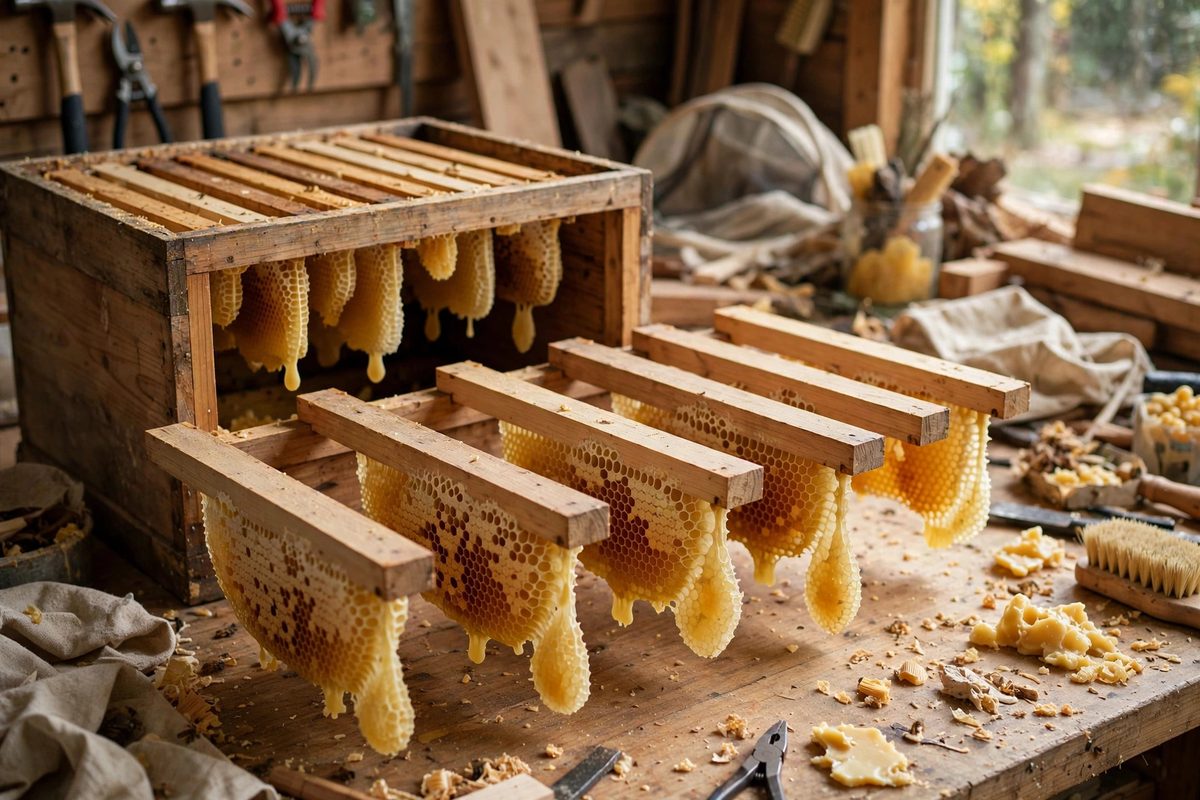
Bees build comb to a natural thickness with a bee-space gap between combs, and in a top bar hive the bar spacing dictates where each comb hangs. Bars spaced correctly produce one straight comb per bar; bars spaced too widely invite the bees to build comb at angles or to join adjacent combs; bars too narrow crowd the combs and restrict the cluster. The bees follow their instincts within the geometry you provide, so the geometry has to match their instincts.
The standard spacing and its logic
The widely used top bar width is around one and a quarter inches, which approximates the natural center-to-center comb spacing bees prefer in the brood area. This is not arbitrary; it reflects the bee space, the gap bees leave between combs, plus the comb thickness. Bars of this width, placed edge to edge with no gaps, give the bees a continuous surface from which to hang straight combs. In the honey storage area, slightly wider bars can be used, since honey combs are built thicker; many beekeepers use follower boards to adjust the active area rather than varying bar widths.
Bar width consistency
Every bar in the hive should be the same width, cut accurately. A single narrow bar creates a gap that the bees will fill with brace comb; a single wide bar crowds its neighbors. Mill or cut the full set of bars in one batch with a consistent setup, and check them with a gauge rather than by eye. The bees are precise builders working to your imprecise bars, and the combs will show every inconsistency. This is one of those places where ten minutes with the table saw setup determines a season of beekeeping.
Guides: starter strips and wax
Spacing alone does not guarantee straight comb; the bees need a starting guide on each bar. A thin starter strip of wood or a bead of wax along the bar's centerline tells the bees where to begin, and they build downward from it. Without guides, even perfectly spaced bars can produce wandering comb, especially in a new hive. Make the guides straight and centered; a crooked guide produces a crooked comb regardless of spacing. The guide is the suggestion; the spacing is the discipline.
Managing cross comb
Despite best efforts, bees sometimes build comb across multiple bars. Catch it early: inspect new hives frequently, and when a comb starts to wander, straighten it gently and secure it. Early intervention is a small correction; late intervention is surgery on a hive full of bees. Cross comb left alone becomes structural, and removing it later destroys comb and angers the colony. Frequent early inspections are the price of natural comb, and they are worth it.
Seasonal and colony variations
Different colonies and different seasons build slightly differently. A strong nectar flow produces enthusiastic, sometimes sloppy comb building; a new package on fresh bars needs more guidance than an established colony. Watch the hive and adjust management, not the bar width: the spacing is fixed by the hive's construction, but inspection frequency and intervention are yours to tune. The beekeeper's attention is the variable that adapts.
Cut every bar to the same width around the natural comb spacing, fit straight centered guides, and inspect new comb frequently. The bees will do the rest, hanging straight combs from your straight bars, which is the quiet cooperation top bar beekeeping is all about.
Related Guides
- Top Bar Hive Comb Width Spacing for Brood Frame Health: In a top bar hive, the width you give each bar decides the shape of the comb the bees draw, and comb shape decides brood health. Too wide and the
- Langstroth Bee Space Tolerances to Prevent Burr Comb: The Langstroth hive works because of a single measurement: bee space, the gap that bees treat as a passageway rather than as space to fill. Get the
- Screened Bottom Board Airflow Ratios for Hives: The screened bottom board replaces the hive's solid floor with mesh, and the question every beekeeper asks is how much screening is right: full open
- Screened Hive Base Airflow Ratios for Varroa Drops: A screened bottom board does two jobs for a hive: it ventilates the colony, and it gives falling varroa mites a one-way trip out of the hive. Mites