
In a top bar hive, the width you give each bar decides the shape of the comb the bees draw, and comb shape decides brood health. Too wide and the bees build wavy, cross-combed messes you cannot inspect without destroying. Too narrow and they cramp the brood nest. Getting the spacing right is one of those small measurements that quietly determines whether the hive is a pleasure or a problem all season.
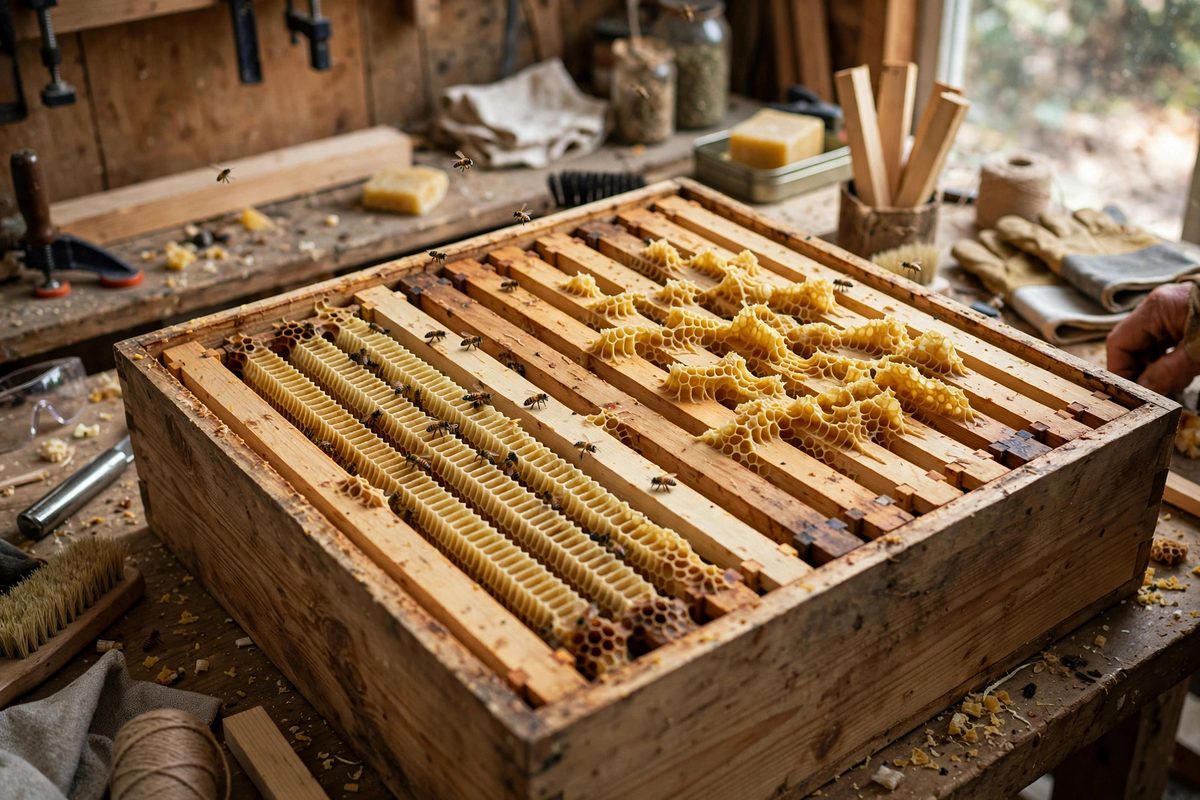
What the Bees Want: Natural Comb Spacing
Bees in the wild space brood comb centers roughly an inch and a quarter apart, with worker brood comb itself close to an inch thick. They leave just enough gap between combs for two bees to pass back to back. When you hand them bars, they want to reproduce that geometry. The common maker standard of inch-and-a-quarter wide top bars exists because it matches what the bees would do on their own. Deviating from it requires a reason, not a whim, because the bees will fight wrong spacing by building crooked comb or skipping bars.
Brood Nest Versus Honey Storage
The brood nest and the honey area want different widths. In the brood nest, bees draw slim worker combs, and the narrower inch-and-a-quarter spacing keeps the nest compact, warm, and easy to inspect. Out in the honey section, they naturally draw thicker combs and will happily fill wider gaps. Some keepers run wider bars in the honey zone to get fatter combs that yield more per bar. The mistake is mixing them: wide bars in the brood nest invite drone comb and cross-building, and narrow bars in the honey zone just mean more bars to handle for the same harvest.
Starting Straight Comb
Spacing only works if the bees start each comb straight along the bar. A starter strip of wax, a triangular wooden guide, or a shallow groove of melted wax down the bar centerline gives the bees a reason to begin at the middle. Without a guide, bees starting on a wide bar may begin at one edge and angle across to the next bar, and one crooked comb pulls its neighbors crooked like dominoes. The first two or three bars of the brood nest set the pattern for the whole hive, so check early and often during the first build-out, and straighten new comb while it is soft and fresh.
Checking and Correcting During Build-Out
Inspect new comb within a few days of starting. If a comb drifts off the bar, push it back while the wax is pliable, using the hive tool gently and your fingers on the edges. Young comb tears easily, so correct early rather than hoping it self-corrects; it will not. If bees cross-comb two bars badly, the kindest fix is to cut the problem comb out early and let them rebuild. Leaving cross-comb to "sort itself out" guarantees an inspection two months later that destroys comb and upsets the colony.
Seasonal and Colony Adjustments
A booming colony in a strong flow draws comb fast and straight, and will forgive slightly off spacing. A weak colony, a slow flow, or a late-season start draws comb reluctantly, and imperfections compound. During slow periods, keep inspections quick and gentle; the comb is your work in progress. In cold weather, remember that the cluster needs continuous comb contact across the brood nest, so comb that has been left with wide gaps from poor spacing can actually strand bees from stores. Uniform spacing is not just tidy, it is winter survival geometry.
Set the bars to match the bees: inch-and-a-quarter in the brood nest, wider where you want honey, guides on every bar, and early corrections while the wax is young. The hive will reward you with combs you can lift out one-handed and brood patterns you can read at a glance.
Related Guides
- Horizontal Frame Spacing for Top Bar Natural Beekeeping: Top bar hives do away with frames and foundation, letting bees build natural comb hanging from wooden bars. The spacing of those bars is the
- Screened Hive Base Airflow Ratios for Varroa Drops: A screened bottom board does two jobs for a hive: it ventilates the colony, and it gives falling varroa mites a one-way trip out of the hive. Mites
- Langstroth Bee Space Tolerances to Prevent Burr Comb: The Langstroth hive works because of a single measurement: bee space, the gap that bees treat as a passageway rather than as space to fill. Get the
- Screened Bottom Board Airflow Ratios for Hives: The screened bottom board replaces the hive's solid floor with mesh, and the question every beekeeper asks is how much screening is right: full open