
Magnetic tool bars are the clean way to display antique tools: the tools hang visible, accessible, and off the bench, with no hooks marring their handles. But a bar that is too strong in the wrong pattern can magnetize precision tools, and poor spacing on a soft pine board leads to sagging, splitting, and tools that migrate. Planning the magnet polarity layout and the mounting turns a strip of magnets into a proper display.
How magnetic bars hold
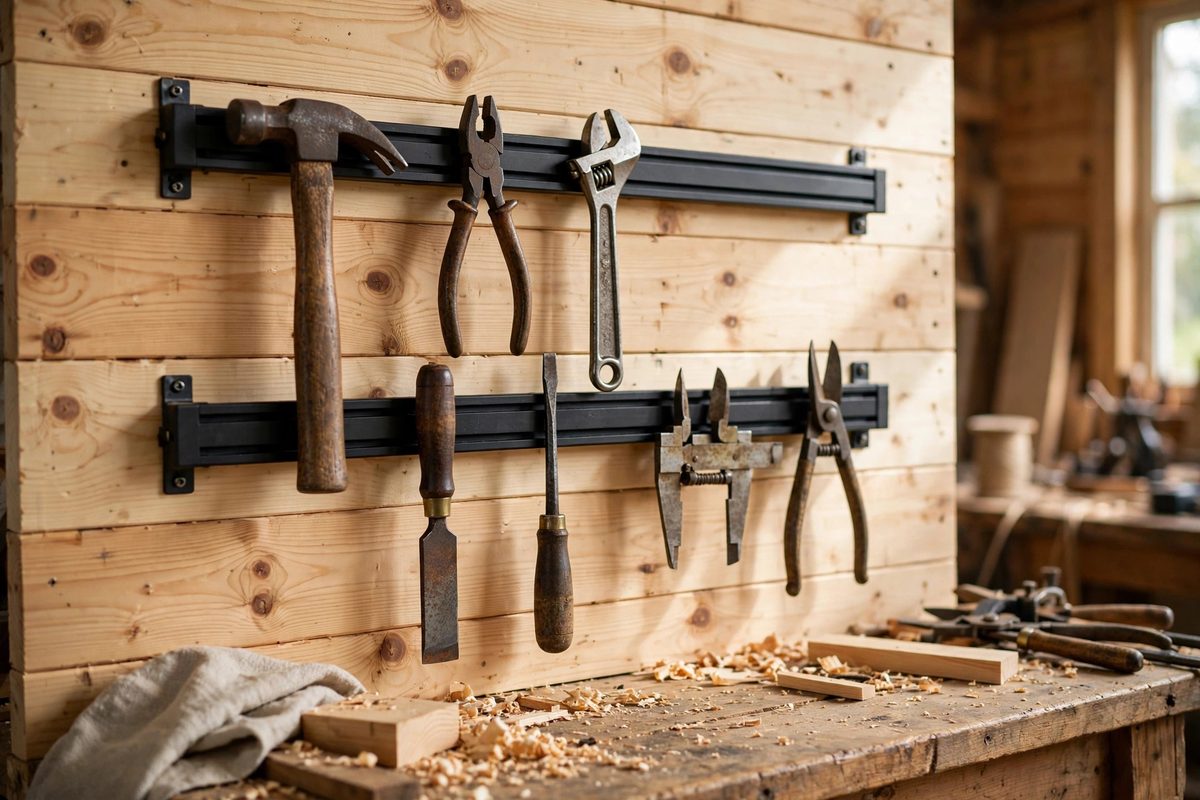
A magnetic tool bar is a row of permanent magnets, usually in a steel channel that focuses their field forward. Tools hang by the attraction between the magnet and the tool's steel; the holding force depends on the magnet strength, the contact area, and the air gap. Antique tools with thin or tapered sections hold less strongly than modern chunky ones, and tools with brass, wood, or bone handles only hang by their steel parts. Plan the display around actual holding force, not the bar's rating: test each tool on the bar before finalizing the layout.
Polarity patterns and spacing
Alternating the magnet polarity along the bar (north, south, north, south) creates a focused field pattern that holds tools more evenly and reduces the stray field extending beyond the bar. If building a bar from individual magnets, alternate their orientation and space them evenly, roughly an inch or so apart for typical hand tools; wider spacing creates dead zones where tools barely hold. Keep some distance between the bar and any precision instruments you do not want magnetized: a magnetized screwdriver is a nuisance, but a magnetized precision square or indicator can cause real problems. When in doubt, keep measuring tools on a separate, non-magnetic display.
Mounting on pine
Pine is soft, which is both forgiving and treacherous: screws bite easily but also strip easily, and a loaded bar exerts real pull-out force. Mount the bar with screws long enough to bite deep, and if the board is thin, use through-bolts with washers rather than wood screws. Pre-drill every hole; driving screws into pine without pilot holes splits the board, sometimes days later as the wood moves. Space the mounting screws to share the load, and check them periodically; a bar that works loose drops antique tools onto the floor.
Display layout for antique tools
Arrange tools with space between them so each can be lifted off without disturbing its neighbors; crowded bars lead to dropped tools. Hang heavier tools near the bar's mounting screws, where the support is strongest, and lighter ones toward the middle of spans. Consider the tools' finishes: bare steel on a magnetic bar is fine, but japanned or painted surfaces can be marked by repeated contact; a thin felt or leather strip on the bar's face protects finishes while barely reducing hold. Label the display if it is educational; a small tag with the tool's name and era turns storage into a museum.
Magnetization management
Tools stored on magnetic bars become magnetized over time. For most hand tools this is harmless or even handy, but it attracts steel dust and swarf, which then needs cleaning. Demagnetize tools periodically with a demagnetizer if the magnetism becomes a nuisance, especially before any precision work. Keep magnetic storage away from mechanical watches, magnetic media, and pacemakers; the fields are small but the caution is cheap.
Alternate the polarity, mount deep into the pine, space tools for safe handling, and watch what gets magnetized. The tools stay visible, accessible, and safe.
Related Guides
- Slotted Leather Tool Loops for High-Density Tool Boards: A wall of antique tools deserves better than nails and wire. Slotted leather loops hold each tool securely, look appropriate to the collection, and
- Rare Earth Magnetic Cleats for Vintage Tool Displays: Vintage tools deserve to be seen, and a wall display beats a drawer every time. But screws through a 100-year-old plane body are vandalism, and most
- Custom French Cleat Spacing for Vintage Tool Racks: Vintage tools deserve display that respects them: visible, accessible, and held securely without stressing century-old handles and mechanisms. The
- Recessed Rare Earth Magnet Spacing for Antique Chisels: Displaying antique chisels on a magnetic rack looks clean and keeps the tools accessible, but rare earth magnets are strong enough to be a problem if