
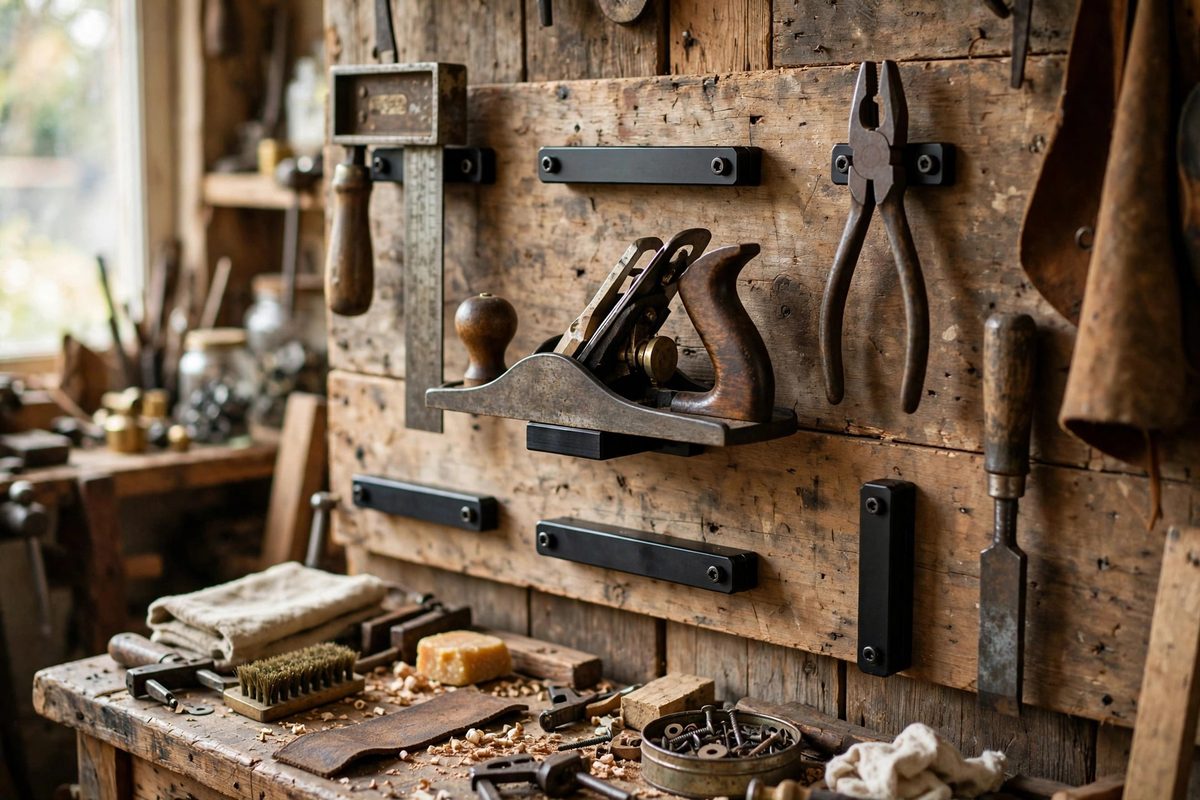
Vintage tools deserve to be seen, and a wall display beats a drawer every time. But screws through a 100-year-old plane body are vandalism, and most adhesives are forever in the wrong way. Rare earth magnetic cleats solve the mounting problem: a magnet embedded in a wooden cleat holds the tool invisibly from behind, the tool lifts off for handling, and nothing on the tool is modified, drilled, or glued. It is the display method collectors wish they had known about years earlier.
Why Magnets Suit Vintage Tools
Most vintage tools are steel or iron, which is exactly what magnets grip. The hold is strong, silent, and completely reversible: lift the tool off the cleat and there is no trace it was ever mounted. This matters for tools with collector value, where any modification (even a small screw hole in an inconspicuous spot) reduces worth. Magnets also make the display interactive; visitors can pick up a tool, feel its weight, and set it back, which is the difference between a museum rope and a living collection.
Magnet Selection and Strength
Neodymium (rare earth) disc or block magnets in the 1/2- to 3/4-inch range provide ample hold for hand tools; a single such magnet typically holds several pounds in direct shear-free contact, far more than a plane or saw weighs. Use N42 grade or similar; higher grades add strength but also add the risk of pinching fingers and of the magnet slamming the tool against the cleat hard enough to chip japanning. For heavy tools (large plow planes, heavy saws), use two magnets spaced apart rather than one monster magnet; distributed hold is gentler and more stable.
Building the Cleat
The cleat is a small wooden block, shaped to cradle the tool's back, with the magnet recessed into its face. Bore a pocket slightly deeper than the magnet's thickness, epoxy the magnet in flush or a hair below the surface, and cap it with a thin layer of leather, cork, or felt. That cap is essential: it prevents the magnet from scratching the tool's finish and softens the contact so tools seat with a gentle click instead of a snap. Shape the cleat's back to mount on the display board with screws or a French cleat of its own, so the whole assembly is removable.
Positioning for Stability
Place the cleat where the tool's center of gravity keeps it stable: roughly at the balance point for symmetric tools, or paired cleats (one near each end) for long tools like saws and levels. The tool should hang or rest against the cleat without wanting to rotate; if a plane wants to tip forward off its magnet, add a small lower lip or a second magnet near the toe. Test each mount by jostling the display board gently; a tool that walks off its magnet during a bump needs a deeper cradle or a second cleat, not a stronger magnet.
Protecting Finishes and Patina
Keep the magnet's cap material soft and clean; grit embedded in the felt will scratch a finish over time. For tools with fragile japanning or delicate plating, consider a slightly thicker leather pad to distribute the magnetic pressure. Avoid sliding tools across the cleat when removing them; lift straight off. And keep magnets away from tools with magnetic-sensitive companions: compasses, obviously, but also any tool with a magnetized component you want to preserve, and credit cards or phones in visitors' pockets near low-mounted displays.
Labeling and Layout
A display earns its keep with information: small engraved or printed labels identifying each tool, its maker, and its era turn a wall of old tools into a story. Lay out the display on paper first, grouping by type or chronology, and leave breathing room; a crowded wall reads as storage, while a spaced wall reads as curation. Because the cleats are modular, rearranging the display is trivial, so let the layout evolve as the collection grows.
Rare earth magnetic cleats give vintage tools the display they deserve: secure, reversible, interactive, and kind to finishes. Recess the magnet, cap it soft, position for balance, and label with care; the tools spent a century waiting to be seen, and now they can be.
Safety note: neodymium magnets are strong enough to pinch skin badly and can shatter if allowed to slam together. Keep them away from children, pacemakers, and electronic media, and handle large ones with the respect their pull force demands.
Related Guides
- Recessed Rare Earth Magnet Spacing for Antique Chisels: Displaying antique chisels on a magnetic rack looks clean and keeps the tools accessible, but rare earth magnets are strong enough to be a problem if
- Magnetic Tool Bar Polarity Spacing on Pine Boards: Magnetic tool bars are the clean way to display antique tools: the tools hang visible, accessible, and off the bench, with no hooks marring their
- Custom French Cleat Spacing for Vintage Tool Racks: Vintage tools deserve display that respects them: visible, accessible, and held securely without stressing century-old handles and mechanisms. The
- Slotted Leather Tool Loops for High-Density Tool Boards: A wall of antique tools deserves better than nails and wire. Slotted leather loops hold each tool securely, look appropriate to the collection, and