
Bast fibers, flax, hemp, nettle, make yarns with a character all their own: strong, a little stiff, and less stretchy than wool. That low stretch is torsional elasticity, the yarn's resistance to twisting deformation, and measuring it tells a spinner whether the yarn will behave in the intended textile or fight it.
What torsional elasticity means in yarn
When you twist a yarn, the fibers wind tighter and the yarn shortens slightly; release it, and it untwists and recovers. Torsional elasticity describes how much twist the yarn absorbs and how completely it recovers. Wool is springy in torsion; bast fibers are not. A hand-spun flax yarn holds its twist with little recovery, which is why linen fabrics have that crisp, stable hand. Knowing the yarn's torsional behavior predicts how it will act in weaving, knitting, and plying.
A simple test rig
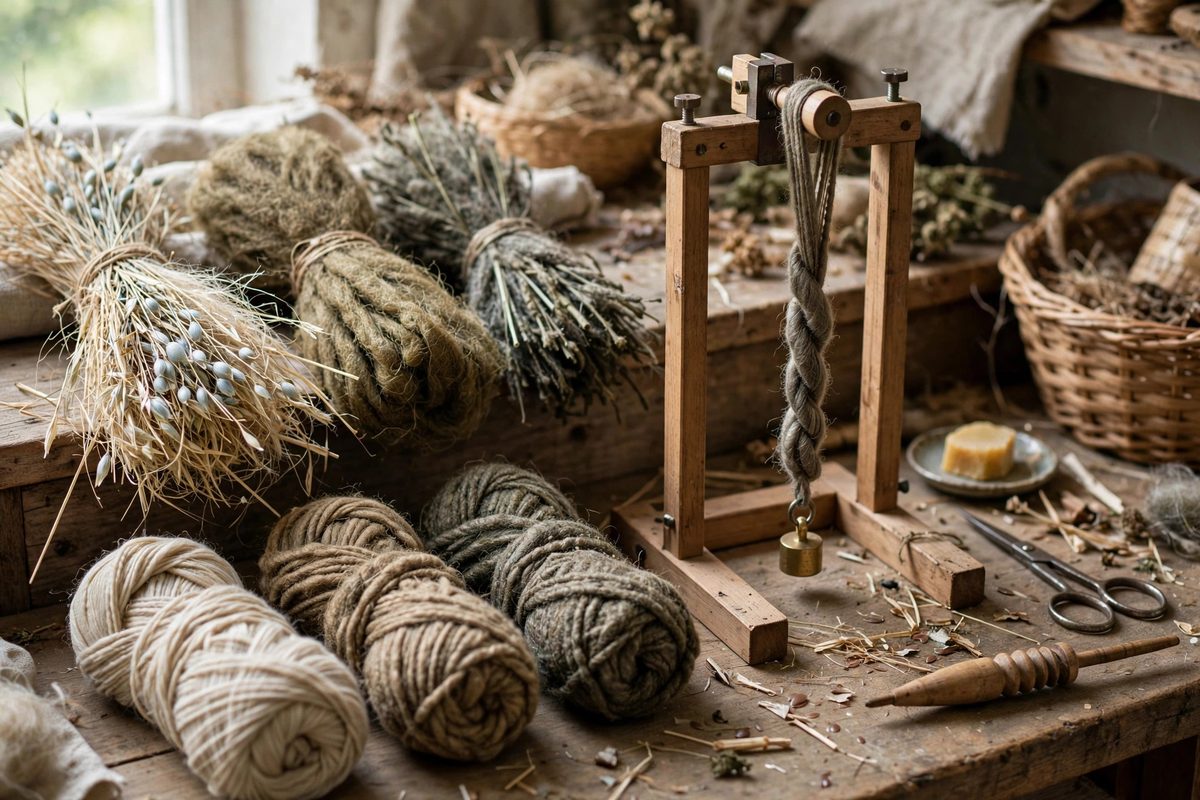
You do not need a lab to measure this. Hang a measured length of yarn vertically with a fixed clamp at the top and a small weight at the bottom that is free to rotate, such as a lightweight cross-stick. Twist the bottom through a known number of turns, release it, and count how many turns it recovers. The ratio of recovered turns to applied turns is a practical measure of torsional elasticity. Keep the applied twist consistent between tests, and test several samples, because hand-spun yarn varies along its length.
Reading the results
A high recovery ratio means a lively, springy yarn; a low ratio means a stable, twist-holding yarn. Neither is better in the abstract. For weaving warp, low torsional elasticity is often desirable: the yarn stays put under tension and does not try to untwist in the reed. For knitting, a bit more liveliness helps the stitches sit evenly. Record the numbers alongside the fiber, the preparation, and the spinning details, so the measurement becomes part of your spinning notes rather than a one-off curiosity.
How processing changes the numbers
Retting, breaking, scutching, and hackling all affect the fiber's torsional behavior by changing fiber length, fineness, and surface character. Under-retted bast is stiff and twist-resistant; over-retted fiber is weak and variable. The spinning itself matters too: a long draw produces a different twist structure than a short draw, and the amount of twist inserted shifts the elasticity. If the numbers surprise you, look at the processing first. The yarn is reporting on everything that happened to the fiber before it.
Plying and the elasticity balance
Plying two singles together partly cancels their torsional energy, which is why plied yarns are more stable than singles. Measuring the singles' torsional elasticity before plying lets you predict the plied yarn's behavior: two low-recovery singles make a very stable plied yarn, while lively singles need more plying twist to settle. For bast yarns destined for warp, this predictability is valuable; a warp that wants to untwist is a weaving headache. Test, then ply with intention.
Keeping records that compound
The real value of measuring is cumulative. A notebook entry per batch, fiber source, preparation, twist, recovery ratio, and the textile it became, builds a personal reference that no book can match. After a dozen batches you will know your fibers' torsional personalities the way you know your own spinning. The test takes minutes; the knowledge compounds for years.
Hang the yarn, twist it, count the recovery, and write it down. Torsional elasticity is one number that tells you how the yarn will behave, and the spinner who measures it spins with fewer surprises.
Related Guides
- Moisture Regain Elasticity Changes in Bast Fibers: Bast fibers, flax, hemp, jute, ramie, the long fibers drawn from plant stems, behave differently wet than dry in ways that matter at every stage from
- Tensile Elasticity Loss in Wet Spun Flax Cordage: Flax spun wet, the traditional method for fine linen thread, produces cordage with remarkable strength and smoothness. But flax fiber's relationship
- Tensile Strength Testing in Natural Braid Fibers: Natural fibers for braiding, hemp, jute, linen, cotton cord, vary enormously in strength from batch to batch, and a braid is only as strong as its
- Reed Moisture Soaking Times for Tension Stake Weaving: Reed is wood, and wood bends only when its fibers are willing. Dry reed snaps. Properly soaked reed bends around stakes, cinches tight, and holds its
- Calculating Split Cane Taper Ratios for Ribs: Basket ribs, the structural stakes that radiate from the base and define the basket's shape, are usually tapered: thick and strong at the base where