
Flax spun wet, the traditional method for fine linen thread, produces cordage with remarkable strength and smoothness. But flax fiber's relationship with water is complicated: the same moisture that makes wet spinning possible changes the fiber's mechanical behavior, and cordage that is strong when dry can lose a significant portion of its tensile elasticity when wet. For makers using flax cordage in functional applications, from bowstrings to fishing lines to structural lashings, understanding this wet-dry behavior is the difference between cordage that performs and cordage that fails when it rains.
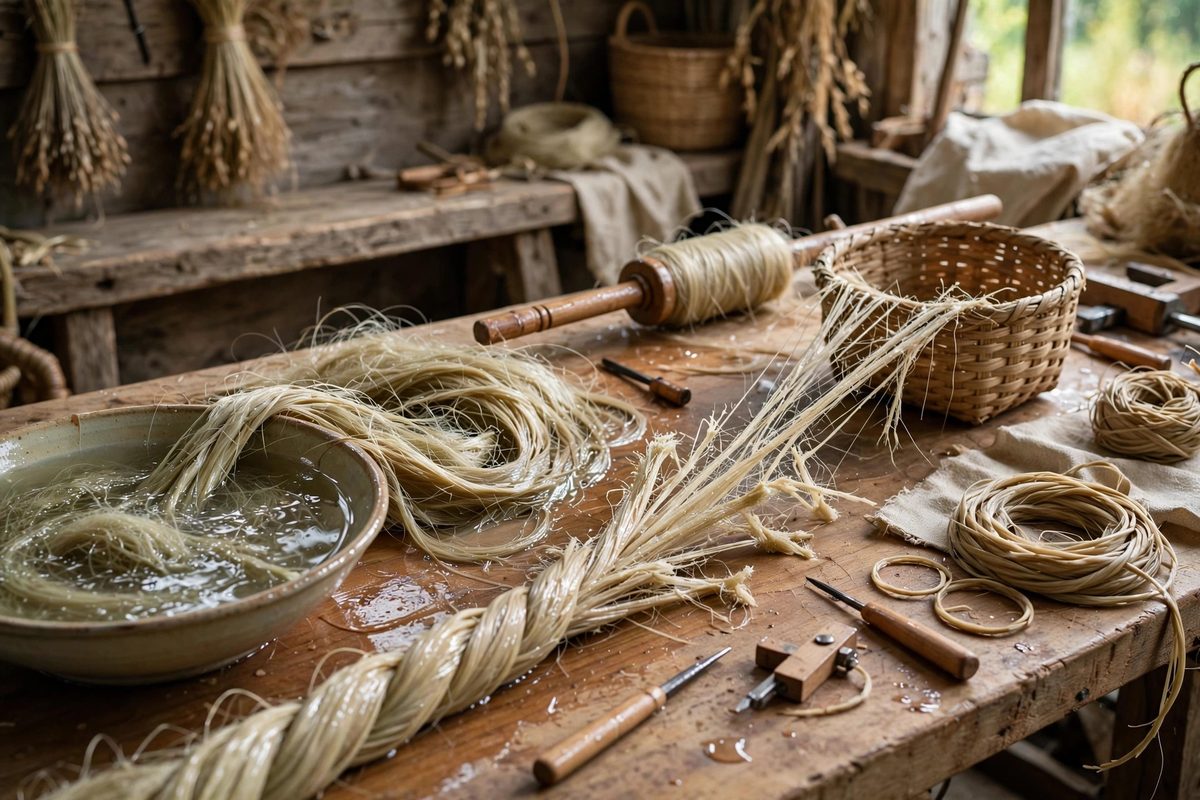
Why Wet Spinning Works
Flax fibers are bound together by pectins, natural gums that soften in warm water. Wet spinning passes the roving through a hot water trough just before the drafting zone: the softened pectins let the fibers slide past each other into a fine, even strand, and the individual fiber ends, which would poke out as hairiness in dry spinning, plaster down smoothly against the strand. The result is a stronger, smoother, finer thread than dry spinning can produce from the same fiber. As the thread dries, the pectins re-harden, locking the fibers in their drafted arrangement: the water was a processing aid, and its departure is part of the strength development. This is why wet-spun linen has its characteristic crisp, almost wiry hand when dry; the pectin cement has set.
What Water Does to the Fiber
Cellulose fibers absorb water into their structure, swelling the fiber and plasticizing the bonds between cellulose chains. In flax, this has two mechanical effects. Tensile strength, the breaking load, actually increases slightly when damp: the swollen fibers grip each other better and the plasticized structure distributes stress more evenly, which is why linen thread is traditionally said to be stronger wet. But tensile elasticity, the ability to stretch under load and recover, decreases: the plasticized fiber deforms more readily and recovers less completely, so wet flax cordage elongates under sustained load and does not fully spring back. Stiffness drops markedly: wet linen feels softer and more pliable than dry, which is the same plasticization observed from the mechanical side. The practical summary is that wet flax is stronger against breaking but weaker against stretching: it holds more before it snaps, but it gives more under working loads.
Implications for Cordage Under Load
The elasticity loss matters most in applications where the cordage must maintain tension. A bowstring of wet-spun flax, wetted by rain, stretches under the bow's draw weight: the brace height drops, the cast weakens, and the string does not fully recover when dried, having taken a permanent set. A fishing line behaves similarly, elongating under a fighting fish. Structural lashings loosen as the cordage stretches under sustained load in wet conditions, which is precisely when lashings are most needed to hold. The design responses are several: pre-stretch the cordage wet during making, so the permanent set is taken before the cordage goes into service; size the cordage for the wet working elongation, not just the dry breaking strength; protect the cordage from wetting with wax or oil dressings, which slow water absorption dramatically; or choose applications where the elasticity change is harmless, decorative cordage and short ties rather than tension-critical uses.
Waxing and Dressing as Protection
Traditional cordage dressings, beeswax, tallow, or modern wax blends, waterproof the fibers and largely preserve the dry mechanical behavior in wet conditions. The wax fills the interfiber spaces, blocking liquid water from reaching the cellulose, while adding minimal weight. Apply warm so the wax penetrates: surface waxing washes off quickly, while impregnated waxing endures. The dressing also reduces abrasion, a significant secondary benefit, since wet fibers abrade faster than dry ones. Re-dress periodically in hard use; the wax wears off with handling and weather. Note the tradeoff: heavy waxing makes the cordage slightly less flexible and can interfere with knots that depend on fiber friction, so dress for the application: working cordage that must hold knots wants a lighter dressing than standing rigging that must resist weather.
Testing and Knowing Your Cordage
The honest approach is to test the actual cordage in both states. Hang a known weight from a length of the finished cordage dry, mark the elongation, then wet it thoroughly, rehang the weight, and measure again: the difference is the wet elasticity loss for that specific cordage, which varies with fiber quality, spin tightness, and finishing. Repeat the wet-dry cycle several times: the first cycle takes the largest permanent set, and subsequent cycles stabilize, which tells you how much pre-stretching the cordage needs before service. Break-test samples wet and dry to confirm the strength behavior for your fiber. These are simple tests requiring only weights, water, and patience, and they replace speculation with numbers. Cordage you have tested is cordage you can trust; cordage you assume about is a surprise waiting for rain.
Wet-spun flax cordage is superb material with a known wet-weather personality: stronger against breaking, weaker against stretching. Pre-stretch it wet, dress it against water, size for wet elongation, and test what you make. The cordage will then perform in the rain as well as it does in the shop.
Related Guides
- Measuring Torsional Elasticity in Hand-Spun Bast Yarns: Bast fibers, flax, hemp, nettle, make yarns with a character all their own: strong, a little stiff, and less stretchy than wool. That low stretch is
- Tensile Strength Testing in Natural Braid Fibers: Natural fibers for braiding, hemp, jute, linen, cotton cord, vary enormously in strength from batch to batch, and a braid is only as strong as its
- Moisture Absorption Impact on Hemp Cordage Strength: Hemp cordage has held the world together for millennia: rigging, nets, lashings, and garden twine. It is strong, sustainable, and pleasant to work
- Moisture Regain Elasticity Changes in Bast Fibers: Bast fibers, flax, hemp, jute, ramie, the long fibers drawn from plant stems, behave differently wet than dry in ways that matter at every stage from
- Reed Moisture Soaking Times for Tension Stake Weaving: Reed is wood, and wood bends only when its fibers are willing. Dry reed snaps. Properly soaked reed bends around stakes, cinches tight, and holds its