
Hemp cordage has held the world together for millennia: rigging, nets, lashings, and garden twine. It is strong, sustainable, and pleasant to work with, but it is a natural fiber, and natural fibers drink water. Moisture absorption changes hemp cordage in ways that matter for any load-bearing use: the fibers swell, the cordage weakens when wet, and repeated wet-dry cycles degrade it faster than steady use. Understanding the moisture behavior is what separates decorative hemp work from hemp you can trust.
How Hemp Fiber Absorbs Water
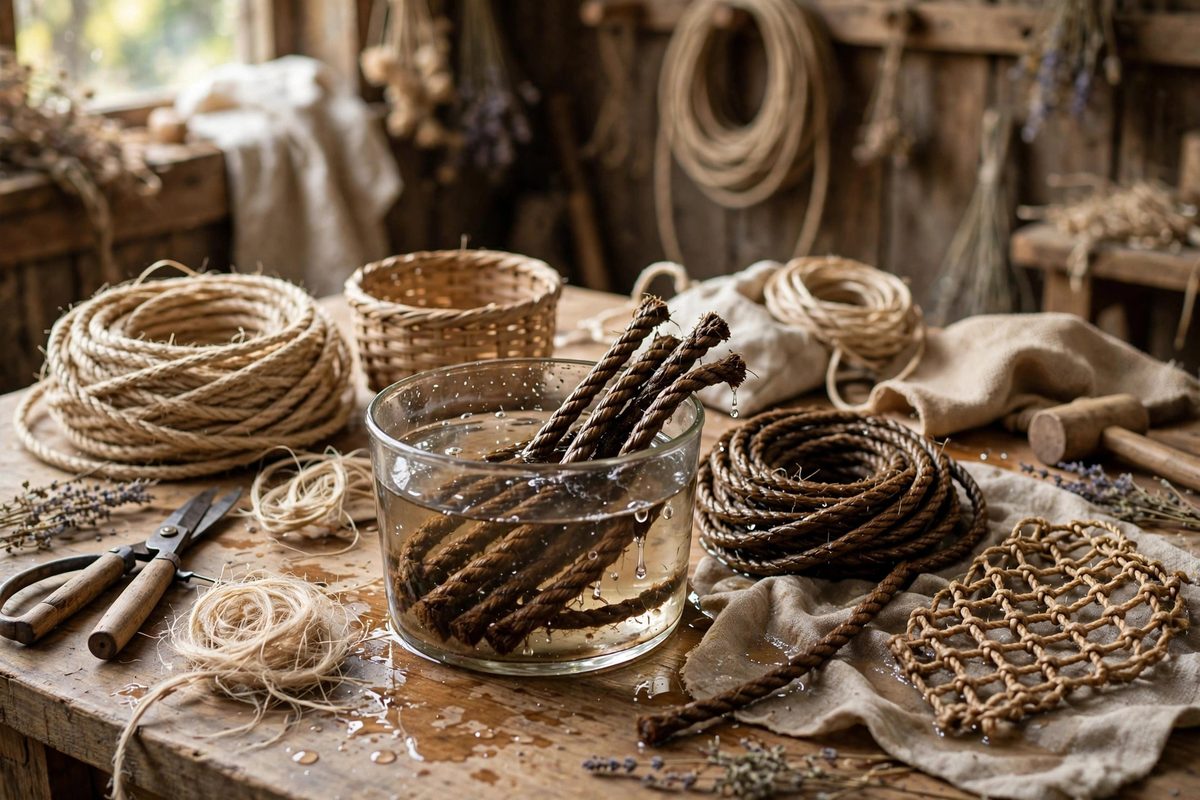
Hemp fibers are bundles of cellulose, and cellulose is hydrophilic: water molecules slip between the fiber's molecular chains and push them apart, which is why the fiber swells. A hemp cord can absorb a substantial fraction of its own weight in water, swelling in diameter and, importantly, changing its mechanical properties. The swelling is not uniform: the cord gets thicker and slightly shorter as the fibers fatten and the twist structure tightens. This is reversible in the short term, dry the cord and it returns close to its original dimensions, but the absorption-desorption cycle itself does cumulative damage over time.
Wet Strength vs Dry Strength
Here is the counterintuitive part: many natural fibers, hemp included, are actually somewhat stronger when damp than when bone dry, because a little moisture plasticizes the fibers and lets them share load more evenly. But soaked hemp, and hemp that has been repeatedly wetted and dried, tells a different story. Prolonged wetting softens the fiber structure, encourages microbial attack, and the swelling-shrinking cycles work the twist structure loose, reducing the cordage's effective strength. The practical rule: brief dampness is harmless and even helpful for working the cord, but cordage that lives wet, or cycles wet and dry constantly, should be derated significantly from its dry breaking strength and inspected often.
Rot: The Real Enemy
Strength loss from moisture alone is gradual; rot is what kills hemp cordage. Constant dampness invites fungi and bacteria that digest cellulose, and once rot starts, strength drops off a cliff: rotted hemp can look almost normal while having a fraction of its original strength. The danger zone is cordage that stays damp without drying: buried lashings, garden twine in contact with soil, outdoor rigging in shaded humid spots. Traditional treatments like tarring existed precisely to fight this: the tar waterproofed the fibers and poisoned the microbes. Modern makers can use wax, oil finishes, or synthetic preservatives, but the principle is unchanged: keep water out, or keep the cord dry enough between wettings that microbes cannot establish.
Designing With Moisture in Mind
Several design choices mitigate moisture effects. Size the cordage generously for outdoor or load-bearing use, so that even with strength reduction and aging, the working load stays well within capacity. Avoid designs that trap water: lashings should shed water rather than cup it, and cordage should not sit in permanent contact with wet surfaces. Allow for the swelling: a lashing pulled drum-tight when dry will get tighter when wet as the fibers swell, which can stress the anchor points, and then loosen as it dries. Where dimensional stability matters, pre-shrink the cordage by soaking and drying it before the final installation. And for critical loads in wet environments, consider whether hemp is the right fiber at all: synthetics exist for a reason, and there is no shame in choosing them where safety depends on it.
Inspection and Retirement
Hemp cordage in service needs periodic inspection, and moisture exposure sets the schedule. Look for discoloration, a musty smell, stiffness or brittleness when dry, and fibers that pull apart easily or feel mushy when wet: all are signs of degradation. Flex the cord sharply and look for surface cracking; healthy hemp flexes, degraded hemp cracks. Pay special attention to sections that stay damp: the soil line on garden stakes, the contact points of lashings, the interior of knots where water lingers. When in doubt, retire it: cordage is cheap, and the failure it prevents is not.
Storage Between Uses
Store hemp cordage dry, ventilated, and out of direct sun: UV degrades natural fibers nearly as fast as moisture. Do not store it in sealed plastic while damp, which is an invitation to mold; let it dry fully first. Coils should be loose enough for air circulation. A little care in storage extends cordage life dramatically, because most degradation happens not during use but during the long idle periods between uses.
Hemp is a superb cordage fiber with an honest weakness: water. Respect the moisture behavior, design for it, protect against rot, inspect on schedule, and hemp will serve reliably. Ignore it, and the cordage will teach you the lesson on its own schedule, which is never convenient.
Related Guides
- Moisture Regain Elasticity Changes in Bast Fibers: Bast fibers, flax, hemp, jute, ramie, the long fibers drawn from plant stems, behave differently wet than dry in ways that matter at every stage from
- Reed Moisture Soaking Times for Tension Stake Weaving: Reed is wood, and wood bends only when its fibers are willing. Dry reed snaps. Properly soaked reed bends around stakes, cinches tight, and holds its
- Tensile Elasticity Loss in Wet Spun Flax Cordage: Flax spun wet, the traditional method for fine linen thread, produces cordage with remarkable strength and smoothness. But flax fiber's relationship
- Tensile Strength Testing in Natural Braid Fibers: Natural fibers for braiding, hemp, jute, linen, cotton cord, vary enormously in strength from batch to batch, and a braid is only as strong as its
- Calculating Split Cane Taper Ratios for Ribs: Basket ribs, the structural stakes that radiate from the base and define the basket's shape, are usually tapered: thick and strong at the base where