
Fusible web is the applique artist's shortcut: an adhesive film that bonds fabric shapes to a background with heat, no pinning, no basting, no shifting. The paper-backed version adds a carrier sheet that lets you trace, cut, and position shapes precisely before fusing. But the web must be sized correctly to the applique piece: too small and the edges lift, too large and adhesive oozes beyond the shape, stiffening the background and attracting dirt. Sizing the web to the shape is a small skill with a large effect on the finished applique.
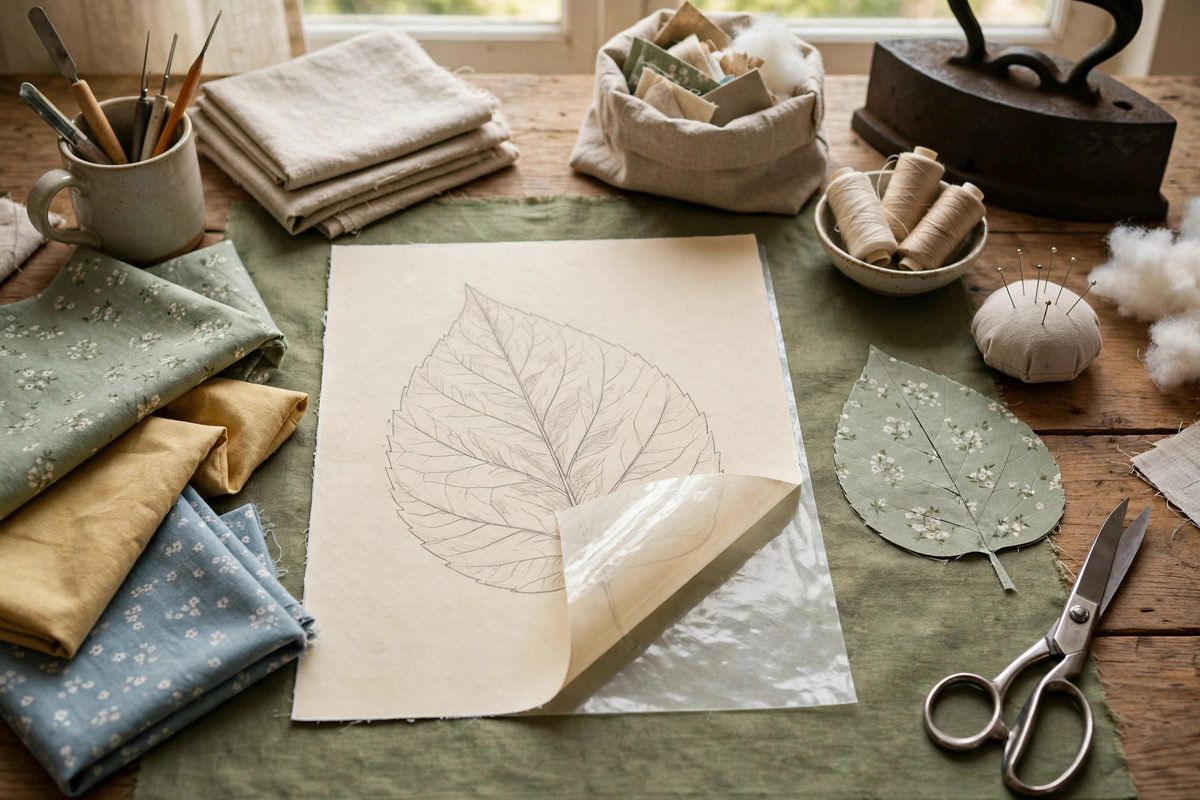
How Paper-Backed Fusible Web Works
The product is a sandwich: fusible adhesive on one side, paper carrier on the other. You trace the applique shape (in reverse) onto the paper side, cut it out, fuse the adhesive side to the wrong side of your fabric with an iron, then peel off the paper and fuse the shape to the background. The paper backing serves two purposes: it stabilizes the adhesive for tracing and cutting, and it prevents the adhesive from sticking to the iron during the first fusing. The adhesive itself is a heat-activated film that melts into the fibers of both fabrics, creating a bond that holds the applique through stitching and, depending on the product, through washing.
Sizing the Web to the Shape
The web should cover the applique shape fully but not extend beyond it. The standard method handles this automatically: trace the shape onto the paper, cut the web on the traced line, and fuse it centered on the fabric shape's wrong side, then cut the fabric shape slightly outside the web's edge (or cut both together on the line). What you must avoid is web extending past the fabric edge: exposed adhesive fuses to the ironing surface, to the background beyond the shape, or to the iron itself, creating stiff spots and sticky messes. For shapes with intricate edges or narrow points, cut the web very slightly inside the fabric's cutting line: the fabric edge then has a tiny adhesive-free margin that stays soft, while the shape's body bonds fully.
Weight and Stiffness Considerations
Fusible webs come in different weights, and the choice affects both the bond and the hand of the finished applique. Lightweight webs give a softer result and are right for most quilt applique; heavyweight webs bond aggressively but stiffen the shape noticeably, which matters in a quilt meant to drape. Consider the fabric too: lightweight or sheer applique fabrics show web stiffness more and may need the lightest web available, while heavier fabrics tolerate standard weights. Test the combination on scraps: fuse, feel the stiffness, wash the test if the finished piece will be washed, and check that the bond holds. The test takes minutes and prevents unpleasant discoveries in the finished quilt.
Fusing Technique for a Clean Bond
Good fusing is about heat, pressure, and time in the right combination. Use the temperature the product specifies: too cool and the adhesive does not fully melt, giving a weak bond that lifts later; too hot and it can scorch fabric or squeeze adhesive out beyond the shape. Press, do not slide the iron: sliding shifts the shape and wrinkles the web. Hold for the recommended time, applying firm even pressure, and make sure the heat reaches the adhesive through the fabric layers: thick fabrics need more time. Let the piece cool before testing the bond: fusible adhesive gains strength as it cools, and judging it hot leads to over-fusing. Fuse in stages for complex compositions: position all shapes, then fuse, so nothing shifts mid-process.
Edge Finishing After Fusing
Fusible web holds the shape in place; edge stitching makes it permanent and finished. The classic choices are a tight zigzag (satin stitch) that covers the raw edge, a blanket stitch for a hand-look finish, or a straight stitch just inside the edge for a raw-edge aesthetic. The stitching also seals the edge against fraying and lifting in the wash: even "permanent" fusible bonds benefit from stitched edges on pieces that will be laundered. Match the edge treatment to the design: dense satin stitching on every shape can overwhelm a delicate design, while raw edges on a heavily used quilt will fray.
Troubleshooting Common Problems
Shapes that lift after fusing usually suffered insufficient heat, pressure, or time: re-fuse with attention to the product's specifications. Adhesive oozing beyond the shape means the web was oversized or the iron too hot: trim the web smaller next time and check temperature. A stiff, board-like applique means the web is too heavy for the fabric: switch to a lighter product. And gummy residue on the iron or pressing surface comes from exposed adhesive: protect surfaces with a pressing sheet and keep the web within the fabric's boundaries.
Size the web to the shape, choose the weight for the fabric, fuse with proper heat and pressure, and finish the edges. Paper-backed fusible web is a precision tool disguised as a shortcut: treat it with precision and the applique will be clean, secure, and beautiful.
Related Guides
- Fusible Web Weight Selection for Raw Edge Appliqué: Raw edge appliqué bonds fabric shapes to a background with fusible web, then secures the edges with stitching, leaving the cut edges exposed as a
- Stiletto Piercing Precision for Turned Needle Appliqué: Needle-turn appliqué asks you to fold a raw fabric edge under itself, a sixteenth of an inch at a time, and stitch it down invisibly while the shape
- Freezer Paper Stabilizing for Micro Needle Turn Curves: Needle-turn applique on tiny curves, the petals of a miniature flower, the tight arcs of a small motif, asks the fabric to do something it resists
- Basting Tissue Underlay for Machine Applique Bounds: Machine applique lives or dies at the edges: the satin stitch or blanket stitch that binds the applique piece to the background must land precisely