
Tunisian crochet builds fabric in two passes: the forward pass picks up loops, and the return pass works them off. In Tunisian rib, where knit and purl stitches alternate to create stretchy vertical ribs, the return pass is where the fabric's fate is decided. Too tight and the ribs choke, losing their elasticity; too loose and the fabric gapes and the ribs look sloppy. Balancing return-pass tension is the core skill of Tunisian rib.
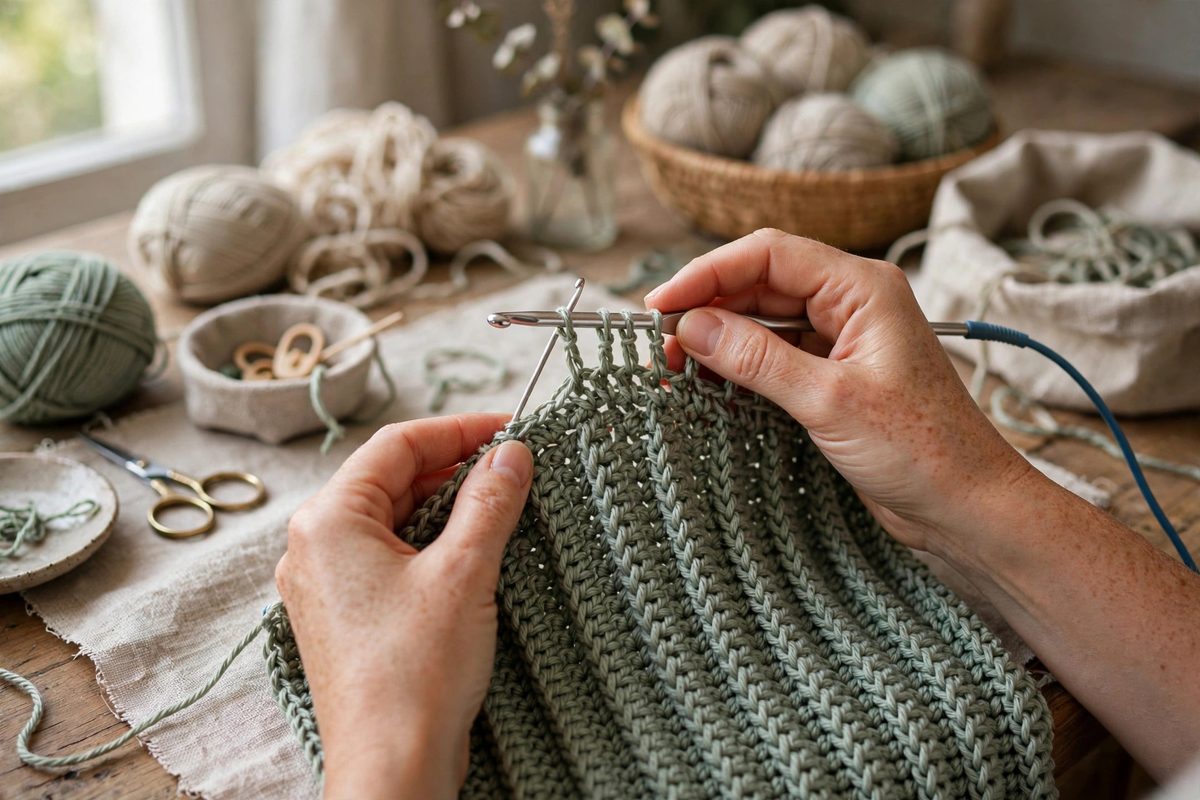
How the Return Pass Shapes the Fabric
The forward pass of Tunisian crochet is relatively forgiving: you are just collecting loops on the hook. The return pass does the real structural work, chaining the loops off in sequence and setting each stitch's final size. In rib patterns, the return pass must handle knit and purl stitches differently: knit stitches are worked through the front vertical bar, purl stitches bring the yarn forward, and each has a slightly different yarn path and tension requirement. If you work the return pass with uniform, unthinking tension, the two stitch types end up different sizes, and the ribs look uneven: the knit columns may pull tight while the purl valleys sag, or vice versa.
Reading Your Ribs for Tension Problems
The fabric tells you what is wrong. Ribs that lie flat but will not stretch indicate a return pass worked too tightly overall: the chaining-off has locked the stitches at minimum size. Ribs with visible gaps between the knit columns, where you can see through the fabric, indicate too-loose tension, usually concentrated in the purl stitches, which many crocheters work more loosely without realizing it. A fabric that curls aggressively or biases to one side suggests inconsistent tension between the two stitch types across the row. Learn to diagnose before you adjust: the fix for tight knits differs from the fix for loose purls.
Balancing Knit and Purl Tension
The goal is knit and purl stitches of matching size, which requires slightly different handling. Most crocheters naturally work purl stitches looser because the yarn-forward motion feels less controlled; compensate by being deliberate about snugging each purl's return chain to the same size as the knits. Conversely, if your knits are the tight ones, ease off slightly on the yarn-over-and-pull-through of the knit return. A useful check: after completing a return pass, look at the row of chained stitches along the top. They should be uniform in size across knit and purl columns. If they are not, adjust on the next return pass, because the top chain is the visible record of your tension decisions.
Hook Size and Yarn Feed
Return-pass tension does not exist in isolation. A hook that is too small for the yarn forces tight stitches no matter how carefully you work; Tunisian crochet generally wants a hook larger than you would use for regular crochet in the same yarn, precisely to keep the return pass from strangling. How you feed the yarn matters too: keep a consistent, relaxed yarn supply to the working hand, because grabbing and yanking the yarn tight on each chain is what produces the choked-rib problem. Some Tunisian workers find that a slightly looser grip on the yarn, letting it flow, produces more even return passes than careful, controlled feeding.
The Foundation Row Sets the Precedent
Tension problems often start at the very beginning. A foundation chain worked too tightly constricts the first few rows of rib, and no amount of careful return-pass work above it fully compensates: the bottom edge stays pinched while the rest of the fabric behaves. Work the foundation chain loosely, or use a larger hook for the foundation row and switch to the working hook after. Similarly, keep the forward pass loops even: wildly uneven loop heights on the forward pass force the return pass to compensate stitch by stitch, which is where inconsistency creeps in. Even input, even output.
Blocking as the Final Equalizer
Even well-tensioned Tunisian rib benefits from blocking. Wet or steam block the finished piece, gently stretching the ribs to even width and letting the stitches settle into uniform size. Blocking will not fix truly bad tension, gaps stay gaps, but it smooths the minor variations that even experienced hands produce. Block to the intended measurements, pin the ribs straight, and let the piece dry fully. The ribs will look sharper and behave more consistently in the finished garment.
The return pass is where Tunisian rib is made. Watch the knit-purl balance, keep the tension even and moderate, size the hook generously, and start with a loose foundation. Get the return pass right and the ribs will be stretchy, even, and professional: the fabric will do what rib is supposed to do.
Related Guides
- Return Pass Tension Balance in Tunisian Purl Stitches: Tunisian crochet works in two passes: the forward pass picks up loops onto the hook, and the return pass works them off. The Tunisian purl stitch
- Return Pass Slant Correction in Extended Tunisian Stitches: Tunisian crochet's extended stitches create a tall, elegant fabric, but they also introduce a persistent annoyance: the return pass slants. Because
- Mitigating Bias Pull in Extended Tunisian Knit Stitches: Tunisian crochet has a notorious lean: the fabric biases, pulling diagonally instead of hanging straight. Extended stitches make it worse, because
- Preventing Edge Curling in Tunisian Simple Stitch: Tunisian simple stitch produces a beautiful dense woven-like fabric, and it curls. The forward pass builds up loops on the hook, the return pass