
Push a hand plane for an hour and your wrist will file a complaint. The angle of the wrist during the push, specifically how much it supinates, determines whether the force flows cleanly through the joint or grinds across it. Understanding the mechanics lets you plane longer with less pain.
What supination means at the plane
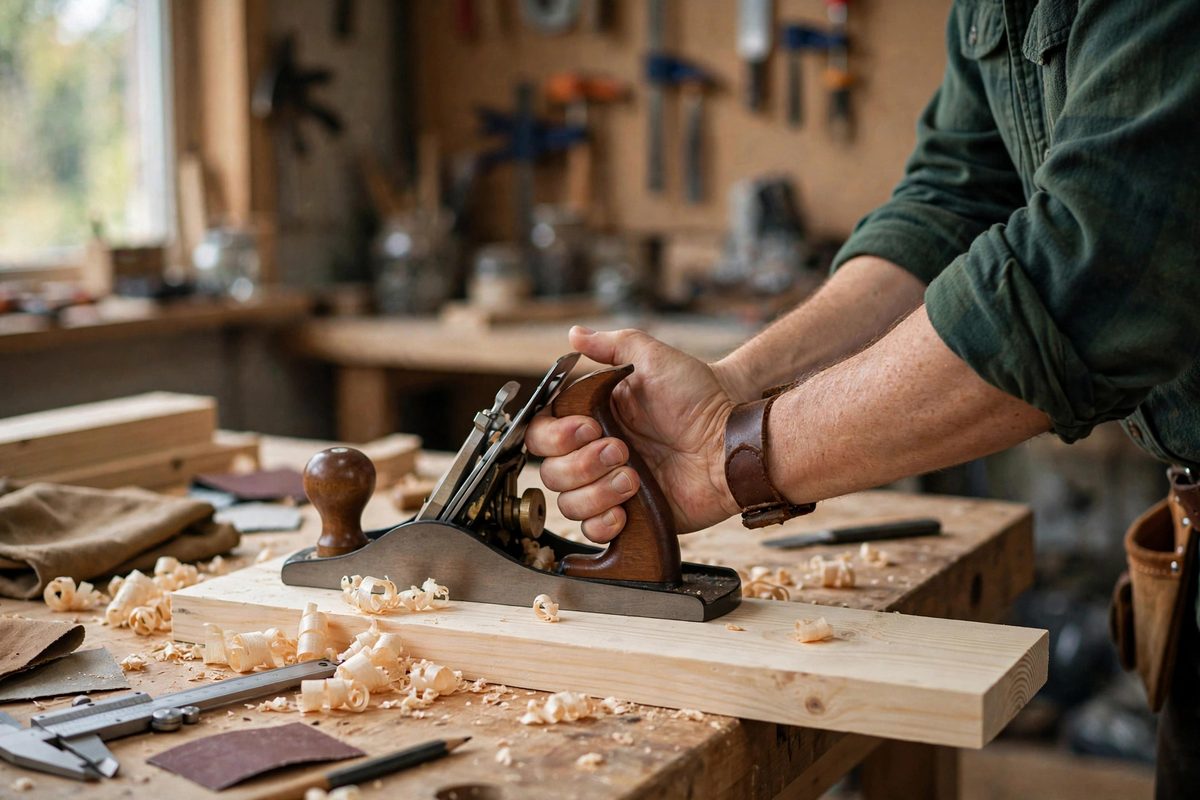
Supination is the rotation of the forearm that turns the palm upward; pronation turns it downward. When you grip a plane tote and push, your wrist sits somewhere between the two, and the exact angle depends on the tote's shape, the plane's height, and your body position. A wrist forced toward extreme supination under load compresses the joint unevenly and stresses the tendons that cross it. The comfortable working zone is near neutral, where the forearm's bones and muscles share the load evenly.
How tote design drives the angle
The tote is the wrist's interface with the tool, and its angle and shape dictate the wrist position. A tote raked too far back forces the wrist into extension plus supination; one too upright forces a cramped grip. The classic tote shape evolved toward a compromise that keeps most hands near neutral through the stroke. If a plane hurts your wrist, look at the tote before blaming your technique: an aftermarket or reshaped tote that fits your hand can change the joint angle more than any amount of practice.
Body position and the push line
Where you stand relative to the work changes the wrist angle as much as the tote does. Pushing a plane with your body behind the stroke, weight shifting from back foot to front, lets the arm extend naturally and keeps the wrist straighter. Reaching across the body or planing with the work too high forces the wrist to compensate with rotation. Set the work at a height where your forearm is roughly level at mid-stroke; for most people that means the work surface near hip height. The right stance does half the ergonomic work.
The stroke's changing angle
The wrist angle is not constant through the stroke. At the start, with the arm bent, the wrist tends toward one position; at full extension, toward another. A smooth stroke lets the wrist drift naturally through this range rather than locking it. Gripping the tote in a death grip freezes the wrist and forces the joint to absorb every variation; a firm but relaxed grip lets the wrist articulate. Think of guiding the plane rather than strangling it. The shavings will tell you: a relaxed stroke cuts more evenly.
When pain is information
Persistent wrist pain during planing is the joint reporting overload, and the correct response is to change something, not to push through. Check the tote fit, the work height, and the stroke mechanics first. Take breaks before the pain starts, not after; micro-breaks every twenty minutes beat one long rest after an hour of damage. If pain persists across sessions despite ergonomic changes, see a professional. No article replaces medical advice, and a wrist injured now is a wrist that limits every future project.
Adapting for different planes
Different planes load the wrist differently. A long jointer plane wants a full-body push with the wrist as a link, not a driver; a small block plane used one-handed puts more of the work on the wrist itself. Match the technique to the tool: use the body for the big planes, keep sessions short with the small ones, and consider a plane with a front knob positioned to share the load when the work allows two-handed use. The tool collection should fit the worker, not the other way around.
Keep the wrist near neutral, let the body drive the stroke, grip firmly without clenching, and listen to pain early. Planing is one of the great pleasures of the shop; it should not cost you a joint.
Related Guides
- Neutral Wrist Alignment on Pull Stroke Japanese Saws: Japanese pull saws cut on the pull stroke, which reverses the body mechanics that Western push-saw users have internalized: instead of driving the
- Offset Tote Handles for Reduced Wrist Strain on Saws: The tote handle of a handsaw, that closed grip your hand wraps around, looks like a simple thing, but its position relative to the blade determines
- Handle Axis Offset Calculations for Hand Saws: The handle of a hand saw is not just a grip; it is a lever arm that determines how cutting force reaches the teeth. The offset between the handle's
- Center of Mass Balance in Hand Plane Grip Profiles: A hand plane's tote, the rear handle, is where the craftsman's hand meets the tool, and its profile determines comfort, control, and fatigue over a