
The saddle stitch is the strongest hand stitch in leatherwork, and its strength lives or dies on tension. Each stitch is a small knot of thread locked through the leather, and the cast, the way each stitch is laid over the previous one in a consistent direction, is what makes the line lie flat and even. Diamond chisels set the spacing and angle of the holes; tension decides whether those holes become a beautiful stitch line or a puckered mess. The two have to work together.
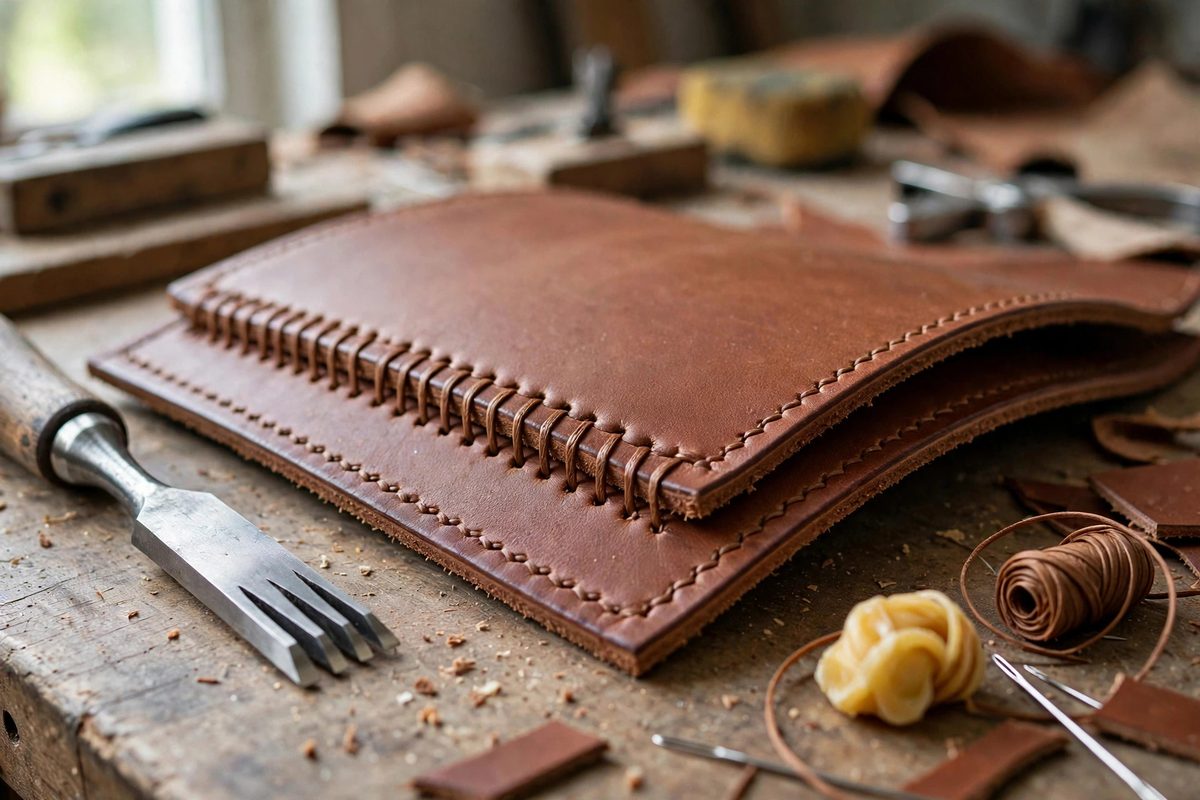
What the Diamond Chisel Decides
Diamond chisels punch slanted slots rather than round holes, and the slant is what gives the saddle stitch its characteristic angled look. The spacing of the chisel, measured in stitches per inch, sets how much thread shows per stitch and how the cast lies. Wider spacing shows more thread per stitch and suits heavy thread on thick leather; tighter spacing suits fine thread and gives a denser, more refined line.
The chisel also sets the hole size relative to the thread. The hole should grip the thread snugly: too loose and the stitches slide and the tension never sets; too tight and the thread abrades on every pass and the holes distort under tension. Match the chisel and the thread to the leather weight as a system, not as separate choices.
Setting Tension Stitch by Stitch
Tension is set as each stitch is pulled tight, and it must be set the same way every time. Pull both needles with equal, firm pressure until the stitch seats into the holes, then stop. The thread should lie flat in the diamond slots with no slack and no puckering of the leather around the holes. Puckering means too much tension; loose, lifted stitches mean too little.
The cast is the directional part: after seating each stitch, lay the threads over in the same direction every time, so each stitch casts over the last like shingles. Consistent casting is what makes the stitch line look machine-regular. Inconsistent casting, some stitches thrown left and some right, makes even perfect tension look sloppy.
Reading the Stitch Line
A well-tensioned saddle stitch line reads as a series of even slanted bars, each the same size, sitting flat against the leather with the holes just barely visible at the ends of each bar. Flip the work over: the back should mirror the front, which is the saddle stitch's signature and its strength. If the back looks different from the front, the tension was uneven between the two needles.
- Check tension every few stitches by sighting down the line; drift is easier to correct early.
- If the leather cups along the stitch line, back off the tension; the thread is stronger than the leather and will win.
- If stitches lift when you flex the piece, the tension was too light; the knots never locked.
- Keep your pull angle consistent; pulling up versus pulling sideways changes the effective tension.
Thread, Needles, and Wax
Waxed thread is non-negotiable for consistent tension. The wax lubricates the thread through the holes so it pulls evenly, then grips once seated so the tension holds. Unwaxed thread binds unpredictably, giving tight stitches and loose stitches at random, and it is more prone to loosening over time. If your thread is not pre-waxed, run it over a block of beeswax until it is evenly coated.
Needle size matters too: the needle should pass through the diamond slot without forcing, but not so loosely that it wallows the hole. Forcing a fat needle through a small slot stretches the hole, and the stitch seated in a stretched hole never tensions correctly. Size the needle to the chisel, the thread to the needle, and the tension takes care of itself.
Practicing the Rhythm
Good tension is a rhythm, not a measurement. Stitch a practice strip of the same leather with the same chisel, thread, and needles before starting the real piece, and stitch it the way you plan to stitch the project: same posture, same pull, same cast direction. The practice strip calibrates your hands to the materials, and it is where you discover that this leather needs a firmer pull or that this thread seats differently.
Keep the practice strip. When you pick up the project after a break, run a few stitches on scrap to get the rhythm back before touching the real work. Tension is muscle memory, and muscle memory fades between sessions.
Chisel the spacing, wax the thread, cast every stitch the same way, and pull to the same firm seat each time. The saddle stitch rewards consistency with a line that looks like it grew there, and it punishes variation visibly. There is no shortcut; there is only rhythm.
Related Guides
- Pricking Iron Pitch Angles for Flawless Saddle Stitches: The saddle stitch's signature slant, those perfect angled stitches marching down a leather edge, comes from the pricking iron, not from the needles
- Deglazing Vegetable Tanned Hides Before Dye: Vegetable tanned leather arrives from the tannery with a glazed surface: a smooth, slightly sealed finish from the final rolling and burnishing that
- Molding Heavy Saddle Skirting for Cuirasses: A cuirass, the torso armor of breastplate and backplate, demands leather that is thick enough to hold a shape under its own weight and shaped closely
- Swivel Knife Depth Control on Casing Leather: The swivel knife is the pencil of leather tooling: every carved line starts as a swivel knife cut, and every bevel, background, and decorative stamp
- Hot Water Hardening of Heavy Skirting Armor Leather: Vegetable-tanned skirting leather can be hardened into rigid armor plates with nothing but hot water, a technique as old as armor itself. The heat