
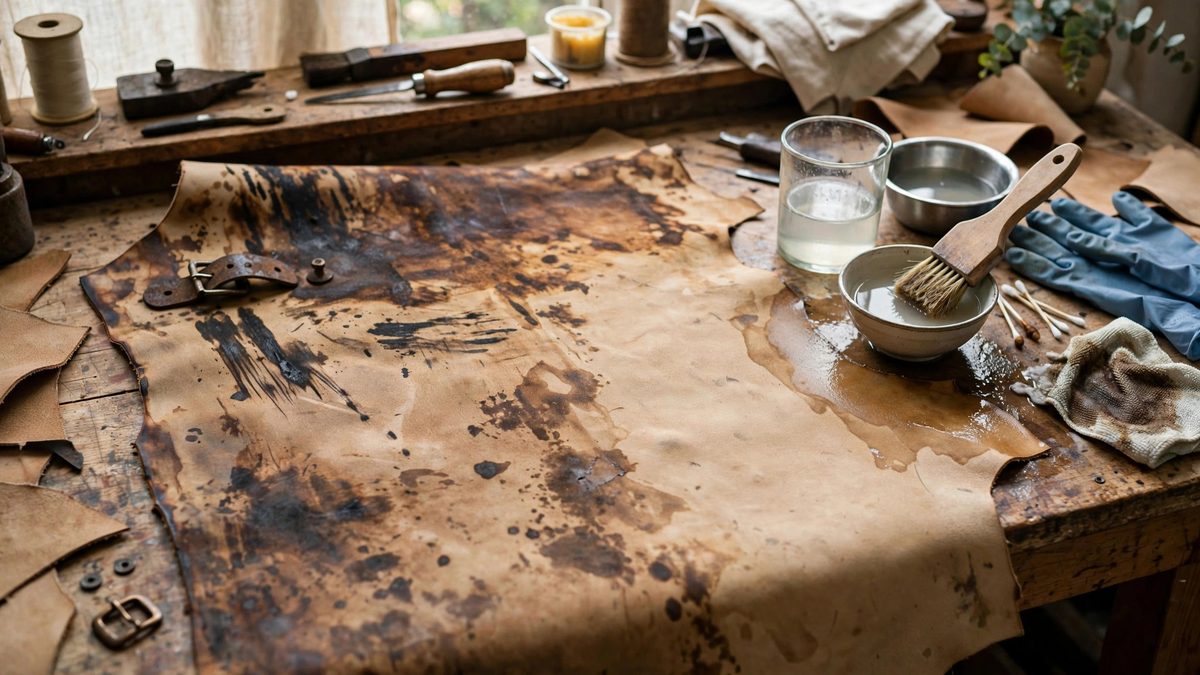
Vegetable-tanned calfskin picks up stains: iron marks from hardware, darkening from handling, blotches from uneven exposure. Oxalic acid bleaching lifts many of these stains without the harshness of chlorine bleach, which would destroy the leather. It is a controlled chemical step that demands respect for the acid and patience with the process.
How Oxalic Acid Works on Leather
Oxalic acid is a mild organic acid that dissolves iron-based stains and lightens the leather's surface by breaking down discolored compounds. It is particularly effective on the black iron stains that plague veg-tan, the marks left by steel hardware, tools, or even iron-rich water. Unlike chlorine bleach, it does not attack the leather's fiber structure aggressively at proper dilutions, so the leather's strength and temper survive the treatment. It lightens the overall tone somewhat, which is usually desirable when preparing for dyeing but must be accounted for in the final color plan.
Safety First
Oxalic acid is toxic if ingested and irritating to skin, eyes, and lungs. Wear gloves and eye protection, work with ventilation, and keep the crystals and solution away from food, pets, and children. Mix the solution in a non-reactive container, adding the crystals to water, and label it clearly. Rinse any skin contact promptly. The acid deserves the same careful handling as any workshop chemical; familiarity with the process should never become casualness about the material.
Mixing and Applying
Dissolve the crystals in warm water at a modest concentration; a little goes a long way, and stronger is not better, just harsher. Test the solution on a scrap of the same leather first, watching both the stain removal and any change to the leather's surface. Apply to the stained areas with a sponge or cloth, working the solution in gently, or submerge small pieces for even treatment. Keep the application even across the piece if the goal is overall lightening; spot treatment of stains followed by an overall light pass prevents patchiness. Do not let the solution dry on the leather mid-process, as dried acid concentrates and can mark.
Neutralizing and Rinsing
After the stains lift, the acid must come out. Rinse the leather thoroughly in clean water, several changes, until the rinse runs clear. Some workers follow with a mild baking soda rinse to neutralize residual acid, then a final clean water rinse. Incomplete rinsing leaves acid in the leather that can interfere with dyes and finishes later, or continue lightening unpredictably. Dry the leather slowly, away from direct heat, and condition it afterward; the bleaching process strips some of the leather's natural oils along with the stains.
Dyeing After Bleaching
Bleached calf takes dye more evenly than stained calf, which is the point of the whole exercise. The lightened surface may dye slightly lighter than unbleached leather would, so test the dye on a bleached scrap before committing the piece. Apply dye evenly and build color in coats rather than trying to reach depth in one pass. The bleaching removed the obstacles; the dyeing still requires the usual care with application and finishing. Seal the finished work appropriately, since the bleached and dyed surface deserves the same protection as any fine leatherwork.
Oxalic acid bleaching rescues stained veg-tan calf: handle the acid safely, test on scraps, apply evenly, rinse thoroughly, and dye on the clean lightened surface. The stains that made the hide look ruined become a footnote in the finished piece.
Related Guides
- Deglazing Vegetable Tanned Hides Before Dye: Vegetable tanned leather arrives from the tannery with a glazed surface: a smooth, slightly sealed finish from the final rolling and burnishing that
- Cast Stitch Tension on Diamond Chisel Spacing: The saddle stitch is the strongest hand stitch in leatherwork, and its strength lives or dies on tension. Each stitch is a small knot of thread
- Molding Heavy Saddle Skirting for Cuirasses: A cuirass, the torso armor of breastplate and backplate, demands leather that is thick enough to hold a shape under its own weight and shaped closely
- Swivel Knife Depth Control on Casing Leather: The swivel knife is the pencil of leather tooling: every carved line starts as a swivel knife cut, and every bevel, background, and decorative stamp
- Hot Water Hardening of Heavy Skirting Armor Leather: Vegetable-tanned skirting leather can be hardened into rigid armor plates with nothing but hot water, a technique as old as armor itself. The heat