
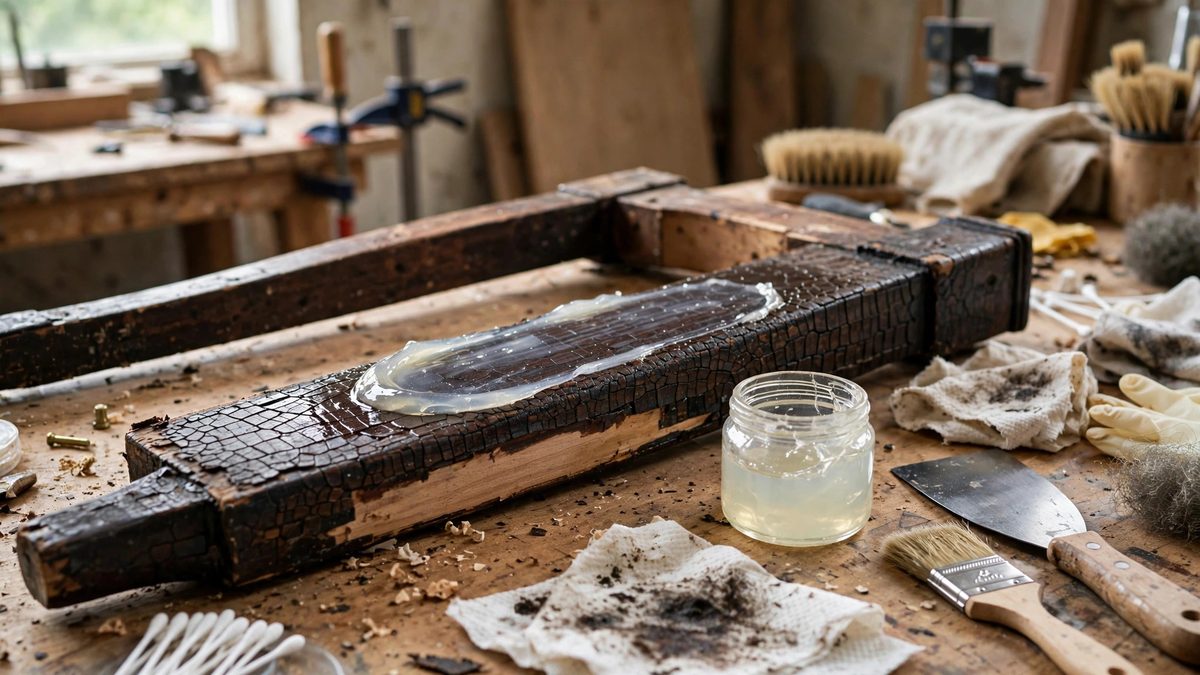
French polish, the traditional shellac finish built up in hundreds of thin layers, eventually needs to come off: alligatored, blackened, or damaged beyond repair. Stripping it with liquid solvents risks driving dissolved finish into the wood and raising the grain; solvent gels hold the chemistry on the surface where it belongs. The gel format is what makes the job controllable.
Why Gels Instead of Liquids
A liquid stripper flows into every pore, crack, and joint, carrying dissolved shellac with it and swelling the wood unevenly. A gel stays where it is applied, softening the finish film from the top down without flooding the substrate. The extended dwell time of a gel, it does not evaporate in minutes like a liquid, lets the solvent work through thick built-up polish without repeated applications. For French polish, which is shellac and therefore soluble in alcohol, an alcohol-based gel is the natural choice; it dissolves the finish it was designed to dissolve, without the aggression of methylene-chloride strippers on the wood beneath.
Choosing the Gel
Match the gel's solvent to the finish: alcohol-based gels for shellac and French polish, with the gel carrier being inert to the wood. Avoid gels with added waxes or silicones if the piece will be refinished, since residues interfere with the new finish; check the product's cleanup requirements. For valuable antiques, test the gel on a hidden area first and watch for any effect on the wood itself, particularly on pieces with original patina that stripping might disturb. The gentlest gel that does the job is the right gel, because every step up in aggression risks the substrate.
Application Technique
Apply the gel in a generous even coat with a brush, working in manageable sections; French polish comes off in layers, and trying to strip a whole tabletop at once means the gel dries at the edges before the middle is done. Let it dwell per the product's guidance, then lift the softened finish with a plastic scraper or fine steel wool, working with the grain. Do not gouge; the gel has done the softening, and the removal should require only gentle persuasion. Reapply to stubborn areas rather than scraping harder, since the wood underneath is the thing you are trying to save.
Cleanup and Neutralizing
After the finish is off, remove all gel residue; dried stripper residue interferes with refinishing and can continue acting on the wood. Wipe down with the recommended cleanup solvent, usually alcohol for alcohol-based gels, changing cloths frequently so you are removing residue rather than spreading it. Let the piece dry thoroughly and evenly before any refinishing; trapped solvent under a new finish causes adhesion failures that appear weeks later. Inspect the bare wood in raking light for any remaining finish in pores or carvings, and spot-treat those areas rather than re-stripping the whole piece.
Safety and Ventilation
Even alcohol-based gels produce vapors that demand ventilation; work with airflow and away from ignition sources, since alcohol vapors are flammable. Wear gloves and eye protection, because gels cling to skin longer than liquids and prolong exposure. Dispose of the finish-laden waste properly; shellac residue and solvent-soaked materials are a fire hazard in the trash. The stripping is straightforward chemistry, but the safety discipline is what keeps it a restoration instead of an incident.
Strip French polish with a gel matched to shellac, applied in sections, removed gently, and cleaned thoroughly. The finish comes off the surface instead of going into the wood, and the piece is ready for whatever its next century requires.
Related Guides
- Stripping Lacquer Without Degrading Veneers: Old lacquer finishes fail in familiar ways: they craze, yellow, chip, and go cloudy, and the only real fix is removal. On solid wood, stripping is
- Needle Punching Horsehair Into Burlap Layers: Traditional upholstery builds its comfort from natural materials layered with intention, and the horsehair-over-burlap sandwich is one of the oldest
- Pleating Heavy Velvets Around Curved Armrests: A curved armrest is one of upholstery's honest tests: the fabric must travel around a compound curve, which means it has to go somewhere, and pleats
- Curled Hair Layering for Resilient Antique Seat Tops: Before foam, upholsterers built seat comfort from curled horsehair, and antique seats stuffed with it can still be comfortable a century later if the
- Tufting Button Pull Depth Limits on Heavy Damasks: Deep button tufting on heavy damask is the signature look of traditional luxury upholstery, but the pull depth, how far the button sinks below the